Embodied memories, teachings, feelings, movements passed on from one person to another. I have ingrained in my dancing body memories of my fabulous aunt, Sanjuanita Martínez-Hunter Ph.D., who was also my first dance teacher. Yes, I inherited her knick-knacks and collectibles, but these are all just trivial pieces of material items in comparison to what I have truly inherited. I inherited her bodily knowledge.
Since my aunt was my first dance teacher, one of my earliest memories is of my sister and I taking my aunt’s creative movement class. All I remember is sitting in a circle with my legs crossed, putting my feet together and making “butterflies” with my legs. Later, as a student at the University of Texas at Austin (UT) and a member of the UT Ballet Folklórico I registered for her Mexican ethnic dance, modern, and ballet classes. Here, I learned her zapateado (footwork) exercises that I continue to use today in my own teachings. We danced with piano accompaniment, and I remember how she seamlessly bridged dance and music. I remember her wild enthusiasm, her words of encouragement, and her love of teaching dance. I feel that I have her teachings etched within my soul.
Sometimes when I teach a difficult zapateado sequence or try to motivate my dancers, I catch myself repeating my aunt’s instructions or using her teaching tools to explain myself to my dancers better. Most importantly, I remember her dances and movements that I have archived within my body. Whenever I teach a few of her favorite choreographies I keep the movements that are distinctly hers especially those that emphasize the elongated arms, the x pattern formations, the leaping to the air, the intense zapateado sequences. I often ask my dancers to identify the movements that are uniquely hers, wondering if they can recognize them. These movements define her dance legacy and mine. These embodied memories of my aunt’s teachings, movements, and choreographies were transmitted from aunt to niece and teacher to student. They were passed on to me directly from her.
Some of these embodied memories in my own dancing body were passed on to me by my aunt’s students (Michael Carmona and Roy Lozano) who I learned so much from. Within their choreographies are traces of my aunt’s teachings that are very hard to pinpoint exactly but are still present. Even more difficult to trace are the embodied memories of aunt’s dance teachers such as Alura Flores de Angeles “Godmother of Mexican Dance,” Neo Gutiérrez, Blanche Flores Leyendecker, Elizabeth (Ruby Roy) Galo, Frances Gonzalez Scarff, Dr. Anne Schley Duggan that she held archived within her body. I never took a dance class with any of these legends, yet I know that I carry a bit of their teachings within me that were passed on to me from my aunt.
These embodied memories are reminders of the ways in which through dance we transmit our bodily histories from one person to another. As dance teachers we carry within us the bodily memories, histories, and legacies of our teachers. I continue to teach these dance movements to my own students with every single lesson, calling upon the embodied memories of my aunt to inspire and guide me. We all do the same.
Big smiles and warm hugs greet me as I start another year of folklorico classes. I marvel at how tall my students have grown over the summer, listen to stories of summer getaways, and comment to parents about school happenings. I console, encourage, and coax a few of my littlest dancers who have never taken a dance lesson before. Pointing to the map of Mexico, I tell them histories of our newest dances and excitedly reveal details of our first performances.
In preparation for the first day back, I have already begun researching the regions of Mexico to present, designing the costumes, and reviewing choreographies. My dance studio is sparkling clean having swept, mopped, and cleaned mirrors in expectation of the first day back. Costumes are organized and are neatly hung in my storage room ready for my dancers to wear.
Later in the week, my adult dancers arrive carrying their dance bags filled with water bottles, practice skirts, folklorico shoes and everything needed to start zapateando. As I teach the footwork slowly and then with increasing speed, my dancers keep in pace with me. I smile brightly as I hear the clear, rhythmic sounds of the zapateado echoing throughout the room. Looking around the room I can see my life’s work. I have dancers who began at four years of age and now are in their teens, adults who have danced with me for years, as well as newbies who are very enthusiastic.
I teach the rhythmic sounds of the zapataeado following in the footsteps of my own dance teachers, continuing the legacies of their teachings, and sharing the histories of our ancestors. A small tear peaks out of the corner of my eye as I become a tad emotional. For I am a Folklorista, one who endlessly loves her students, and shares her talent with all.
By Gabriela Mendoza-Garcia Ph.D. My newest writing project is a bilingual children’s book called Todos a Bailar! A Folklorico Alphabet Book. Pre-orders are available with Del Alma Publications by clicking on the link below.
I remember as a young folklorista feeling a bit perplexed at times. I mistakenly thought that all the costumes, music, and dance traditions came from a community of people. It was until I entered graduate school that I began to see the folklórico world in a different light. Here, I dug deep into research on Mexican cultural nationalism of the 1920s and the ways it influenced which dances were selected to represent the country of Mexico. Now, as I read through my texts I keep seeing the name Ramón Valdiosera, a fashion designer, appear alongside the creation of many folklórico costumes which are near to my heart. Some of his folklórico designs such as Veracruz Huasteca and Aguascalientes have become synonymous with the region/state of Mexico even though they were created for the stage. Wanting to learn more, I decided to write two blogs on this topic. This is my second blog post. Here, I write of Valdiosera’s costume designs to represent the states of Aguascalientes, Tabasco, and Quintana Roo.
Aguascalientes
The people living in Aguascalientes perform many traditional dances such as the matlachines, a version of the Danza de la Pluma, Danza de Conquista, Danza de los Indios and Danza de Chicahuales (both are similar to the Moors and Christians dance). Yet, Maestro José Luis Sustaita Luevano, writes that Aguacalientes did not have an official costume to represent the state until the 1970s when Validosera designed his creation. Valdiosera designed this costume based upon the dress called the Ranchera del Centro. Valdiosera created a white dress with a blouse having a high collar with puffed sleeves. The bodice has lace with a ruffle of the same fabric. The white skirt has a colorful petticoat of pastel or brilliant colors. Valdiosera designed the skirt to have motifs that represent Aguascalientes. The motifs worn today include: carnations, roses, grapes on a vine, balustrade of the garden of San Marcos, roosters, peach blossom, and the guayaba. The reason that folklórico groups often include grapes in their design is due to the fact that at one time the cultivation of grapes had an important economic impact in Aguascalientes. Nowadays, the growing of peach and guayabas are commonplace (Sustaita Luevano 8-9).
Traje de Gala de Tabasco
As Maestra Rosa del Carmen Dehesa remembers one day a few friends of Carlos Madrazo Becerra, Governor of Tabasco, told him that they felt that the regional costume was very humble and simple. They asked Madrazo to designate a dress representing Tabasco that was more stylish. Becerra had the idea to create a gala dress that incorporated the indigenous dress design elements of the women from Tabasco. Thus, he asked fashion designer Validosera to create an official dress of Tabasco. Valdiosera traveled for three months with Roberto Campos to the different communities of Tabasco. When he arrived in Tapijulapa which is a community in Tacotalpa, Tabasco, he loved the beautiful color blue worn there. Valdiosera based his dress design on the people of the community of Tamulté de las Sabanas and decided to utilize the blue of Tacotalpa.
Valdiosera’s design utilizes the traditional embroidered blouse and rebozo worn by the women of Tabasco. However, he designed the A-lined skirt to represent the state. The skirt is a dark blue color and has a thick waistband adorned with the tira bordada of Tabasco. The tira bordada is a strip of colorful embroidered flowers. Along the bottom of the skirt, are four strips of tira bordada with a ribbon sewn underneath each one. The color of the ribbons are the same colors used in the tira bordada. which are blue (representing rivers), green (representing mountains), yellow (representing Chontalpa), and red (representing the central region). Each ribbon on the dress represents a region of Tabasco (Información y fotos proporcionadas, García n.p., Zetina n.p.).
Valdiosera and his Tabasco Design
Chetumal Traje de Quintana Roo
In 1959 Carmen Ochoa de Merino who was the wife of Quintana Roo’s Governor Aarón Merino phoned Valdiosera and commissioned him to design a dress to represent the state of Quintana Roo. According to Flor de Azalea Hadad Salgado, Director of the Artistic Laboratory “Chactemal” of the College of Arts and Culture A.C., this was important because Quintana Roo did not have an official dress to represent the state (Hadad Salgado n.p.) Valdiosera traveled to this area and was inspired by a Mayan statue of an indigenous women located in the island of Jaina, Campeche. La Chetumaleña is depicted on this sculpture wearing the traditional dress of Chetumal which was worn in the peninsula. Valdiosera used the pre-hispanic elements of the area in his design. He used a sort of brown linen or yute color for a tunic that reaches below the knees. The tunic is open on the sides without sleeves with a cape worn over the shoulders. Geometric shapes, adorn the shoulders and bottom of the cape as well as, the hem. These motifs can either be painted or embroidered. These motifs were chosen to symbolize fertility (Hadad Salgado, n.p., Verdayes Ortiz n.p., The Chetumaleña Monument). In 1981 this costume became famous when the beauty pageant contestant of Quintana Roo wore a version of this design in the Miss Mexico contest. She won first prize for traditional clothing (The Chetumaleña Monument).
Most importantly, in 1959 the same year that Valdiosera premiered his design, Maestro Rubén Dario composed music and lyrics to a song entitled Danza de la Chetumaleña Prehispánica. Also, Isabel “Bellita” Ferreyro Villamil who taught ballet and folklórico alongside Professor Omar Erosa who was a physical education teacher created the choreography to accompany the music and official dress. This dance was presented in December of 1959 in the Manuel Ávila Camacho Theater (Hadad Salgado n.p.).
My Thoughts
Do you notice that all three of the dress designs mentioned above were commissioned by government officials? I have so many questions to ask. For example, why is an official government sanctioned dress needed? Who gets left out when an official dress is chosen and why? What are the politics behind these types of decisions? Also, some of Valdiosera’s folklórico designs are beloved by the people and came to represent the state/regions (Veracruz Huasteca & Aguascalientes) while other designs are not as commonly utilized. What is the reason behind this? Regardless, I can’t help but admire the designs of Valdiosera.
Sustaita Luevano, José Luis. “Monografia del Estado de Aguascalientes.” 25. Congreso Asociación Nacional de Grupos Folklóricos en Aguascalientes, México del 4 al 11 de Julio de 1998. Aguascalientes: Asociación Nacional de Grupos Folklóricos, 1998.
Gabriela Mendoza-García Ph.D. is an Artist and Scholar. She has her own dance school and company called the Gabriela Mendoza-García Ballet Folklórico in Laredo, Texas. Dr. Mendoza-Garcia founded this group in 2013 and teaches children and adults of all ages. Her company consists of seasoned folklórico dancers with years of experience performing this art form. She teaches traditional Mexican folklórico dance pieces, as well as, works that are inspired by her scholarly research. Her scholarship includes: Dancing throughout Mexican History (1325-1910),History & Folklore booklet with an accompanying documentary sponsored by the Webb County Heritage Foundation, The Jarabe Tapatío: Imagining Race, Nation, Class and Gender in 1920s Mexico published by Oxford University Press, an on-line blog, writings for Asociación Nacional de Grupos Folklóricos, and others.
I could never have imagined the position that we are in–never in my wildest dreams. It began with me seeing all the postings on Facebook of my colleagues in California cancelling their concerts, classes, and even events. I noticed my friends in other states began to do the same. In Texas, Governor Abbot declared that all public schools would be closed until April 3rd. That is when it hit home! I suspended all my dance classes. I began to share warm-up exercises, zapateado techniques, and even host a few Facebook live on-line classes just so that we wouldn’t completely stop dancing folklórico entirely. I had to re-think this entire situation. And these are my thoughts.
Aztec Codex Borgia
We come from a very strong people. Our people have overcome conquest, colonization, and even genocide. We adapted and survived the European colonization of the Americas, the Spanish inquisition, the War of Independence from Spain, the Reform Wars, the Mexican-American War, the Mexican Revolution, etc. In the United States, our people are both native people and immigrants to this country. We struggled and fought in many wars such as the American Revolution, American Indian Wars, the Mexican-American War, the Civil War, World War I, World War II, the Korean War, the Vietnam War, the Iraq War, the Gulf War, etc. We protested and fought for our civil rights during the Chicano Movement. We continue this fight even today. Our music and dance traditions continuously transform. They are inspired by the political events around us. We did not stop dancing in times of hardship. During the Spanish Inquisition, our people were punished with three hundred lashes with a whip, fined, and put in jail for singing and dancing the jarabes. This did not stop us from playing our music, singing our songs, and dancing.
Jarabes during the Colonial Era
Our people survived small pox which killed millions of indigenous people throughout the Americas in the 1500s. In Tenochtitlán approximately 150,000 died of small pox. We are the survivors of the measles, syphilis, influenza, etc. Throughout this decimation our ancestors continued dancing. Perhaps the reason we express so much joy in our dances is because our people turned to music and dance as a survival mechanism. Think about it, for a few hours they could leave their problems behind them while they danced. We should do the same
So, we shall too overcome this pandemic. As Folkloristas we are the storytellers, the shamans, the bearers of our cultural dance traditions in the twenty-first century. We will adapt, change, and continue dancing just as our ancestors before us. We will persevere!
Cover photo courtesy of Gabriela Mendoza-Garcia. Photos are in the public domain.
Copyright, 3/29/2020, Mendoza-Garcia
Gabriela Mendoza-García Ph.D. is an Artist and Scholar. She has her own dance school and company called the Gabriela Mendoza-García Ballet Folklórico in Laredo, Texas. Dr. Mendoza-Garcia founded this group in 2013 and teaches children and adults of all ages. Her company consists of seasoned folklórico dancers with years of experience performing this art form. She teaches traditional Mexican folklórico dance pieces, as well as, works that are inspired by her scholarly research. Her scholarship includes: Dancing throughout Mexican History (1325-1910),History & Folklore booklet with an accompanying documentary sponsored by the Webb County Heritage Foundation, The Jarabe Tapatío: Imagining Race, Nation, Class and Gender in 1920s Mexico published by Oxford University Press, an on-line blog, writings for Asociación Nacional de Grupos Folklóricos, and others.
That is a question I was posed my first quarter as a graduate student at the University of California, Riverside. Yes, we discussed, debated this issue and even analyzed writings by current scholars. Yet, it was until I began my own research that I found that Nellie and Gloria Campobello, two Mexican dance maestras, had already begun this conversation in 1940.
Nellie and Gloria Campobello
Nellie Campobello was born in 1900 while Gloria Campobello was born in 1911. Nellie would later write a book of poems called Cartucho: Relatos de la Lucha en el Norte de México (1931) describing her experiences of having lived through the Mexican Revolution. Both sisters investigated Indigenous dances, taught in the Cultural Missions and were employed as teachers in the National Music and Dance Section of the Department of Fine Arts of the Secretary of Public Education. Later on, the Campobello sisters would be instrumental in forming the National Ballet of Mexico with Gloria becoming known as Mexico’s first prima ballerina.
In the book Ritmos Indígenas de México (1940), the Campobellos argue that for the indigenouos people, movement is the principal form of expression. They have their own distinct ways of speaking, moving, and gesturing that parallels language. The Campobellos declare that the indigenous people speak more with the body than with their tongue. They advocate observing the indigenous people as they dance to understand their rhythms. Body movement is a sacred language to the indigenous people. The Campobellos believe that through the analysis of movement you learn their secret beauty and pain inscribed in every movement (12-13). Let’s take the Campobello’s arguments a bit further. How does folklorico dance speak with the body?
Nowadays, Dance scholars believe that through a careful study of dance movements, you can understand the joy, pain, cultural, and even political stance of a people. So, we must analyze every zapateado, skirt flourish, even grito to hear the dancing body.
These groundbreaking ideas espoused by the Campobellos in 1940 are utilized by Dance scholars today when we study dance. Sixty-seven years after the Campobellos wrote Ritmos Indígenas de México, Diana Taylor argues the same ideas in her book The Archive and the Repertoire: Performing Cultural Memory in the Americas (2007). Here, she writes of the importance the indigenous people placed on the body to re-tell histories. She also declares we must all study the dancing body because the body is an archive that stores and disseminates memories, a sense of our identity, and our social knowledge (Taylor 2-3). So, our folklorico dances retain within their zapateados and movements memories of our ancestor’s histories. When we dance we tell stories of our identity and reveal our society’s customs.
How do we speak with our dancing bodies?
Photo of dancers of the Gabriela Mendoza-Garcia Ballet Folklorico Infantil
Barbara Browning in Samba: Resistance in Motion(1995) compares dance to a form of “bodily dialogue” in which many bodily meanings are spoken simultaneously and in different languages (2). Think about that, when we dance folklórico our body has many meaning that are spoken on multiple levels, at different tempos and rhythms. What are we saying when we dance? It is up to us to think, study, and analyze these movements to find out what they are telling us.
My Thoughts
The Campobellos wrote about indigenous people and the ways in which dance made meaning for them. Yet, their ideas can be applied to all dance forms. Perhaps we should really sit back listen to our zapateados, hear the music, and connect with oral/written histories to really understand what our dances are saying. What do our folklórico dances say about us as a people? What do they say about our histories? What would it mean to us if we really listen to our dancing bodies and allow them to speak? Without saying a single word, our folklorico dancing bodies tell us so much.
Works Cited
Campobello, Nellie. 1940. Cartucho: Relatos de la Lucha en el Norte de México. México: E.D.I.A.P.S.A.
Campobello, Nellie and Gloria Campobello. 1940. Ritmos Indígenas de México. México.
Taylor, Diana. 2003. The Archive and the Repertoire: Performing Cultural Memory in the Americas. Durham: Duke University Press.
Photos courtesy of Gabriela Mendoza-Garcia
Copyright, 3/1/2020, Mendoza-Garcia
Gabriela Mendoza-García Ph.D. is an Artist and Scholar. She has her own dance school and company called the Gabriela Mendoza-García Ballet Folklórico in Laredo, Texas. Dr. Mendoza-Garcia founded this group in 2013 and teaches children and adults of all ages. Her company consists of seasoned folklórico dancers with years of experience performing this art form. She teaches traditional Mexican folklórico dance pieces, as well as, works that are inspired by her scholarly research. Her scholarship includes: Dancing throughout Mexican History (1325-1910),History & Folklore booklet with an accompanying documentary sponsored by the Webb County Heritage Foundation, The Jarabe Tapatío: Imagining Race, Nation, Class and Gender in 1920s Mexico published by Oxford University Press, an on-line blog, writings for Asociación Nacional de Grupos Folklóricos, and others.
February is the season of love. What better way to celebrate the season than by recognizing a few folklórico choreographies that are beloved by many. For this blog post, I describe my four favorite folklórico choreographies that have been set by talented maestro(a)s. I chose these works because of their tremendous influence throughout the folklórico community. So, let’s recognize a few iconic folklórico choreographies by amazing artists who have influenced us all.
*Técnica Raza
Rafael Zamarripa Castañeda, Ballet Folklórico de la Universidad de Colima
Rafael Zamarripa Castañeda founded the Ballet Folklórico de la Universidad de Colima in 1981. He has choreographed many dance suites. Yet, it is his development of a folklórico technique called Técnica Raza that is my favorite of all his contributions. I learned elements of Técnica Raza from him at the Asociación Nacional de Grupos Folklóricos (ANGF) conference in 2002. Here, dancers learn sophisticated folklórico zapateado sequences that utilize the heel, toe, and entire body as they travel across the floor. Designed to increase spatial awareness, enhance motor ability, and especially encourage clear zapateado footwork sequences this technique is a wonderful tool for dance training (Director’s Class ANGF Dance Workshop, June 29-July 6, 2002; https://www.tecnicaraza.com/founder).
*Although Técnica Raza is a series of folklórico dance training techniques, I have included this as a choreographic work because I have seen folklórico dance groups perform it on stage. Plus, these techniques required choreographic skill to develop and teach.
Revolución
Amalia Hernández, Ballet Folklórico de México de Amalia Hernández
Amalia Hernández founded the Ballet Folklórico de Mexíco in 1952. (Aguirre and Escalona, 1994, 16-42). One of Hernández’s most famous choreographies depicts the Mexican Revolution (1910-1920) using song and dance. Hernández choreographed this suite based upon her own family stories. It is very close to her heart. In this iconic dance piece she utilized the corridos of the era. The corridos are musical ballads that sing of the heroes/heroines of the war, love lost and found etc. She usually begins La Revolución showcasing the aristocrats dancing the ballroom dances of the epoch. Then, the revolutionaries or peasants interrupt the scene carrying rifles while the aristocrats rush off stage. The music changes to the corridos of the time period alongside dancing which has intricate footwork and skirt work elements (Ballet Folklórico de México de Amalia Hernández: Sesenta y Cuatro Aniversario). Of this suite one of her most beloved is a tribute to the soldaderas calledLas Adelitas. These women who fought along men in battle during the Mexican Revolution are depicted as strong, brave, and fierce. So many folklórico groups in Mexico and the United States have followed her lead in depicting the dances and soldaderas during the Mexican Revolutionary War.
We cannot forget the contributions of Kinesiology teachers in the 1920s and 1930s who were sent by the Secretaría de Educación Pública to rural communities to teach. The Cultural Missions consisted of a group of teachers in different disciplines plus a social worker to rural areas where public education was lacking. Flores de Angeles was a part of one of these missions. She remembers teaching physical education classes to all. In addition, she was instructed to collect the dances of the rural people. She was sent to Chiapas, Mexico in San Juan Chamula. At the time she was a single mother because her husband had recently passed away. While her son was living with his grandmother, Flores de Angeles traveled with this group of educators to teach. She is most famous for learning El Bolonchon during the festival of the Virgen de Asunción. She choreographed it for the stage. These efforts mark the very beginnings of the folklórico movement that we know of today (Mendoza-García, 85-102).
To read more about Flores de Angeles, please read the following posts:
Juan Gil Martínez Tadeo, El Grupo de Danza Folklórica Kicukpaico
Gabriela Mendoza-Garcia Ballet Folklorico Company
In the 1960s in La Misión, Baja California, Mario Ramón Reyes Meléndez spoke with the elders of this community who stated that the varsouvianna, polka, and shotis were the traditional dances of this region. Yet, he noticed that in this community the youth danced calabaceados (Valdovinos García, 125-126). These dances are performed by cowboys and cowgirls to musica norteña. They dance with much flexibility kicking their legs in the air and stomping the heel of the boot on the floor (Martínez Tadeo, 41-42). In 1979, Mario Ramón Reyes Meléndez organized the first festival called La Fiesta de la Misión in La Misión, Baja California. Here, the youth danced calabaceados. In 1982, he invited Juan Gil Martínez Tadeo to choreograph these calabaceados for the stage. In 1991, Martínez Tadeo started El Grupo de Danza Folklórica Kicukpaico and they performed a dance suite representing the calabaceados of La Misión, Baja California. According to Raúl Valdovines García in El Baile Calabaceado: Tradicion de la Fiesta de Vaquero (2017), calabaceados were not considered part of the folklórico repertory for a long time. It was until Martínez Tadeo choreographed these dances for the stage, that they gradually were adopted into the folklórico repertoire of companies in Mexico (17, 21, 37, 126-127, 129-131). I know it is hard to imagine the folklórico community without the calabaceados because they have become a part of the identity of the people of Baja California.
My Thoughts
I think that these choreographic works are iconic in our folklórico community. I cannot imagine what the folklórico world would be like without the choreographic contributions of these maestra/os. Yes, there are so many more maestra(o)s with iconic dance choreographies that I did not mention. These are just a few. What choreographies are your favorite?
Works Cited
Aguirre Cristiani, and Felipe Segura Escalona.1994. El Ballet Folklórico de Mexico de Amalia Hernández. México D.F.: Fomento Cultural Banamex. A.C.
Asociación Nacional de Grupos Folklóricos Conference XXIX Director’s Class Workshop. 2002.
Ballet Folklórico de Mexico de Amalia Hernández: Sesenta y Cuatro Aniversario. DVD. Disc 1. Documental.
Martínez Tadeo, Juan Gil. Calabaceados de Baja California. In Asociación Nacional de Grupos Folklóricos Conference XXIX Syllabus. 2002. 42-44.
Mendoza-García, Gabriela. Bodily Renderings of the Jarabe Tapatío in Early Twentieth-Century Mexico and the Millennial United States: Race, Nation, Class, and Gender. PhD. diss. University of California, Riverside, 2013.
Valdovinos García, Raúl. 2017. El Baile Calabaceado: Tradición de la Fiesta del Vaquero. Baja California: Universidad Autónoma de Baja California.
Gabriela Mendoza-García Ph.D. is an Artist and Scholar. She has her own dance school and company called the Gabriela Mendoza-García Ballet Folklórico in Laredo, Texas. Dr. Mendoza-Garcia founded this group in 2013 and teaches children and adults of all ages. Her company consists of seasoned folklórico dancers with years of experience performing this art form. She teaches traditional Mexican folklórico dance pieces, as well as, works that are inspired by her scholarly research. Her scholarship includes: Dancing throughout Mexican History (1325-1910),History & Folklore booklet with an accompanying documentary sponsored by the Webb County Heritage Foundation, The Jarabe Tapatío: Imagining Race, Nation, Class and Gender in 1920s Mexico published by Oxford University Press, an on-line blog, writings for Asociación Nacional de Grupos Folklóricos, and others.
I feel that I am always learning more and more about our folklorico dances. I am constantly reading, asking questions, and thinking about new ideas. Very often I am shook (as my teenage daughters would say) when I come across a new finding. Here, are a few folklorico findings that shook me!
Theoretical
Principle
First off, I like to bring academic theory into our conversations around folklorico dance. In my previous blog called Folklorico Dance as an Invented Tradition, I talk about how oftentimes we think that all the folklorico dances that we perform have a long history. In reality, they are recent creations. Eric Hobsbawn in his classic text “Inventing Traditions” (1983) coins this term to refer to “traditions actually invented, constructed and formally instituted and those emerging in a less easily traceable manner within a brief and date-able period-a matter of a few years perhaps- and establishing themselves with great rapidity (1).” He notes that these invented traditions are practices with a given set of rules, rituals, that are repeated and that are thought to have a long history but in actuality are very recent (1). Many of our Mexican folklorico costumes, music, and dances fall under this definition of invented traditions. In my writing, today I continue this thought by adding a few more folklorico facts that really support Hobsbawn’s theory of Invented Traditions.
Invention of the Huapangos Tamualipecos
In the summer of 2018, I attended the Asociacion
Nacional de Grupos Folkloricos Conference in Phoenix, Arizona. I took a Tamualipas
dance workshop with María Teresa Montelongo Ortíz. She gave presentation before
the entire membership and told us that the huapango
dances of Tamualipas were invented. (Surprise!!)
She said that they were created by Raúl Pazzi Sequera
(national grand champion winner Huapango Veracruzano) and Moisés Rodríguez
(former dancer with the Ballet Folklórico de Amalia Hernádez). Both
men traveled to Tamualipas and created the distinctive footwork sequences that
would come to represent the huapangos of Tamualipas. Then, alongside the Conjunto
Típico Tamaulipeco which was the official musical group of Tamualipas, they
traveled all across the country teaching the dances of the son huapango to the
rhythm of the jarana (Montelongo Ortíz 26). Thus, these dances were an invented tradition
created for the stage.
Stylization
of the Ranchera costume
Ranchera Costume Worn by Dancers of the Gabriela Mendoza-Garcia Ballet Folklorico
I always thought that the ranchera costume
of Jalisco had evolved from the outfits worn by women during the Colonial era.
Low and behold, as I am reading through my materials I find out that this is
partly true. The costume did evolve through time but the style that we wear
today was created by Josefina Gómez and Maria Del
Refugio García Brambila also affectionately known as Miss Cuca.[i] They both designed this costume using oral
histories, personal experiences, and a bit of artistic creativity. This is the story behind the ranchera costume.
One day Miss Cuca ran out of espiguilla so instead she bought ribbons to adorn
a costume she was sewing. She discovered that the ribbons really complimented
the dress. Plus, the ribbons accentuated the movement of the skirt so that it
was really highly visible (Chávez Rodríguez 51). This would become the Ranchera
dress that we know of today.
Innovations in Veracruz Dancing
Many of the zapateado sequences that I had always thought were derived from the Jarochoas/os of Veracruz as they danced during their festivals, were in fact created for the stage by Mario Cabrera Salgado. According to the video Mario Cabrera “El Jaquetón,” Cabrera invented 54 jarocho steps which we use today in our dances. He also was the first person to use white botines when he danced Veracruz. Not only that but he changed the cotton palecate and used a long one made out of satin. He also changed the hat to a more durable one that would withstand our zapateados. Such creative innovations in dance that we still continue to this day.
Mario Cabrera “El Jaqueton”
My Thoughts: These are just three examples of the ways in which folklorico dances were invented for the stage during the 20th century. What other folklorico dances are invented traditions?
Works Cited
Chávez Rodriguez. Asociación Nacional de Grupos Folklóricos
Congreso.46-52.
July. 2002, Riverside, California.
Hobsbawn, Eric and Terence Ranger, Eds. The
Invention of Tradition. Cambridge: Cambridge UP, 1983.
Montelongo Ortíz,María Teresa. Asociación
Nacional de Grupos Folklóricos Congreso. 26-27. July.
2018, Phoenix, Arizona.
—-.—-. “ Huapangos Tamualipecos” (lecture, Asociación Nacional de
Grupos Folklóricos, Phoenix Arizona, July 2018).
[i] In “Ballet Folklórico Mexicana: Choreographing National Identity in a Transnational Context, Olga Nájera-Ramírez interviews Rafael Zamarripa Artistic Director of the Ballet Folklórico de la Universidad de Colima. He was as one of Miss Cuca’s former students. He says that Miss Cuca earned a degree in Physical Education. She also taught dance at Beatriz Hernández Boarding School. Her dancers would win national titles. She taught at many schools. Her dance group at the Escuela Normal or Teacher’s College was designated the official state representative of Jalisco.
Photos courtesy of Gabriela Mendoza-Garcia. Video footage taken from You Tube.
Copyright, 11/24/2019, Mendoza-Garcia
Gabriela Mendoza-García Ph.D. is an Artist and Scholar. She has her own dance school and company called the Gabriela Mendoza-García Ballet Folklórico in Laredo, Texas. Dr. Mendoza-Garcia founded this group in 2013 and teaches children and adults of all ages. Her company consists of seasoned folklórico dancers with years of experience performing this art form. She teaches traditional Mexican folklórico dance pieces, as well as, works that are inspired by her scholarly research. Her scholarship includes: Dancing throughout Mexican History (1325-1910),History & Folklore booklet with an accompanying documentary sponsored by the Webb County Heritage Foundation, The Jarabe Tapatío: Imagining Race, Nation, Class and Gender in 1920s Mexico published by Oxford University Press, an on-line blog, writings for Asociación Nacional de Grupos Folklóricos, and others.
After my aunt Sanjuanita Martínez-Hunter passed away, I helped my mother sort through all her personal possessions. Among her boxes of paperwork, I found a collection of manila folders with the words Alura Flores de Angeles scribbled on top. Thrilled, I opened each folder and in it were slides, pictures, brochures, press releases, newspaper clipping all documenting Flores de Angeles’ many visits to the University of Texas at Austin in which she displayed her costume collection, conducted dance workshops, and lectured on Mexican folkloric dance. Among my aunt’s paperwork, I also found copies of articles on Mexican Dance written by Flores de Angeles from 1934 to 1935 for Real Mexico magazine.
Alura Flores de Angeles (1905-2000) earned a degree in physical education at the National Autonomous University of Mexico (UNAM) during a time when few people much less women attended college. She was known for her poetic recitation having performed at nearly every theatre in Mexico City. Yet, she was especially known as a teacher of Mexican folkloric dance having taught at UNAM for over fifty years. Few realize that she was also an author. This month I share an excerpt from an article as written by Alura Flores de Angeles for Real Mexico in the December 1934/ January 1935 issue which I found in my aunt’s collection.
Business Card of Alura Flores de Angeles
Las Canacuas (Michoacán
Dance)
We are now going to study some of the dances of the State of
Michoacán.
Michoacán
is situated in the southwestern part of Mexico, and is one of the richest and
most interesting states in the Republic. The most important and best known of
the Michoacán
dances are: La Danza de las Canacuas (The Dance of the Crowns), which is a
women’s dance and is very beautiful.
Fiestas
Las Canacuas are danced on the Fiestas de las Coronas
(Fiestas of the Crown) which are celebrated several times throughout year,
particularly on certain market days when large crowds of visitors from far and
near are attracted to the town where the fiestas are being held. Uruapan is the
town where Las Canacuas are danced most often, and many people come from the
towns nearby such as Huecorio, Janitzio, Jarácuaro, Santa Fe and others.
Now that the pretty town of Uruapan is becoming so popular as a resort with
Mexicans and visitors alike doubtless many more persons each year will have the
opportunity of witnessing the dancing of Las Canacuas as well as the other
Michoacán
dances.
Ceremonial
There is a graceful little ceremony connected with the dance. Presents are offered to the assembly of visitors such as flowers, fruits, and small toys and curios. The state of Michoacán is famous for its flowers and fruits and indeed its lush soil will produced anything. The state also excels in the manufacture of attractive and ingenious arts and crafts. Among the most notable of these are the jicaras, which are trays peculiar to Michoacán and are famous all over Mexico. They are hand painted with birds, flowers, and other dainty or fanciful motifs. The jicara is used in the dance of Las Canacuas.
The girls of the dance and there may lie any number of them, are known as Michoacánas (Michoacan girls). They enter in a single file. Each has her jicara on her head and all carry small bouquets of flowers and fruits as well as small toys and curios. These are for presentation to the priests. The flowers presented are small yellow flowers indigenous to Mexico. They are called here flores del corazón (flowers of the heart). Small bouquets of these flowers are arranged with dried corn husk and a bunch is presented to each guest. The significance of this charming custom is to welcome. The michoacánas dance and sing and they hand round the bouquets. The words of the songs are often very naïve.
Costuming
The costume worn by the Michoacánas is beautiful and very
vivid. The blouse called a huanengo is of fine, white handwork and is
embroidered with fancy patterns in bright wool. The skirt is also of wool,
usually of navy blue wool. At the bottom of the skirt is a rather wide border
of the same material as the blouse. This can also be embroidered with wool or
fancy patterns and figures may be appliqued on it. The waistline of the skirt is
gathered and a band is wound a coupled of time about the waist and tied at
either side.
The Michoacána also wears a shawl around the head. It hangs down her back below her waist. She wears jewelry, bracelets, necklaces, and earrings, usually of coral. She has her hair arranged in two long braids and sometimes she entwines ribbons in her braids.
Dancing
The dance consists of graceful moving and turns and the tapping of the feet on the ground. It is charming, picturesque, and beautiful. Usually the dance of Las Canacuas is prolonged to include the dancing of the Jarabe Michoacáno. This dance is quite different from the Jarabe Tapatío, the national dance of Mexico. Its procedure is thus: the girls place their jicaras down and seat themselves on the floor; they clap their hands; a man enters; he selects one girl from the group and dances the Jarabe Michaoacáno with her. This dance consists of a continued beating of the feet, turns, etc. It too is very attractive.
My
Thoughts
Let’s remember that Flores de Angeles wrote this article in the 1930s. She describes Uruapan as just beginning to be discovered by tourists. Her writings reveal the ceremonial and social aspects of Las Canacuas and not necessarily a dance performed on stage with a set sequence of steps or movements. Amongst my aunt’s belongings, I also found a series of pictures of Alura Flores de Angeles’ costume collection. I am thinking about compiling all these archival photographs to write my new book project. This book would include full color photos of this costume collection plus other archival sources. What do you think about this project?
Works Cited
Flores Barnes, Alura. 1934. The Dances of Mexico: Las Canacuas (Michoacán Dance). Real Mexico 12, no. 1. (December/January): n.p.
___.___. 50 Veranos: Alura Flores de Angeles. N.d. Dance program. Society of Folk Dance Historians Collection, Austin.
—.—. Photograph. Society of Folk Dance Historians Collection, Austin.
Cover photo courtesy of the Sanjuanita Martinez-Hunter Collection. Business Card courtesy of the Society of Folk Dance Historians
Copyright, 5/5/2019, Mendoza-Garcia
Gabriela Mendoza-García Ph.D. is an Artist and Scholar. She has her own dance school and company called the Gabriela Mendoza-García Ballet Folklórico in Laredo, Texas. Dr. Mendoza-Garcia founded this group in 2013 and teaches children and adults of all ages. Her company consists of seasoned folklórico dancers with years of experience performing this art form. She teaches traditional Mexican folklórico dance pieces, as well as, works that are inspired by her scholarly research. Her scholarship includes: Dancing throughout Mexican History (1325-1910),History & Folklore booklet with an accompanying documentary sponsored by the Webb County Heritage Foundation, The Jarabe Tapatío: Imagining Race, Nation, Class and Gender in 1920s Mexico published by Oxford University Press, an on-line blog, writings for Asociación Nacional de Grupos Folklóricos, and others.
This month I am writing about our Chicana/o ancestors from 1940s who showed their rebellious ways through dance, music, dress, speech, and culture. Yes, I am talking about the Zoot Suiter or the Pachucos and Pachucas of this era. As they danced the jitterbug in their zoot suits they defiantly retaliated against assimilation. Yet, this story begins with a killing….
In Los Angeles, California in 1942 Josè Díaz attended a party near Sleepy Lagoon which was a popular place for Mexican-American or Chicano youth to hang out. He was found bleeding to death. Immediately, the police began looking for the killer. They swept through Chicano neighborhoods and rounded up six hundred youths. Twenty-two Chicanos who were members of the 38th Street Gang were charged with murder and assault. Scholars who comb through historical evidence now note that this trial was unjust. This was known as the Sleepy Lagoon Incident.
Then, on June 7, 1942, Vicente Morales who wore a zoot suit took his date to the Orpheum Theatre for a night of dancing. Sometime during this evening, a group of white sailors beat him up while shouting profanities. They stripped him of his zoot suit and his girlfriend had to cover his naked, beaten body with her own coat. The police arrested him on charges of disturbing the peace. He went to jail. So, began the Zoot Suit Riots where hundreds of Service men roamed the streets of Los Angeles targeting Chicanos wearing Zoot Suits. The pachucos were beaten in front of a crowd, stripped of their zoot suits, and arrested by police for vagrancy, disturbing the peace and other charges. The news media added to the hype by labeling the Zoot Suiters as un-American and juvenile delinquents. Eventually the Zoot Suit riots were quelled after an outcry by the Mexican government.
Why Dress in Zoot
Suits?
During this time, Americans were fighting in World War II. All citizens were expected to fight for their country and support the war. Many Chicanos fought during World War II but they were still segregated in schools, movie theaters, hotels, restaurants, etc. They were discriminated against at work and were the targets of prejudice. However, the Chicana/o youths were not powerless. Instead, of succumbing to demands that they assimilate to American society. They rebelled and created the Pachuca/o style (Alvarez 2008, 155, 15-18, 78).
Rebellious Attire
The pachucos and pachucas of the 1940s were known for wearing
their rebellious attire known as the Zoot Suit. Luis Alvarez in The Power of the Zoot: Youth Culture and
Resistance During World War II (2008) quotes a former Zoot Suiter from Los
Angeles, California.
Yeah everything was brown. And the coat came down to here [pointing to the knees], right down to here. And the silver chain from the pocket, and the wide, like a pancake, hat, with a real wide brim. …And we would dress up that like that to go to the dances. All of us. All wear the same thing. With the big chain, we’d twirl the chain (Alvarez 2008, 86).
The pachuca wore a short skirt, a pompadour hair do, and “loud” make-up. Some wore pants and blazer types shirts the equivalent of the male zoot suit (Ramírez 2002, 15).
Dancing Pachucos and
Pachucas in the 1940s
The Zoot suiters of the 1940s danced the jitterbug (Delgado 1971,
5). This was a very difficult dance involving intricate footwork and partnering
skills. They twisted, hopped in a synchronized, fast pace together with their
dance partners. Oftentimes couples incorporated dance tricks involving amazing jumps
and lifts.
Zoot suiters listened to jazz music. This music would later evolve into bebop (Alvarez 2008, 144). They also liked music by artists Artie Shaw & His Orchestra, Benny Goodman, & Harry James. They really loved dancing to the music of Louis Jordan and His Tympany Five especially the song Caldonia. Later on, they would dance to anything by Chubby Checkers (Delgado 1971, 5).
Also, new songs with pachucos as a theme became the rage. One very popular melody was the song called Pachuco Boogie by Edmundo Tostado or Don Tosti. One reason this song was so popular is because the singer uses the unique Pahcuco/a slang in a musical conversation (Alvarez 2008, 140).
Dancing the Zoot Suit
Style in Folklórico
Zoot Suit style dancing gained national attention when featured in the play Zoot Suit (1979) and film (1981) by Luis Valdez. Valdez depicted pachucos and pachucas dancing with their zoot suits. With that, folklórico groups across the country began incorporating Zoot Suit style dancing in their repertoire. Frank Trujillo of The National Chicano Dance Theater based in Denver, Colorado choreographed his own Zoot Suit dance suite based upon family research (Nájera-Ramirez 2012, 172). In their program Trujillo gives a brief history of the Sleepy Lagoon incident and the Zoot Suit riots. He choreographed an entire suite of dances depicting the Zoot Suiters. The National Chicano Dance Theater toured the United States in 1980 showcasing this suite alongside other dances. (Chronology: Cuatro Epocas Program).
At the Asociación Nacional de Grupos Folklóricos (ANGF) conference in 1982 held in Alamosa, Colorado the Bailadores del Bronce folklórico group from Seattle, Washington wowed attendees with their performed of Zoot Suit style dances (ANGF Conference IX Syllabus). Randy Robert López was a member Bailadores del Bronce and performed at the ANGF conference. The group was directed by Elma Gonzalez Radke. He tells me that sometime between 1978 and 1979 all the dancers created these choreographies. He says that the dances were created in a collaborative effort each adding new steps and sequences (López 2019).
Lopez is pictured third from right with the Bailadores del Bronce
Also, the Grupo Folklórico Semillas de la Tierra in Alamosa, Colorado would learn these dances from Juan Rios who was a former dancer with the National Chicano Dance Theatre. They premiered their own Zoot Suit dances in the early 1980s with a poetic recitation by Abelardo Delgado. They also dedicated the Zoot Suit suite to the pachucos and pachucas of the 1940s. Nowadays as a Tejana, I have seen/heard of folklorico groups such as the University of Texas Rio Grande Valley Ballet Folklórico and the Round Rock Ballet Folklórico perform Zoot Suit style dances. I know that there are so many of us that remember the rebellious Pachuca/os through dance.
Round Rock Ballet Folklorico 2018
My Thoughts
Many of us continue to create, innovate, and pass on the songs and jitterbug dance styles of the zoot suit era as a way to remember our ancestors who were unjustly targeted as anti-American. No longer wanting to fit into the melting pot they showed their unique individuality through dress, speech, music, and dance. We keep their rebellious spirit in our hearts as we perform our Zoot Suit dances.
Works Cited
Alvarez, Luis. 2008. The Power of the Zoot: Youth Culture and Resistance During World WarII. Berkeley: University of California Press.
Asociación Nacional de Grupos Folklóricos
Conference IX Syllabus. 1982.
Delgado, Abelardo B. The Chicano Movement: Some Not Too Objective Observations. El Paso: Barrio Publications.
López, Randy Robert. 2019.Correspondence by author. March
28.
Nájera-Ramirez. Ballet Folklórico and Mexican Identity. In Dancing Cultures: Globalization,Tourism, and Identity in the Anthropology of Dance. ed. Héléne Neveu Kringelbach and Jonathan Skinner, 161-176. New York: Berghahn Books.
The National Chicano
Dance Theater: Chronology-Cuatro Epocas Program. n.d. Artes Chicanos.
Sanchez, Yolanda. 2019. Round Rock Ballet Folklorico Photograph.
Ramírez, Catherine S. 2002.
“The Pachuca and Chicana Style Politics.”
Meridians. 2(2): 1-35.
Photos are courtesy of the Asociación Nacional de Grupos Folklóricos and the Round Rock Ballet Folklorico
Copyright, 4/7/2019, Mendoza-Garcia
Gabriela Mendoza-García Ph.D. is an Artist and Scholar. She has her own dance school and company called the Gabriela Mendoza-García Ballet Folklórico in Laredo, Texas. Dr. Mendoza-Garcia founded this group in 2013 and teaches children and adults of all ages. Her company consists of seasoned folklórico dancers with years of experience performing this art form. She teaches traditional Mexican folklórico dance pieces, as well as, works that are inspired by her scholarly research. Her scholarship includes: Dancing throughout Mexican History (1325-1910),History & Folklore booklet with an accompanying documentary sponsored by the Webb County Heritage Foundation, The Jarabe Tapatío: Imagining Race, Nation, Class and Gender in 1920s Mexico published by Oxford University Press, an on-line blog, writings for Asociación Nacional de Grupos Folklóricos, and others.
When I was a folklórico dancer with the University of Texas Ballet Folklórico, I remember my teacher Michael Carmona taught us the polkas, redovas, and schottisches of Northern Mexico. He called it Norteño. This group was started in 1975 by UT students and my aunt Sanjuanita Martinez-Hunter. This was one of the first regions in their repertoire. By the time I attended the University of Texas at Austin some twenty-five years later or so, we continued this dance tradition of representing the entire Northern region of Mexico in a suite of dances. Afterwards, I danced with Roy Lozano’s Ballet Folklórico de Tejas which was founded in the 1980s. When I danced with Roy Lozano in the 1990s, we would perform dances representing Nuevo León and another set representing Chihuahua. Thus, no longer was the entire Northern region of Mexico depicted in a suite of dances. Today, I see folklórico groups performing the norteño dances of Durango, Nuevo León, Chihuahua, Tamaulipas, etc., as separate and distinct states. Thinking about this, I wonder what the bodily distinctions are between the dances of Nuevo León Central and Chihuahua.
Dancing the Polka, Redova, and Shotis
In folklórico, Nuevo León Central is characterized by dances that include the polka, redova, and shotis (Guerrero Hernández 2003, 35). In contrast, only the polkas characterize the folklórico dances of Chihuahua. However, according to Rito Ortega Posada, he says that if you ever travel to Chihuahua all you have to do is say “Let’s dance a few dances of Northern Mexico” and everyone will dance the redova, shotis, etc. with with you on the dance floor (Ortega Posada 2001, 73).
A Final Bow after Dancing Chihuahua
New
Choreographies
Many of the dances and music that we perform to today are derived from choreographies and compositions created in the twentieth century. In my blog post, Folklórico Dance as an Invented Tradition, I wrote about Antonio Tanguma and his famous compositions that we now dance to that represent Nuevo León. He composed the songs entitled: El Cerro de la Silla, Evangelina, El Naranjo, Polka Alegre among others. In fact, his very first composition was composed in 1938. It was entitled De China a Bravo (Houston 2017, 107; Quiroz 2003, 88-89).
It was during the 1970s that a new style of dancing
the polkas from Chihuahua emerged. This type of style is similar to what we
perform today. During the 1970s composers created new songs which included: De
Chihuahua a Concordia, Cierro Prieto, El Huarachazo to name a few. New dance
moves with new choreographies accompanied the music (Ortega Posada 2001, 73).
Stylistic Interpretations
There are stylistic interpretations that characterize the dances of Nuevo León Central and Chihuahua.
The polkas of Nuevo León Central use the punta y talón or toe/heel combinations, carretillas accentuate the footwork when wearing boots, pespunteados y entrecruces and are marked with rapid turns that resemble the European style of dancing (Guerrero Hernández 2003, 35).
According to Vicky Barriga of the Rarajipame Ballet Folklorico Infantil, there are five different stylistic versions of dancing the polkas of Chihuahua. Maestro/as who created their own stylistic versions of Chihuahua include: Prof. Antonio Rubio of the Universidad Autonoma de Chihuahua, Leonor Avalos (considered by Barriga to be one of the great choreographer of the polkas), husband and wife duo Victor Barriga and Rita Cobos Lugo of the Rarajipame Ballet Folklórico, and Profesor Chava who choreographed dances to represent Ciudad Juárez. Barriga also mentions that we can’t forget all those dancers who participate in competitions. This is also a specific style in which they incorporate new footwork and movements to win. Also, she mentions that Leonor Avalos revolutionized these dances by making them synonymous with the state of Chihuahua. Before Avalos the dances of Chihuahua were lumped together as dances of the norteño region. She describes Chihuahua as having distinct polkas with rapid turns that requires much agility and elegance. Each of the maestro/as listed above put their own touch to the polkas of Chihuahua (Barriga 2019).
My Thoughts
Writing this piece, makes me realize that I still have so much to learn. I feel that I am always learning something new. How does your folklórico group embody the norteño dances?
Works Cited
Barriga,Vicky. 2019. Correspondence by author. January 31.
Houston, Ron. 2017. Folk Dances of Mexico for Grupos Folklóricos: Dances Introduced by
Alura Flores and Her Students. Austin: Society of Folk Dance
Historians.
Garza Quiros, Fernando. 2003. “Artisticas
Destacados de Nuevo León: Antonio Tanguma.” Nuevo León: Textos del Folklore. Monterrey:
Asociación Nacional de Maestros de Danza Popular Mexicana A.C.
Guerrero Hernández, Jaime. ed. 2003. “Bailes y Ritmos de la Región Central.” In Nuevo León: Textos del Folklore. Monterrey: Asociación Nacional de Maestros de Danza Popular Mexicana A.C.
Photos courtesy of Gabriela Mendoza-Garcia
Copyright, 2/10/2019, Mendoza-Garcia
Gabriela Mendoza-García Ph.D. is an Artist and Scholar. She has her own dance school and company called the Gabriela Mendoza-García Ballet Folklórico in Laredo, Texas. Dr. Mendoza-Garcia founded this group in 2013 and teaches children and adults of all ages. Her company consists of seasoned folklórico dancers with years of experience performing this art form. She teaches traditional Mexican folklórico dance pieces, as well as, works that are inspired by her scholarly research. Her scholarship includes: Dancing throughout Mexican History (1325-1910),History & Folklore booklet with an accompanying documentary sponsored by the Webb County Heritage Foundation, The Jarabe Tapatío: Imagining Race, Nation, Class and Gender in 1920s Mexico published by Oxford University Press, an on-line blog, writings for Asociación Nacional de Grupos Folklóricos, and others.




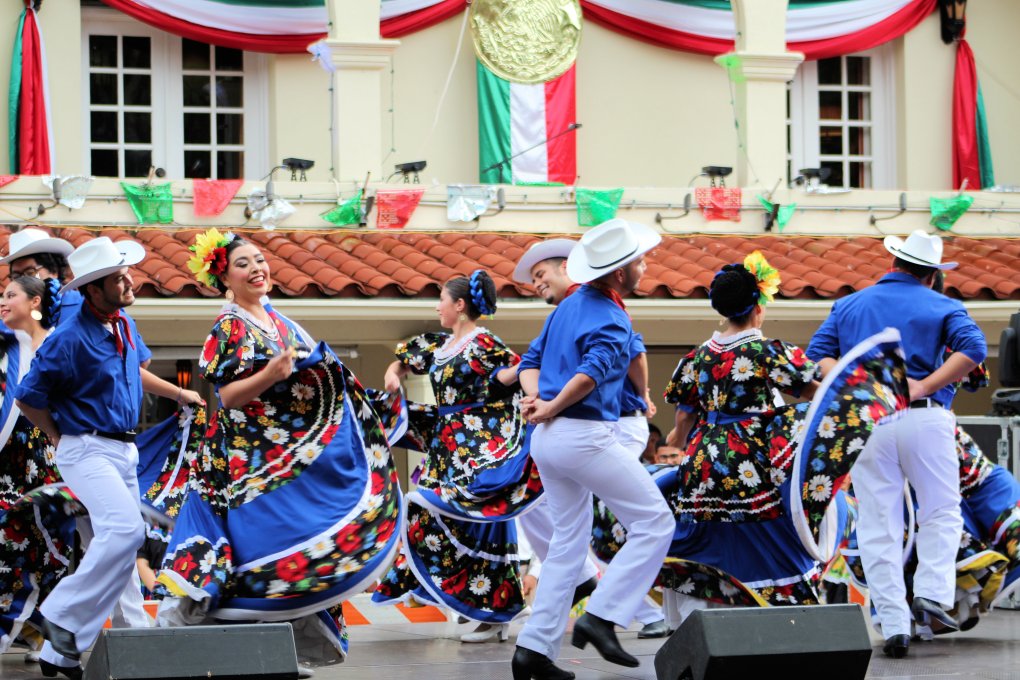
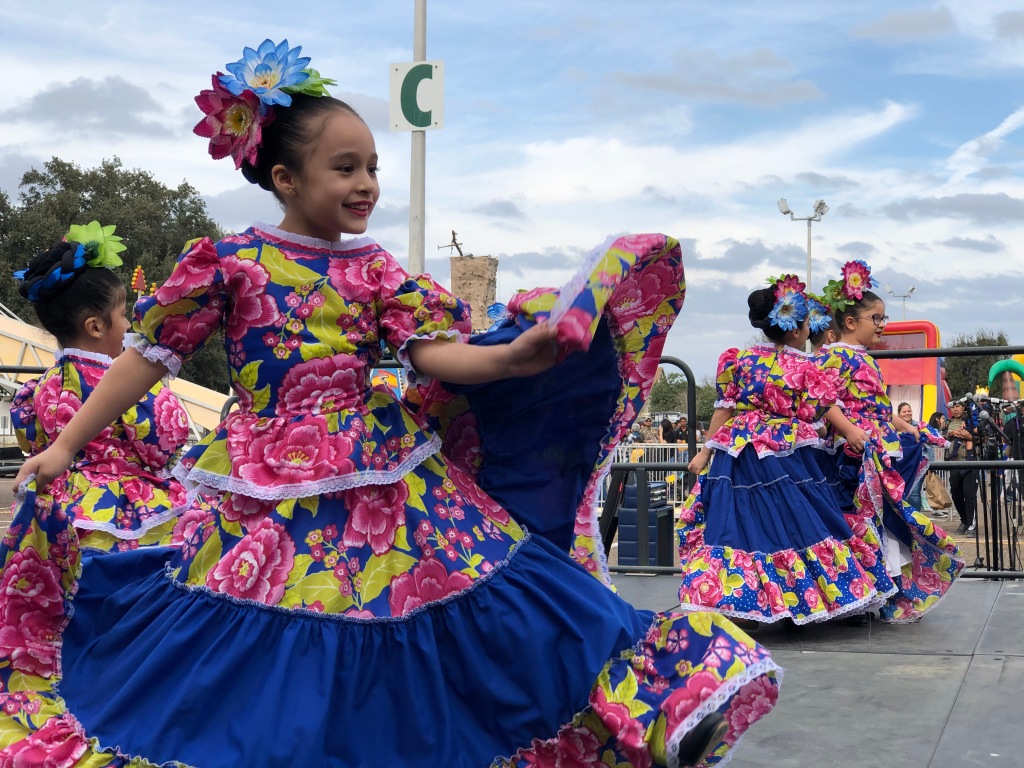
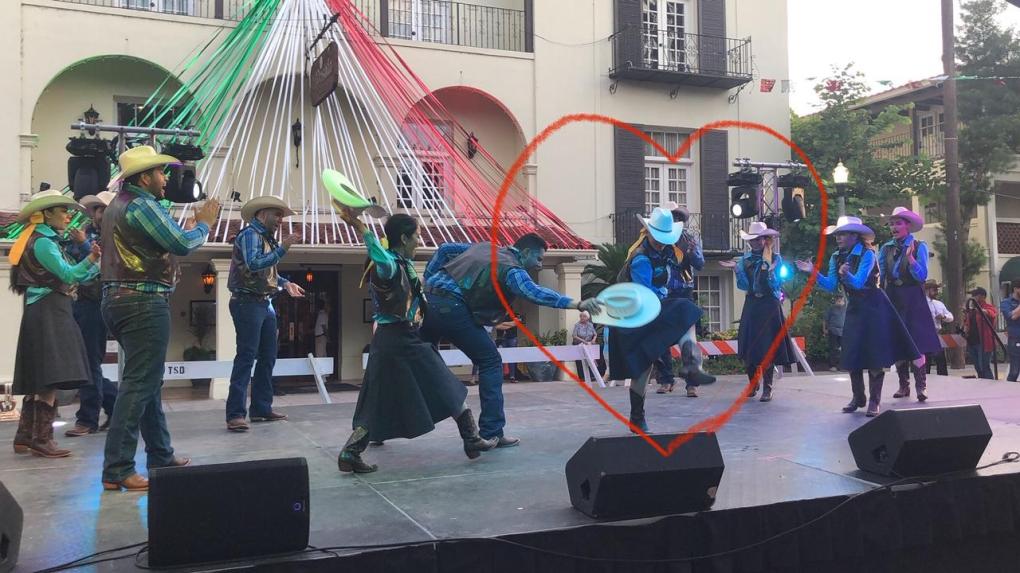

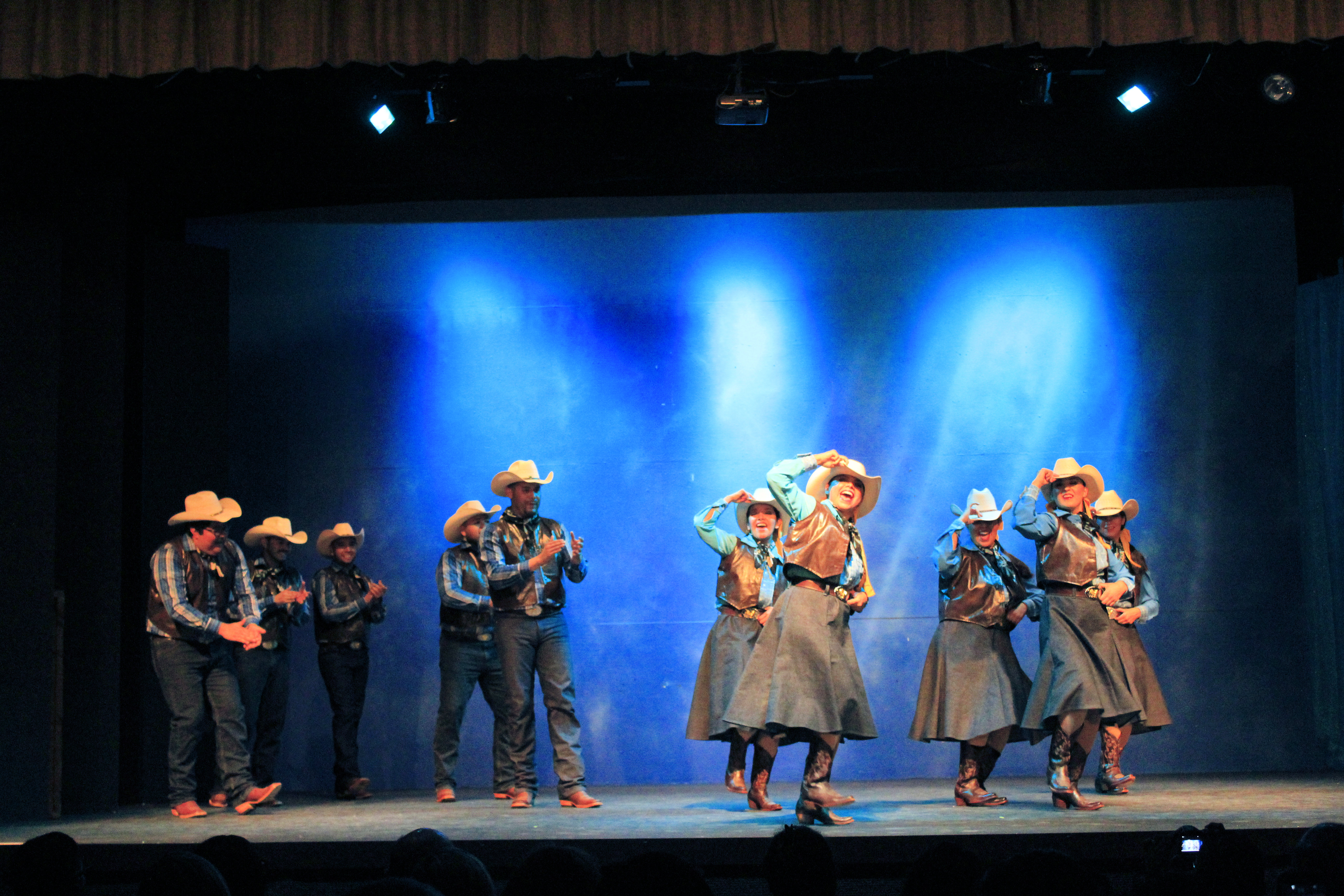
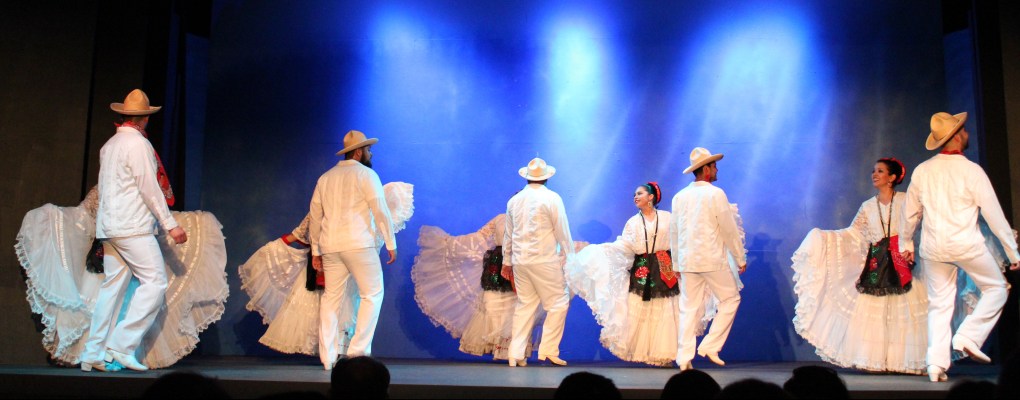


 Gabriela Mendoza-Garcia Ballet Folklorico