Chicana/o Rebellious Dancers: The Pachuco/a Zoot Suiters

This month I am writing about our Chicana/o ancestors from 1940s who showed their rebellious ways through dance, music, dress, speech, and culture. Yes, I am talking about the Zoot Suiter or the Pachucos and Pachucas of this era. As they danced the jitterbug in their zoot suits they defiantly retaliated against assimilation. Yet, this story begins with a killing….

In Los Angeles, California in 1942 Josè Díaz attended a party near Sleepy Lagoon which was a popular place for Mexican-American or Chicano youth to hang out. He was found bleeding to death. Immediately, the police began looking for the killer. They swept through Chicano neighborhoods and rounded up six hundred youths. Twenty-two Chicanos who were members of the 38th Street Gang were charged with murder and assault. Scholars who comb through historical evidence now note that this trial was unjust. This was known as the Sleepy Lagoon Incident.

Then, on June 7, 1942, Vicente Morales who wore a zoot suit took his date to the Orpheum Theatre for a night of dancing. Sometime during this evening, a group of white sailors beat him up while shouting profanities. They stripped him of his zoot suit and his girlfriend had to cover his naked, beaten body with her own coat. The police arrested him on charges of disturbing the peace. He went to jail. So, began the Zoot Suit Riots where hundreds of Service men roamed the streets of Los Angeles targeting Chicanos wearing Zoot Suits.  The pachucos were beaten in front of a crowd, stripped of their zoot suits, and arrested by police for vagrancy, disturbing the peace and other charges. The news media added to the hype by labeling the Zoot Suiters as un-American and juvenile delinquents. Eventually the Zoot Suit riots were quelled after an outcry by the Mexican government.

Why Dress in Zoot Suits?

During this time, Americans were fighting in World War II. All citizens were expected to fight for their country and support the war. Many Chicanos fought during World War II but they were still segregated in schools, movie theaters, hotels, restaurants, etc. They were discriminated against at work and were the targets of prejudice. However, the Chicana/o youths were not powerless. Instead, of succumbing to demands that they assimilate to American society. They rebelled and created the Pachuca/o style (Alvarez 2008, 155, 15-18, 78).

Rebellious Attire

The pachucos and pachucas of the 1940s were known for wearing their rebellious attire known as the Zoot Suit. Luis Alvarez in The Power of the Zoot: Youth Culture and Resistance During World War II (2008) quotes a former Zoot Suiter from Los Angeles, California.

Yeah everything was brown. And the coat came down to here [pointing to the knees], right down to here. And the silver chain from the pocket, and the wide, like a pancake, hat, with a real wide brim. …And we would dress up that like that to go to the dances. All of us. All wear the same thing. With the big chain, we’d twirl the chain (Alvarez 2008, 86).

The pachuca wore a short skirt, a pompadour hair do, and “loud” make-up. Some wore pants and blazer types shirts the equivalent of the male zoot suit (Ramírez 2002, 15).

Dancing Pachucos and Pachucas in the 1940s

The Zoot suiters of the 1940s danced the jitterbug (Delgado 1971, 5). This was a very difficult dance involving intricate footwork and partnering skills. They twisted, hopped in a synchronized, fast pace together with their dance partners. Oftentimes couples incorporated dance tricks involving amazing jumps and lifts.

Zoot suiters listened to jazz music. This music would later evolve into bebop (Alvarez 2008, 144). They also liked music by artists Artie Shaw & His Orchestra, Benny Goodman, & Harry James. They really loved dancing to the music of Louis Jordan and His Tympany Five especially the song Caldonia. Later on, they would dance to anything by Chubby Checkers (Delgado 1971, 5).

Also, new songs with pachucos as a theme became the rage. One very popular melody was the song called Pachuco Boogie by Edmundo Tostado or Don Tosti. One reason this song was so popular is because the singer uses the unique Pahcuco/a slang in a musical conversation (Alvarez 2008, 140).

Dancing the Zoot Suit Style in Folklórico

Zoot Suit style dancing gained national attention when featured in the play Zoot Suit (1979) and film (1981) by Luis Valdez. Valdez depicted pachucos and pachucas dancing with their zoot suits. With that, folklórico groups across the country began incorporating Zoot Suit style dancing in their repertoire. Frank Trujillo of The National Chicano Dance Theater based in Denver, Colorado choreographed his own Zoot Suit dance suite based upon family research (Nájera-Ramirez 2012, 172). In their program Trujillo gives a brief history of the Sleepy Lagoon incident and the Zoot Suit riots. He choreographed an entire suite of dances depicting the Zoot Suiters. The National Chicano Dance Theater toured the United States in 1980 showcasing this suite alongside other dances. (Chronology: Cuatro Epocas Program).  

At the Asociación Nacional de Grupos Folklóricos (ANGF) conference in 1982 held in Alamosa, Colorado the Bailadores del Bronce folklórico group from Seattle, Washington wowed attendees with their performed of Zoot Suit style dances (ANGF Conference IX Syllabus). Randy Robert López was a member Bailadores del Bronce and performed at the ANGF conference.  The group was directed by Elma Gonzalez Radke. He tells me that sometime between 1978 and 1979 all the dancers created these choreographies. He says that the dances were created in a collaborative effort each adding new steps and sequences (López 2019).

Lopez is pictured third from right with the Bailadores del Bronce

Also, the Grupo Folklórico Semillas de la Tierra in Alamosa, Colorado would learn these dances from Juan Rios who was a former dancer with the National Chicano Dance Theatre. They premiered their own Zoot Suit dances in the early 1980s with a poetic recitation by Abelardo Delgado. They also dedicated the Zoot Suit suite to the pachucos and pachucas of the 1940s. Nowadays as a Tejana, I have seen/heard of folklorico groups such as the University of Texas Rio Grande Valley Ballet Folklórico and the Round Rock Ballet Folklórico perform Zoot Suit style dances. I know that there are so many of us that remember the rebellious Pachuca/os through dance.

Round Rock Ballet Folklorico
Round Rock Ballet Folklorico 2018

My Thoughts

Many of us continue to create, innovate, and pass on the songs and jitterbug dance styles of the zoot suit era as a way to remember our ancestors who were unjustly targeted as anti-American. No longer wanting to fit into the melting pot they showed their unique individuality through dress, speech, music, and dance. We keep their rebellious spirit in our hearts as we perform our Zoot Suit dances.

Works Cited

Alvarez, Luis. 2008. The Power of the Zoot: Youth Culture and Resistance During World War II. Berkeley:   University of California Press.

Asociación Nacional de Grupos Folklóricos Conference IX Syllabus. 1982.

Delgado, Abelardo B. The Chicano Movement: Some Not Too Objective Observations. El Paso: Barrio Publications.

Jordan, Louis. n.d, Caldonia. Performed by Louis Jordan and His Tympany Five. https://www.youtube.com/watch?v=PR6pHtiNT_k (accessed March 28, 2019).

López, Randy Robert. 2019.Correspondence by author. March 28.

Nájera-Ramirez. Ballet Folklórico and Mexican Identity. In Dancing Cultures: Globalization,Tourism, and Identity in the Anthropology of Dance. ed. Héléne Neveu Kringelbach and Jonathan Skinner, 161-176. New York: Berghahn Books.

The National Chicano Dance Theater: Chronology-Cuatro Epocas Program. n.d.  Artes Chicanos.

Sanchez, Yolanda. 2019. Round Rock Ballet Folklorico Photograph.

Ramírez, Catherine S.  2002. “The Pachuca and Chicana Style Politics.” Meridians. 2(2): 1-35.

Tosti, Don. n.d. Pachuco Boogie. By Orquesta de Don Ramon.    https://www.youtube.com/watch?v=t1Lf81W0vpA (accessed March 29, 2019).

Photos are courtesy of the Asociación Nacional de Grupos Folklóricos and the Round Rock Ballet Folklorico

Copyright, 4/7/2019, Mendoza-Garcia

Gabriela Mendoza-García Ph.D. is an Artist and Scholar. She has her own dance school and company called the Gabriela Mendoza-García Ballet Folklórico in Laredo, Texas.  Dr. Mendoza-Garcia founded this group in 2013 and teaches children and adults of all ages. Her company consists of seasoned folklórico dancers with years of experience performing this art form. She teaches traditional Mexican folklórico dance pieces, as well as, works that are inspired by her scholarly research. Her scholarship includes: Dancing throughout Mexican History (1325-1910), History & Folklore booklet with an accompanying documentary sponsored by the Webb County Heritage Foundation, The Jarabe Tapatío: Imagining Race, Nation, Class and Gender in 1920s Mexico published by Oxford University Press, an on-line blog, writings for Asociación Nacional de Grupos Folklóricos, and others.


Dancing Nuevo Leon Central

Dancing Nuevo León Central and Chihuahua

When I was a folklórico dancer with the University of Texas Ballet Folklórico, I remember my teacher Michael Carmona taught us the polkas, redovas, and schottisches of Northern Mexico. He called it Norteño. This group was started in 1975 by UT students and my aunt Sanjuanita Martinez-Hunter. This was one of the first regions in their repertoire. By the time I attended the University of Texas at Austin some twenty-five years later or so, we continued this dance tradition of representing the entire Northern region of Mexico in a suite of dances. Afterwards, I danced with Roy Lozano’s Ballet Folklórico de Tejas which was founded in the 1980s. When I danced with Roy Lozano in the 1990s, we would perform dances representing Nuevo León and another set representing Chihuahua. Thus, no longer was the entire Northern region of Mexico depicted in a suite of dances. Today, I see folklórico groups performing the norteño dances of Durango, Nuevo León, Chihuahua, Tamaulipas, etc., as separate and distinct states. Thinking about this, I wonder what the bodily distinctions are between the dances of Nuevo León Central and Chihuahua.

Dancing the Polka, Redova, and Shotis

In folklórico, Nuevo León Central is characterized by dances that include the polka, redova, and shotis (Guerrero Hernández 2003, 35). In contrast, only the polkas characterize the folklórico dances of Chihuahua. However, according to Rito Ortega Posada, he says that if you ever travel to Chihuahua all you have to do is say “Let’s dance a few dances of Northern Mexico” and everyone will dance the redova, shotis, etc. with with you on the dance floor (Ortega Posada 2001, 73).

A Final Bow . Photograph courtesy of Jesse Solis.
A Final Bow after Dancing Chihuahua

New Choreographies

Many of the dances and music that we perform to today are derived from choreographies and compositions created in the twentieth century. In my blog post, Folklórico Dance as an Invented Tradition, I wrote about Antonio Tanguma and his famous compositions that we now dance to that represent Nuevo León. He composed the songs entitled:  El Cerro de la Silla, Evangelina, El Naranjo, Polka Alegre among others. In fact, his very first composition was composed in 1938. It was entitled De China a Bravo (Houston 2017, 107; Quiroz 2003, 88-89).

It was during the 1970s that a new style of dancing the polkas from Chihuahua emerged. This type of style is similar to what we perform today. During the 1970s composers created new songs which included: De Chihuahua a Concordia, Cierro Prieto, El Huarachazo to name a few. New dance moves with new choreographies accompanied the music (Ortega Posada 2001, 73).

Stylistic Interpretations

There are stylistic interpretations that characterize the dances of Nuevo León Central and Chihuahua.

The polkas of Nuevo León Central use the punta y talón or toe/heel combinations, carretillas accentuate the footwork when wearing boots, pespunteados y entrecruces and are marked with rapid turns that resemble the European style of dancing (Guerrero Hernández 2003, 35).

According to Vicky Barriga of the Rarajipame Ballet Folklorico Infantil, there are five different stylistic versions of dancing the polkas of Chihuahua. Maestro/as who created their own stylistic versions of Chihuahua include: Prof. Antonio Rubio of the Universidad Autonoma de Chihuahua, Leonor Avalos (considered by Barriga to be one of the great choreographer of the polkas), husband and wife duo Victor Barriga and Rita Cobos Lugo of the Rarajipame Ballet Folklórico, and Profesor Chava who choreographed dances to represent Ciudad Juárez. Barriga also mentions that we can’t forget all those dancers who participate in competitions. This is also a specific style in which they incorporate new footwork and movements to win.  Also, she mentions that Leonor Avalos revolutionized these dances by making them synonymous with the state of Chihuahua. Before Avalos the dances of Chihuahua were lumped together as dances of the norteño region. She describes Chihuahua as having distinct polkas with rapid turns that requires much agility and elegance.  Each of the maestro/as listed above put their own touch to the polkas of Chihuahua (Barriga 2019).

My Thoughts

Writing this piece, makes me realize that I still have so much to learn. I feel that I am always learning something new. How does your folklórico group embody the norteño dances?

Works Cited

Barriga,Vicky. 2019. Correspondence by author. January 31.

Houston, Ron. 2017. Folk Dances of Mexico for Grupos Folklóricos: Dances Introduced by Alura Flores and Her Students. Austin: Society of Folk Dance Historians.

Garza Quiros, Fernando. 2003. “Artisticas Destacados de Nuevo León: Antonio Tanguma.” Nuevo León: Textos del Folklore. Monterrey: Asociación Nacional de Maestros de Danza Popular Mexicana A.C.

Guerrero Hernández, Jaime. ed. 2003. “Bailes y Ritmos de la Región Central.” In Nuevo León: Textos del Folklore. Monterrey: Asociación Nacional de Maestros de Danza Popular Mexicana A.C.

Photos courtesy of Gabriela Mendoza-Garcia

Copyright, 2/10/2019, Mendoza-Garcia

Gabriela Mendoza-García Ph.D. is an Artist and Scholar. She has her own dance school and company called the Gabriela Mendoza-García Ballet Folklórico in Laredo, Texas.  Dr. Mendoza-Garcia founded this group in 2013 and teaches children and adults of all ages. Her company consists of seasoned folklórico dancers with years of experience performing this art form. She teaches traditional Mexican folklórico dance pieces, as well as, works that are inspired by her scholarly research. Her scholarship includes: Dancing throughout Mexican History (1325-1910), History & Folklore booklet with an accompanying documentary sponsored by the Webb County Heritage Foundation, The Jarabe Tapatío: Imagining Race, Nation, Class and Gender in 1920s Mexico published by Oxford University Press, an on-line blog, writings for Asociación Nacional de Grupos Folklóricos, and others.


Five Historical Facts about Las Adelitas or Las Soldaderas

Adelita is a nickname given to women soldiers or soldaderas who fought along side men in battle during Mexico’s Revolutionary War (1910-1920). Many of us depict these brave women when we perform the dances of La Revolución. I first learned La Revolución as a dancer with Roy Lozano’s Ballet Folklórico de Tejas in the 1990s. Roy Lozano, my teacher, passed on the choreographies that he learned from performing with the Ballet Folklórico de México de Amalia Hernández in the late 1970s. Following this dance tradition, I have taught these dances to my own company which have been in our own repertoire since 2003. Yet, I feel that our folklórico practice encourages a romanticized view of the las adelitas. Quite recently, I began to deep deeper into historical accounts and realized that there was so much that I didn’t know.  

  • 1. The word soldaderas refers to women who followed men in camp and those who fought in battles. During Mexico’s Revolutionary War, soldiers paid women to work on their behalf as servants. These women purchased supplies, cleaned clothes, cooked, cared for the sick, buried the dead, and some were prostitutes. Many women were expected to follow their husbands, fathers, brothers, lovers, etc. into the military. Yet, others fought in battle as soldiers, generals and colonels. They lead militias of men and women troops to fight during the Revolution (Salas 1990, xii, 44; Monsiváis 2006, 5).
Soldaderas as Camp Followers
  • 2. Not all women willingly followed men in battle. Some were abducted and raped. There are stories of young girls been taken from their homes and forced to follow the troops while their mothers cried at home. Newspaper accounts tell of women kidnapped on trains and even one reports that forty women, almost the entire female population from the village of Jojutla, were abducted by Zapatistas. Nuns were taken from their convent and forced to accompany the Carrancistas. After the war, many of these nuns were pregnant or had children of their own. Parents fought back by hiding their children in the fields, posting look outs for revolutionaries, disguising their daughters etc. (Salas 1990, 40-42).
Soldaderas during the Mexican Revolution
  • 3. Women were so very brave. They lead regiments of men in battle as colonels and generals. They also led regiments comprised entirely of women in battle. Women were sent on secret spy missions, brought ammunition to men while dodging bullets during the line of fire, and some were so courageous that they were feared and respected by men (Salas 1990, 41-43).
Soldadera on Horse
Soldadera on Horse
  • 4. As we dance Las Adelitas we wear cartridge belts around our torso, carry rifles and use a serious expression to portray these tough, courageous women. We wear skirts and blouses typical of the time period. Yet, some soldaderas dressed as men. They wore pants, shirts, or even dressed in men’s military uniforms. See pictures below.
Soldadera posing for the camera
Soldadera  Posing
Carmen Robles, Soldadera
  • 5. After the Mexican Revolutionary War, women’s military contributions were devalued. Women were not called colonels or soldiers but were listed under the general term of soldaderas. The military classified soldaderas as wives. Very few women veterans received military pensions. Most did not. Women who did receive pensions could not re-marry nor officially participate in the military (Arce 2017, 65, 82). In addition, after the Revolution, images of the soldaderas were romanticized in literature, film, art, and song. Soldaderas were not depicted as diverse, independent women many of which fought in battle but instead they were cast along four main stereotypes.  Soldaderas were characterized as either self-sacrificing, sexually carefree, sweethearts, or soldiers (Salas 1990, 69, 82).

My Thoughts

I have danced and taught the choreographies that represent La Revolución for years.Yet, I believe that a close study of history alongside our folklórico practice really allowed me the ability to fully appreciate the individual spirit of these brave and courageous women.

Written by Gabriela Mendoza-Garcia Ph.D.

Works Cited

Arce, Christine.2017. México’s Nobodies: The CulturalLegacy of the Soldadera and Afro-Mexican Woman. Albany: State University ofNew York.

Monsiváis, Carlos.2006. “Foreword.” In Sex in theRevolution: Gender, Politics, and Power in Modern Mexico, ed. JocelynOlcott, Mary Kay Vaughn, and Gabriela Cano. 1-20. Durham: Duke University Press.

Salas, Elizabeth. 1990. Soldaderas in the Mexican Revolution: Myth and History. Austin: The University of Texas Press.

FurtherReading

Craske, Nikki. “Ambiguities and Ambivalences in Making the Nation: Women and Politics in 20th Century Mexico.” Feminist Review.79 (2005) 116-133.

Olcott, Jocelyn, Mary Kay Vaughn, and Gabriela Cano. 2006. Sex and the Revolution: Gender,  Politics, and Power in Modern Mexico. Durham: Duke University Press.

Poniatowska,Elena, 2016. Hasta no verte Jesús mío.Madrid: Alianza Literaria.

Schaefer, Claudia. 1992. Textured Lives: Women, Art, and Representation in Modern Mexico. Tucson: The University of Arizona Press.

Turner, Frederick C. 1967. “Los Efectos de la Participación Femenina en la Revolución de 1910.” Historia Mexicana. 16 no. 4 (April-June): 603-620.

All photos are in the public domain.

Copyright, 1/6/2019, Mendoza-Garcia

Gabriela Mendoza-García Ph.D. is an Artist and Scholar. She has her own dance school and company called the Gabriela Mendoza-García Ballet Folklórico in Laredo, Texas.  Dr. Mendoza-Garcia founded this group in 2013 and teaches children and adults of all ages. Her company consists of seasoned folklórico dancers with years of experience performing this art form. She teaches traditional Mexican folklórico dance pieces, as well as, works that are inspired by her scholarly research. Her scholarship includes: Dancing throughout Mexican History (1325-1910), History & Folklore booklet with an accompanying documentary sponsored by the Webb County Heritage Foundation, The Jarabe Tapatío: Imagining Race, Nation, Class and Gender in 1920s Mexico published by Oxford University Press, an on-line blog, writings for Asociación Nacional de Grupos Folklóricos, and others.


Dancing Throughout Mexican History (132-1910)

How do Folklorico Dancers Embody the Son?

 The Son -Mexico’s  Dance                                                                                                  

Mestizo folk music was born from the blend of the Indigenous and Spanish cultures in Mexico. In the seventeenth century, a new variety of generic song and dance, the son (peasant song) appeared. (Scholars today acknowledge the son as having mestizo, Indigenous, and African influences). As the son became popular, those sones which were native to a particular locale were called sones de la tierra. By the nineteenth century, sones were identifiable as typically Mexican. Sones are popularly sung and danced throughout Mexico. The huapango, the jarana, the Chilean son, the son jarocho, and the jarabe are all sones which stem from the Spanish zapateado steps, dances, and music. Most sones developed from Spanish peasant or rural music. A son differs from other music in its “form, rhythm, choreography, and textual content.” Its characteristic “unequal triple rhythm” is based on “patterns of six beats.”

Dancing to a Son
Independent couples dance sones, many of which are distinguished by the rapid action of the feet in a zapateado. The zapateado serves as accompaniment to the music when the rhythm of the dancers’ feet produce percussion-type sounds. The zapateado’s percussive accompaniment and many of the melodic instruments, such as the violin, stop while the lyrics of the son are sung. A zapateado produces its sound by the fast stamping of the feet on hard ground or on a raised wooden platform called a tarima. As “one of the universal traits of the son,” the zapateado is also a particular kind or type of son. Many of the sones from southern Mexico which are accompanied by marimba music are generally known as zapateados. Many of these belong to the repertory of sones de marimba or sones istmeños.

Lyrics of a Son
Lyrics for sones are usually written in rhyming couplets with eight-syllables in each line. The son usually opens with a dedication of the performance either to the gracious audience, to a particular important individual in the audience, or to beauty in individuals or in nature. The couplets of the sones often weave colorful tapestries of men and women in love surrounded by the beauties of nature. Malageña, a love overture to a girl from Malaga in Spain; Petenera, a tragedy about sailors set to unusually lively rhythm; and Indita, a description for the passion of Indigenous women are three typical sones that are appropriate for singing only.
In this book, Martinez-Hunter continues to describe the different types of dances that sones are performed to. These include the chilena, huapango, son jarocho, jarana, and the jarabe.

My Thoughts                                                                                                                                      

The sones and jarabes are still popular even today in the 21st century. We dance sones and jarabes from the states of Nayarit, Tamualipas, Jalisco, Veracruz to name a few.  A few of us living in the United States even create our own choreographies to the sones of Mexico.

Photos courtesy of Gabriela Mendoza-Garcia

Copyright, 10/14/2018, Mendoza-Garcia

Gabriela Mendoza-García Ph.D. is an Artist and Scholar. She has her own dance school and company called the Gabriela Mendoza-García Ballet Folklórico in Laredo, Texas.  Dr. Mendoza-Garcia founded this group in 2013 and teaches children and adults of all ages. Her company consists of seasoned folklórico dancers with years of experience performing this art form. She teaches traditional Mexican folklórico dance pieces, as well as, works that are inspired by her scholarly research. Her scholarship includes: Dancing throughout Mexican History (1325-1910), History & Folklore booklet with an accompanying documentary sponsored by the Webb County Heritage Foundation, The Jarabe Tapatío: Imagining Race, Nation, Class and Gender in 1920s Mexico published by Oxford University Press, an on-line blog, writings for Asociación Nacional de Grupos Folklóricos, and others.


Folklorico Books for Every Folklorista’s Collection

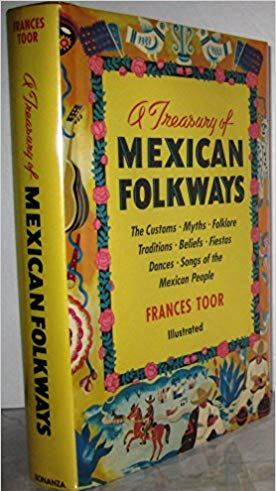
Part of our responsibilities as Folkloristas is to research using books, newspapers, archives, oral histories, and bodily transmissions. We need to fully engage as practitioners of our art form. Our choreographies need to be grounded in theory, text, oral/bodily accounts, and especially in history to create and/or transmit them.  Part of this process involves collecting books written by scholars/artists that we can use as a reference. Every Folklorista that I know has their own book collection that they use to inspire their choreographies and learn more about our history. So, this month I decided to share with you my favorite books that have helped me as a scholar, writer, and choreographer. So, here it goes… Read More


Was Aztec Dance Humorous?

Today, in the twenty-first century I have seen many, many Aztec dances as performed by different folklorico groups[1]. Usually, when we perform the Aztec dances they are depicted as very solemn and part of a ritual ceremony. It is true that the Aztecs did dance as part of religious celebrations.  They also danced war and victory dances. Yet, not all the Aztec dances were serious.  Some of these dances were humorous and meant to entertain. The following is an excerpt from the book Dancing Throughout Mexico (1325-1910) as written by Sanjuanita Martínez-Hunter and edited by myself.

Read More

Creation, Growth, and Inspiration: The Beginnings of the Asociación Nacional de Grupos Folklóricos (1974-1976)

This article was written specifically for the Asociación Nacional de Grupos Folkloricos in 2016. This blog post includes an excerpt. To read the article in its entirety please click on the link below

Asociación Nacional de Grupos Folklóricos

As I write this account, I note that it has been forty-one years since the Asociación Nacional de Grupos Folklóricos or ANGF first began as a non-profit organization. The purpose of ANGF is “to serve as a voice for the promotion and preservation of Mexican folklore traditions…”  This is accomplished by organizing an annual conference whereby participants meet to learn regional dances, music, and traditions of Mexico and Latin America countries by renown teachers. Read More


Alura Flores de Angeles “Godmother of Mexican Folk Dance” (1905-2000)

Alura Flores de Angeles was a woman who was ahead of her times. She was born in 1905 the daughter of an indigenous man from Xochimilco and an American born Protestant missionary. At a time in Mexico when more than 50 percent of the population was illiterate, Flores de Angeles graduated from the National Preparatory School in San Ildelfonso in 1924. She was a star athlete who participated in the swim, volleyball, and basketball teams. She graduated from the Universidad Nacional Autónoma de México (UNAM) majoring in Physical Education. Flores de Angeles stated that as part of her Physical Education training she learned Mexican folkloric dances.

Read More

Folkloric Dance as an Ever-Changing Tradition

I am amazed at how many Mexican folkloric dances were cataloged and recorded by teachers of the Secretaria de Educacion Publica by 1934. In his writings, Carlos Merida, Director of Mexico’s School of Dance during the early 1930s, listed so many dances that are now well beloved. For example, a few of the dances that he listed included the danza de los viejitos, danza de los negritos, sones huastecos, sones costenos, jarabe tapatio, etc. Then, in the 1970s there was another government led movement by Mexican President Luis Echevarria (1970-1976) to collect and document the folkloric dances of Mexico. Many of these dances are performed in the repertoire of folkloric dance groups today. Of course, we also have the many dances that were specifically created for the stage such as the dances of Sinaloa, Nayarit Costa, Flor de Piňa from Oaxaca and the list continues. I argue that all of these dances have evolved and changed with time. No matter how hard we try to “preserve” dances so that they remain the same, dance and music traditions do not stay static but are fluid. As folkloristas we are involved in this movement to continue dance traditions that have been passed on from one generation to another.

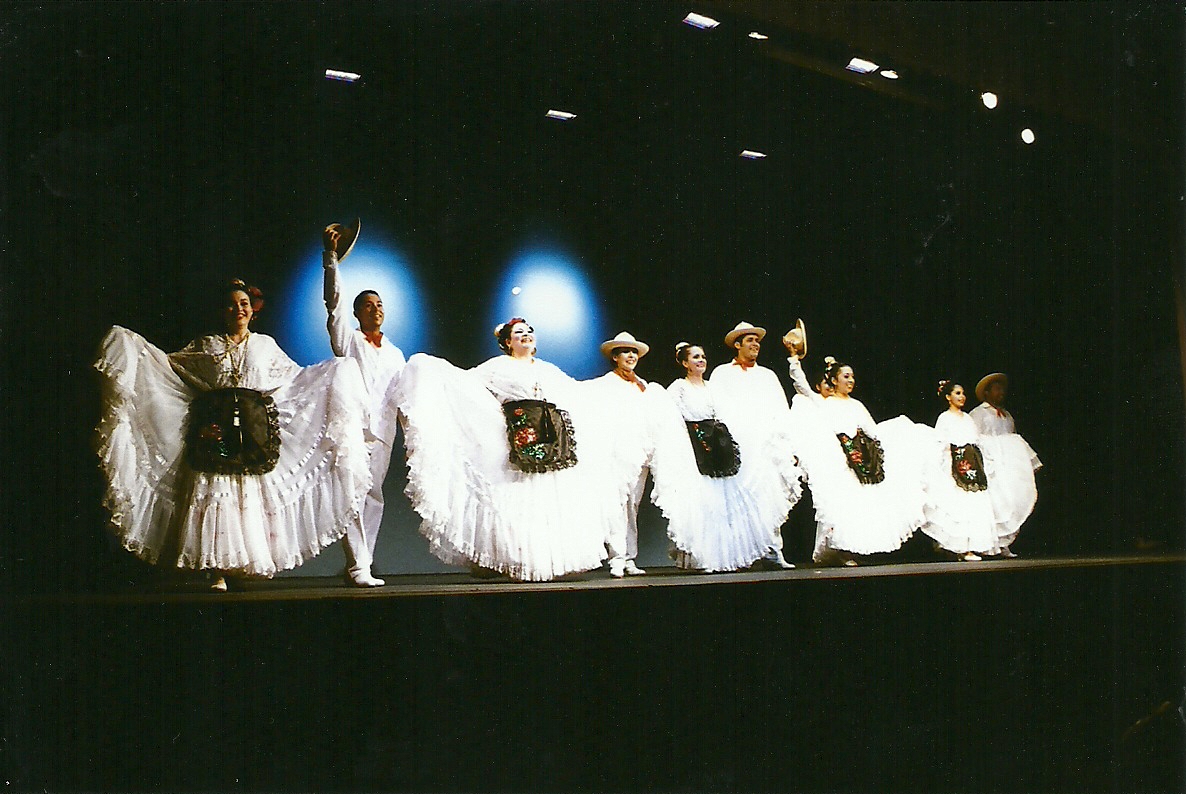
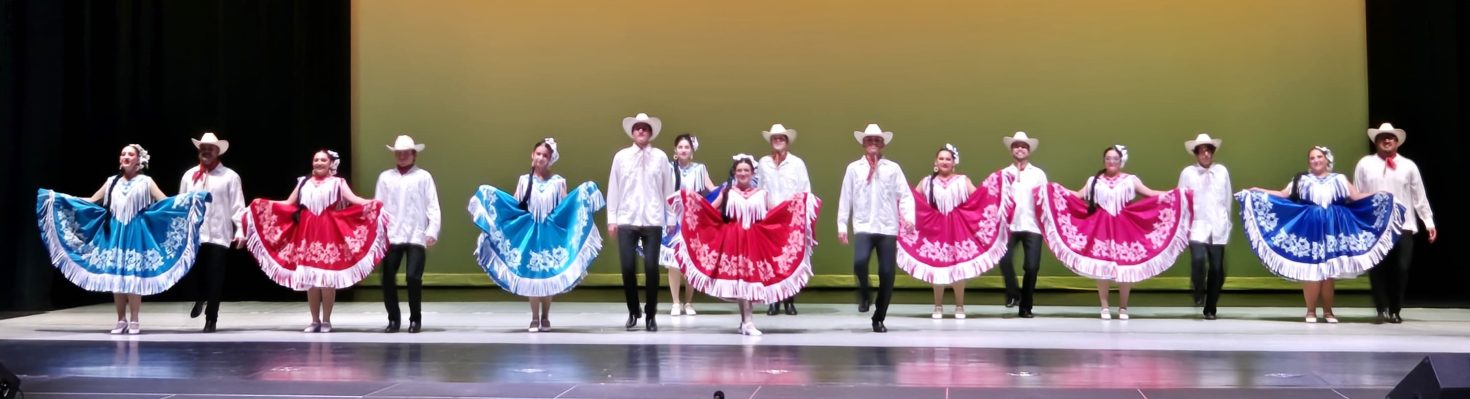
These photos taken almost one hundred years apart attest to the ever-changing dynamic of the folkloric dance movement as it travels throughout the world.

Copyright, 1/28/2015, Mendoza-Garcia

Gabriela Mendoza-García Ph.D. is an Artist and Scholar. She has her own dance school and company called the Gabriela Mendoza-García Ballet Folklórico in Laredo, Texas.  Dr. Mendoza-Garcia founded this group in 2013 and teaches children and adults of all ages. Her company consists of seasoned folklórico dancers with years of experience performing this art form. She teaches traditional Mexican folklórico dance pieces, as well as, works that are inspired by her scholarly research. Her scholarship includes: editing the book Dancing throughout Mexican History (1325-1910), History & Folklore booklet with an accompanying documentary sponsored by the Webb County Heritage Foundation, The Jarabe Tapatío: Imagining Race, Nation, Class and Gender in 1920s Mexico published by Oxford University Press, an on-line blog, writings for Asociación Nacional de Grupos Folklóricos, and others.