Celebrating Dia de los Muertos

Celebrating Dia de los Muertos Folklorico Style

When I first started dancing folklorico as a college student at the University of Texas at Austin, my dance teacher, Michael Carmona, told us about Dia de los Muertos. I remember painting my face like a skeleton and dancing in our community in celebration of our ancestors. I have noticed that with the release of the Disney movie Coco, it seems like this event is even more popular than ever. Yet, I notice that when we dance as skeletons our movements take on additional meanings.

What is Dia de los Muertos? 

Dia de los Muertos is translated as Day of the Dead in English. It is celebrated on November 1 and 2 in Mexico and all around the world. Mexicans believe that on these days the souls of the departed return to earth to visit their family and friends.

What is the history of Dia de los Muertos?

Dancing as Muertos
Dancing as Muertos

It is very difficult to pinpoint the origin of anything. However, scholars acknowledge that the customs surrounding Dia de los Muertos have an indigenous influence. For example, the Aztec people held special offerings and ceremonies to honor children and adults who had died. It was known asMiccailhuitontli and Miccailhuitl which is translated as Little Feast of the Dead and Great Feast of the Dead. This is just one example because Mexico is a very ethnically diverse country whereby indigenous andmestizo groups celebrated the death of their loved ones through song, dance, ritual, and offerings. In the sixteenth century with the Spanish conquest of Mexico, Catholic friars noticed that the indigenous people incorporated their own ceremonies celebrating the dead during the Catholic feast day of All Souls Day.

How do we celebrate Dia de los Muertos today?

Loved ones prepare for a visit by the deceased by creating an altar that is displayed in their home. The altar is decorated with all the favorite items of the departed including pictures. In addition, food is prepared and placed on the altar so that the loved one may return and partake. In my city of Laredo, Texas, many celebrate by visiting the cemetery and put flowers on the graves. Others attend a mass in memory of their loved ones. Many buy pan de muerto (bread of the dead) which is a type of sweat bread that has bone shapes and is sold at the local bakeries.  Different villages, cities, and regions celebrate this custom in many different ways.

Who was José Guadalupe Posada?
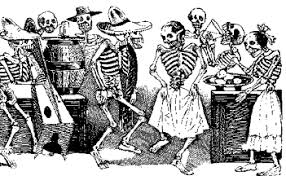
José Guadalupe Posada (1851-1913) was an illustrator, print maker that worked for many different Mexican periodicals and presses. He is most known for his illustrations of calaveras (skulls) that were dressed in fancy clothing and infused with political satire. One of his most popular drawings was of a rich, female skeleton wearing a fancy hat with a feather on it. Posada dubbed this drawing La Calavera de la Catrina. Posada’s skeletal illustrations were not greatly appreciated until after his death. Since the 1920s and 1930s these skeletal images have been closely associated with celebrations of Dia de los Muertos.

How is Dia de los Muertos a Bodily Memory?
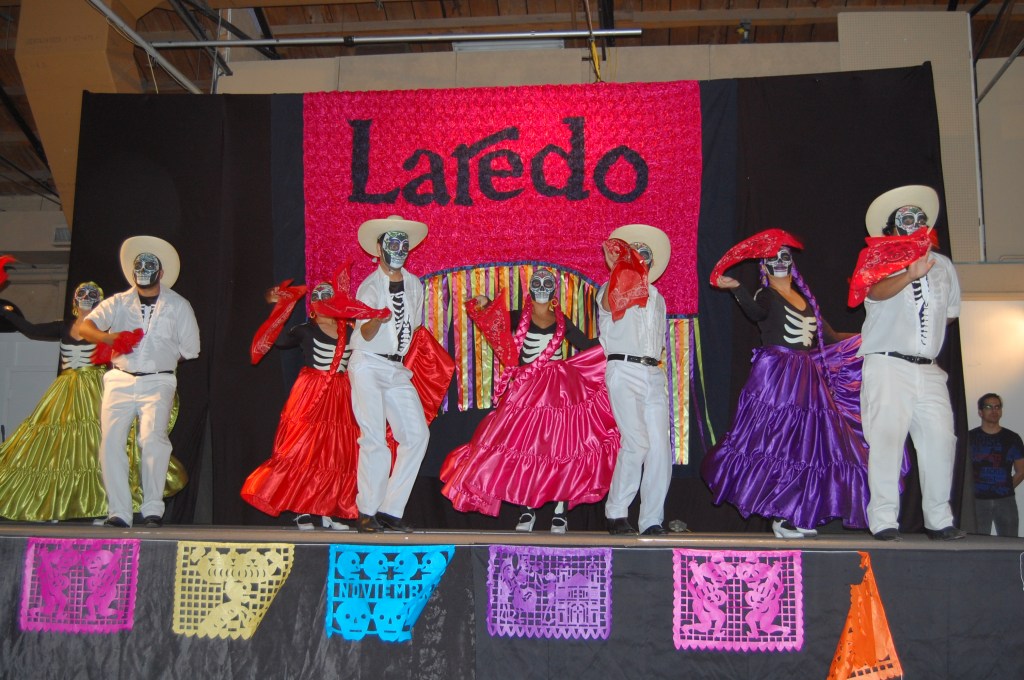
Los Muertos Bailan

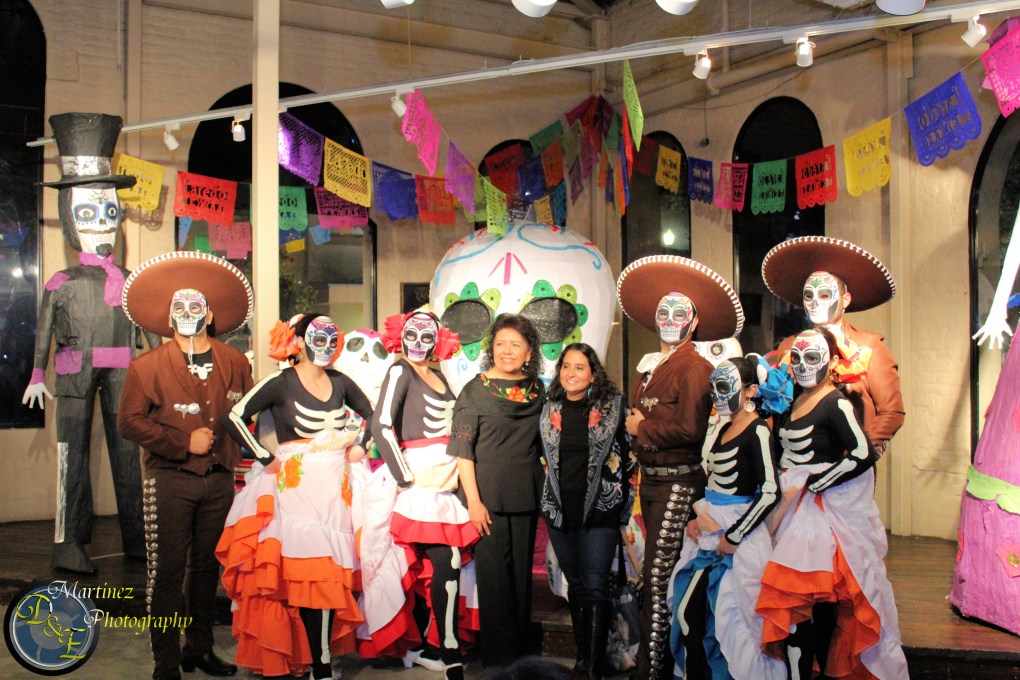
Folklorico dance groups celebrate Dia de los Muertos by dancing with their faces painted as skulls. Then, our dances take on additional meanings. Yes, we are still performing our Mexican cultural history when we dance. Yet, on Dia de los Muertos we are also performing as skeletons bringing to life the bodily memories of our ancestors. Oftentimes, when the dancers perform it may appear that the skeletal Catrina image depicted by Posada has come to life. I usually dedicate my own dancing to my beloved father, grandparents, aunt and my loved ones who are no longer physically on this earth. I remember them with every zapateado, grito, and skirt flourish. Sometimes I can feel their presence with me even stronger. This is the power of our dancing.

Works Cited

Berdecio, Roberto and Appelbaum, Stanley. Eds. Posada’s Popular Mexican Prints. Mineola: Dover Publications Inc., 1972. Print.

Carmichael, Elizabeth and Chloë Sayer. The Skeleton at the Feast: Day of the Dead in Mexico. Austin:  University of Texas Press, 1991. Print.

Delsol, Christine. “La Catrina: Mexico’s Game of Death.” SF Gate. October. 2011. Web. 6 May. 2014.

Photos courtesy of Gabriela Mendoza-Garcia or are in the public domain.

Copyright, 10/28/2019, Mendoza-Garcia

Gabriela Mendoza-García Ph.D. is an Artist and Scholar. She has her own dance school and company called the Gabriela Mendoza-García Ballet Folklórico in Laredo, Texas.  Dr. Mendoza-Garcia founded this group in 2013 and teaches children and adults of all ages. Her company consists of seasoned folklórico dancers with years of experience performing this art form. She teaches traditional Mexican folklórico dance pieces, as well as, works that are inspired by her scholarly research. Her scholarship includes: Dancing throughout Mexican History (1325-1910), History & Folklore booklet with an accompanying documentary sponsored by the Webb County Heritage Foundation, The Jarabe Tapatío: Imagining Race, Nation, Class and Gender in 1920s Mexico published by Oxford University Press, an on-line blog, writings for Asociación Nacional de Grupos Folklóricos, and others.


Dancing Nuevo Leon Central

Dancing Nuevo León Central and Chihuahua

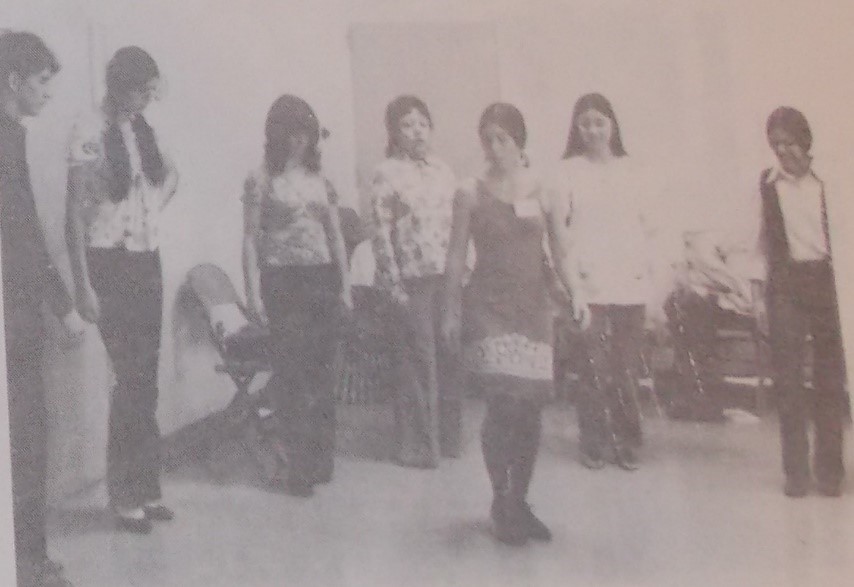
When I was a folklórico dancer with the University of Texas Ballet Folklórico, I remember my teacher Michael Carmona taught us the polkas, redovas, and schottisches of Northern Mexico. He called it Norteño. This group was started in 1975 by UT students and my aunt Sanjuanita Martinez-Hunter. This was one of the first regions in their repertoire. By the time I attended the University of Texas at Austin some twenty-five years later or so, we continued this dance tradition of representing the entire Northern region of Mexico in a suite of dances. Afterwards, I danced with Roy Lozano’s Ballet Folklórico de Tejas which was founded in the 1980s. When I danced with Roy Lozano in the 1990s, we would perform dances representing Nuevo León and another set representing Chihuahua. Thus, no longer was the entire Northern region of Mexico depicted in a suite of dances. Today, I see folklórico groups performing the norteño dances of Durango, Nuevo León, Chihuahua, Tamaulipas, etc., as separate and distinct states. Thinking about this, I wonder what the bodily distinctions are between the dances of Nuevo León Central and Chihuahua.

Dancing the Polka, Redova, and Shotis

In folklórico, Nuevo León Central is characterized by dances that include the polka, redova, and shotis (Guerrero Hernández 2003, 35). In contrast, only the polkas characterize the folklórico dances of Chihuahua. However, according to Rito Ortega Posada, he says that if you ever travel to Chihuahua all you have to do is say “Let’s dance a few dances of Northern Mexico” and everyone will dance the redova, shotis, etc. with with you on the dance floor (Ortega Posada 2001, 73).

A Final Bow . Photograph courtesy of Jesse Solis.
A Final Bow after Dancing Chihuahua

New Choreographies

Many of the dances and music that we perform to today are derived from choreographies and compositions created in the twentieth century. In my blog post, Folklórico Dance as an Invented Tradition, I wrote about Antonio Tanguma and his famous compositions that we now dance to that represent Nuevo León. He composed the songs entitled:  El Cerro de la Silla, Evangelina, El Naranjo, Polka Alegre among others. In fact, his very first composition was composed in 1938. It was entitled De China a Bravo (Houston 2017, 107; Quiroz 2003, 88-89).

It was during the 1970s that a new style of dancing the polkas from Chihuahua emerged. This type of style is similar to what we perform today. During the 1970s composers created new songs which included: De Chihuahua a Concordia, Cierro Prieto, El Huarachazo to name a few. New dance moves with new choreographies accompanied the music (Ortega Posada 2001, 73).

Stylistic Interpretations

There are stylistic interpretations that characterize the dances of Nuevo León Central and Chihuahua.

The polkas of Nuevo León Central use the punta y talón or toe/heel combinations, carretillas accentuate the footwork when wearing boots, pespunteados y entrecruces and are marked with rapid turns that resemble the European style of dancing (Guerrero Hernández 2003, 35).

According to Vicky Barriga of the Rarajipame Ballet Folklorico Infantil, there are five different stylistic versions of dancing the polkas of Chihuahua. Maestro/as who created their own stylistic versions of Chihuahua include: Prof. Antonio Rubio of the Universidad Autonoma de Chihuahua, Leonor Avalos (considered by Barriga to be one of the great choreographer of the polkas), husband and wife duo Victor Barriga and Rita Cobos Lugo of the Rarajipame Ballet Folklórico, and Profesor Chava who choreographed dances to represent Ciudad Juárez. Barriga also mentions that we can’t forget all those dancers who participate in competitions. This is also a specific style in which they incorporate new footwork and movements to win.  Also, she mentions that Leonor Avalos revolutionized these dances by making them synonymous with the state of Chihuahua. Before Avalos the dances of Chihuahua were lumped together as dances of the norteño region. She describes Chihuahua as having distinct polkas with rapid turns that requires much agility and elegance.  Each of the maestro/as listed above put their own touch to the polkas of Chihuahua (Barriga 2019).

My Thoughts

Writing this piece, makes me realize that I still have so much to learn. I feel that I am always learning something new. How does your folklórico group embody the norteño dances?

Works Cited

Barriga,Vicky. 2019. Correspondence by author. January 31.

Houston, Ron. 2017. Folk Dances of Mexico for Grupos Folklóricos: Dances Introduced by Alura Flores and Her Students. Austin: Society of Folk Dance Historians.

Garza Quiros, Fernando. 2003. “Artisticas Destacados de Nuevo León: Antonio Tanguma.” Nuevo León: Textos del Folklore. Monterrey: Asociación Nacional de Maestros de Danza Popular Mexicana A.C.

Guerrero Hernández, Jaime. ed. 2003. “Bailes y Ritmos de la Región Central.” In Nuevo León: Textos del Folklore. Monterrey: Asociación Nacional de Maestros de Danza Popular Mexicana A.C.

Photos courtesy of Gabriela Mendoza-Garcia

Copyright, 2/10/2019, Mendoza-Garcia

Gabriela Mendoza-García Ph.D. is an Artist and Scholar. She has her own dance school and company called the Gabriela Mendoza-García Ballet Folklórico in Laredo, Texas.  Dr. Mendoza-Garcia founded this group in 2013 and teaches children and adults of all ages. Her company consists of seasoned folklórico dancers with years of experience performing this art form. She teaches traditional Mexican folklórico dance pieces, as well as, works that are inspired by her scholarly research. Her scholarship includes: Dancing throughout Mexican History (1325-1910), History & Folklore booklet with an accompanying documentary sponsored by the Webb County Heritage Foundation, The Jarabe Tapatío: Imagining Race, Nation, Class and Gender in 1920s Mexico published by Oxford University Press, an on-line blog, writings for Asociación Nacional de Grupos Folklóricos, and others.


Dancing Throughout Mexican History (132-1910)

How do Folklorico Dancers Embody the Son?

 The Son -Mexico’s  Dance                                                                                                  

Mestizo folk music was born from the blend of the Indigenous and Spanish cultures in Mexico. In the seventeenth century, a new variety of generic song and dance, the son (peasant song) appeared. (Scholars today acknowledge the son as having mestizo, Indigenous, and African influences). As the son became popular, those sones which were native to a particular locale were called sones de la tierra. By the nineteenth century, sones were identifiable as typically Mexican. Sones are popularly sung and danced throughout Mexico. The huapango, the jarana, the Chilean son, the son jarocho, and the jarabe are all sones which stem from the Spanish zapateado steps, dances, and music. Most sones developed from Spanish peasant or rural music. A son differs from other music in its “form, rhythm, choreography, and textual content.” Its characteristic “unequal triple rhythm” is based on “patterns of six beats.”

Dancing to a Son
Independent couples dance sones, many of which are distinguished by the rapid action of the feet in a zapateado. The zapateado serves as accompaniment to the music when the rhythm of the dancers’ feet produce percussion-type sounds. The zapateado’s percussive accompaniment and many of the melodic instruments, such as the violin, stop while the lyrics of the son are sung. A zapateado produces its sound by the fast stamping of the feet on hard ground or on a raised wooden platform called a tarima. As “one of the universal traits of the son,” the zapateado is also a particular kind or type of son. Many of the sones from southern Mexico which are accompanied by marimba music are generally known as zapateados. Many of these belong to the repertory of sones de marimba or sones istmeños.

Lyrics of a Son
Lyrics for sones are usually written in rhyming couplets with eight-syllables in each line. The son usually opens with a dedication of the performance either to the gracious audience, to a particular important individual in the audience, or to beauty in individuals or in nature. The couplets of the sones often weave colorful tapestries of men and women in love surrounded by the beauties of nature. Malageña, a love overture to a girl from Malaga in Spain; Petenera, a tragedy about sailors set to unusually lively rhythm; and Indita, a description for the passion of Indigenous women are three typical sones that are appropriate for singing only.
In this book, Martinez-Hunter continues to describe the different types of dances that sones are performed to. These include the chilena, huapango, son jarocho, jarana, and the jarabe.

My Thoughts                                                                                                                                      

The sones and jarabes are still popular even today in the 21st century. We dance sones and jarabes from the states of Nayarit, Tamualipas, Jalisco, Veracruz to name a few.  A few of us living in the United States even create our own choreographies to the sones of Mexico.

Photos courtesy of Gabriela Mendoza-Garcia

Copyright, 10/14/2018, Mendoza-Garcia

Gabriela Mendoza-García Ph.D. is an Artist and Scholar. She has her own dance school and company called the Gabriela Mendoza-García Ballet Folklórico in Laredo, Texas.  Dr. Mendoza-Garcia founded this group in 2013 and teaches children and adults of all ages. Her company consists of seasoned folklórico dancers with years of experience performing this art form. She teaches traditional Mexican folklórico dance pieces, as well as, works that are inspired by her scholarly research. Her scholarship includes: Dancing throughout Mexican History (1325-1910), History & Folklore booklet with an accompanying documentary sponsored by the Webb County Heritage Foundation, The Jarabe Tapatío: Imagining Race, Nation, Class and Gender in 1920s Mexico published by Oxford University Press, an on-line blog, writings for Asociación Nacional de Grupos Folklóricos, and others.
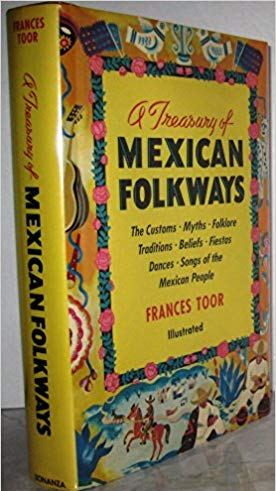

Gabriela Mendoza-Garcia Ballet Folklorico Dancing Veracruz

Transformations of Folklorico

In the book Hybrid Cultures: Strategies for Entering and Leaving Modernity (1995), Néster García Canclini argues that traditional practices that identify us as a nation or people are highly valued. They are thought of as a treasure from the past and are so valuable that we imagine them as beyond question. We are so intent on preserving, restoring, and disseminating these traditions that we fail to see the ways in which these traditions interact, contradict, and respond to modern day influences. Canclini continues by stating that some people believe that folklore should remain unchanged, and that progress as well as modern communication alters and destroys it and makes it lose its identity. Instead, he argues that modern influences do not erase folklore but instead transform it (108, 148-149). I have noticed this same line of thought amongst folkloristas. We love our dances so much that we fail to realize just how much these dances continue to be transformed by history, politics, and modern day influences. I argue that these dance influences are part of a circular pattern where the communities are influenced by modern day politics, trends and vice versa. Plus, as Canclini mentions it is so important is to think through the contradictions expressed within these dance practices.

Folklorico Transforms throughout History

Thinking through Canclini’s ideas, let’s use a historic example from the book Dancing Throughout Mexican History 1325-1910 (2018) as written by Sanjuanita Martínez-Hunter and edited by myself to show the ways in which folklorico dance is transformed based upon political upheavals. The following is an excerpt.

The Spanish conquistadors came to forcefully impose their way of life and morality on the Aztec people. The conquerors saw no value in the Indigenous culture or religion…..[1]

However, the Spanish conquerors faced the problem that many thousands of their Indigenous subjects worshipped through dance. Desiring at all cost to save the souls of the newly conquered people, the conquistadors incorporated polytheistic festivities and dance into their sacramental rites. In their eyes, substituting the symbols and deity of Christianity for the polytheistic motifs and deities while preserving the pomp and color of polytheistic ceremonies helped actualize the transition from the sinful life of certain damnation to the holy life of eternal joy.[2]

As the acculturation progressed, the religious fiestas changed in form. Ancient deities who had presided over the festive rituals were replaced by the patron saints of Christianity. Dance included themes such as the struggle between Christianity and atheism, the medieval Crusades, and even the Spanish Conquest (43).[3]

In her writings, Martínez-Hunter continues to describe the ways in which the indigenous people also changed their dances using new dance movements, musical instruments, and themes of the time period. In other words, the indigenous people and the colonizers were influenced by each other and made changes to the dances to transform them. They did not stay the same during times of political unrest, uncertainty, or peace. Instead, Canclini urges us to examine the many contradictions that these dances express.

Folklorico is Constantly Changing Even Today

Now, let’s thinks of a more contemporary example which shows the ways in which Mexican folklorico dances are influenced by and react to contemporary dance trends.  Folklorico dance companies are known for their staged presentations of dances as performed by a community of people. Anthony Shay in “Choreographing Identities: Folk Dance, Ethnicity, and Festival in the United States and Canada” (2006) argues that dance communities borrow styles and ideas from folkloric dance companies. He quotes an interview in which Amalia Hernández of the Ballet Folklórico de México recounted the following story:

With only a small trace of irony, Hernandez describes being invited to judge a contest of traditional dancing in culturally conservative Veracruz. Watching the competition, Hernandez discovered that the participants were openly incorporating steps she had invented for her classic Ballet Folklórico de México suite. “I didn’t say a thing” she recalls with a big smile. “The tradition is like a river of style that goes on (Segal 1997, 67).”

This is yet another example showing the ways in which dance influences are two-fold and form a circular pattern. In other words, just as we are influenced by the dances of the community of people they are influenced by the folkloric dances presented by companies on stage, on television, via the internet etc. Both examples reveal this circular effect, where communities inspire the staging of the dances and vice versa. By carefully analyzing the dances, we can start thinking about the contradictions expressed.

My Thoughts

I argue that folklorico dances are influenced by their historic and political surroundings, as well as, modern day influences. In addition, they are dynamic, fluid and travel across communities in a circular manner.  It’s time we start analyzing the dances to think about the many contradictions they express. What do you think?

Announcement: The book Dancing Throughout Mexican History (1325-1910) by Sanjuanita Martínez-Hunter and edited by Gabriela Mendoza-Garcia is scheduled to be released in October 2018. It will be available for purchase through amazon. I will post more details at a later date.

Works Cited

Martínez-Hunter, Sanjuanita. Dancing Throughout Mexican History (1325-1910). South Carolina: Mexico Lindo Press, 2018.

Shay, Anthony. Choreographing Politics: State Folk Dance Companies, Representation, and Power. Connecticut: Wesleyan University Press, 2002.

Footnotes

[1] Anne Schley Duggan, et.al., Folk Dances of the United States and Mexico (New York: A.S. Barnes and Company, 1948), p. 103.

[2] Ibid.

[3] Luis Covarrubias, Regional Dances of Mexico (México: Fischgrund Litographia Record, n.d.), p. 34.

All photos courtesy of Gabriela Mendoza-Garcia

Copyright, 9/9/2018, Mendoza-Garcia

Gabriela Mendoza-García Ph.D. is an Artist and Scholar. She has her own dance school and company called the Gabriela Mendoza-García Ballet Folklórico in Laredo, Texas.  Dr. Mendoza-Garcia founded this group in 2013 and teaches children and adults of all ages. Her company consists of seasoned folklórico dancers with years of experience performing this art form. She teaches traditional Mexican folklórico dance pieces, as well as, works that are inspired by her scholarly research. Her scholarship includes: Dancing throughout Mexican History (1325-1910), History & Folklore booklet with an accompanying documentary sponsored by the Webb County Heritage Foundation, The Jarabe Tapatío: Imagining Race, Nation, Class and Gender in 1920s Mexico published by Oxford University Press, an on-line blog, writings for Asociación Nacional de Grupos Folklóricos, and others.
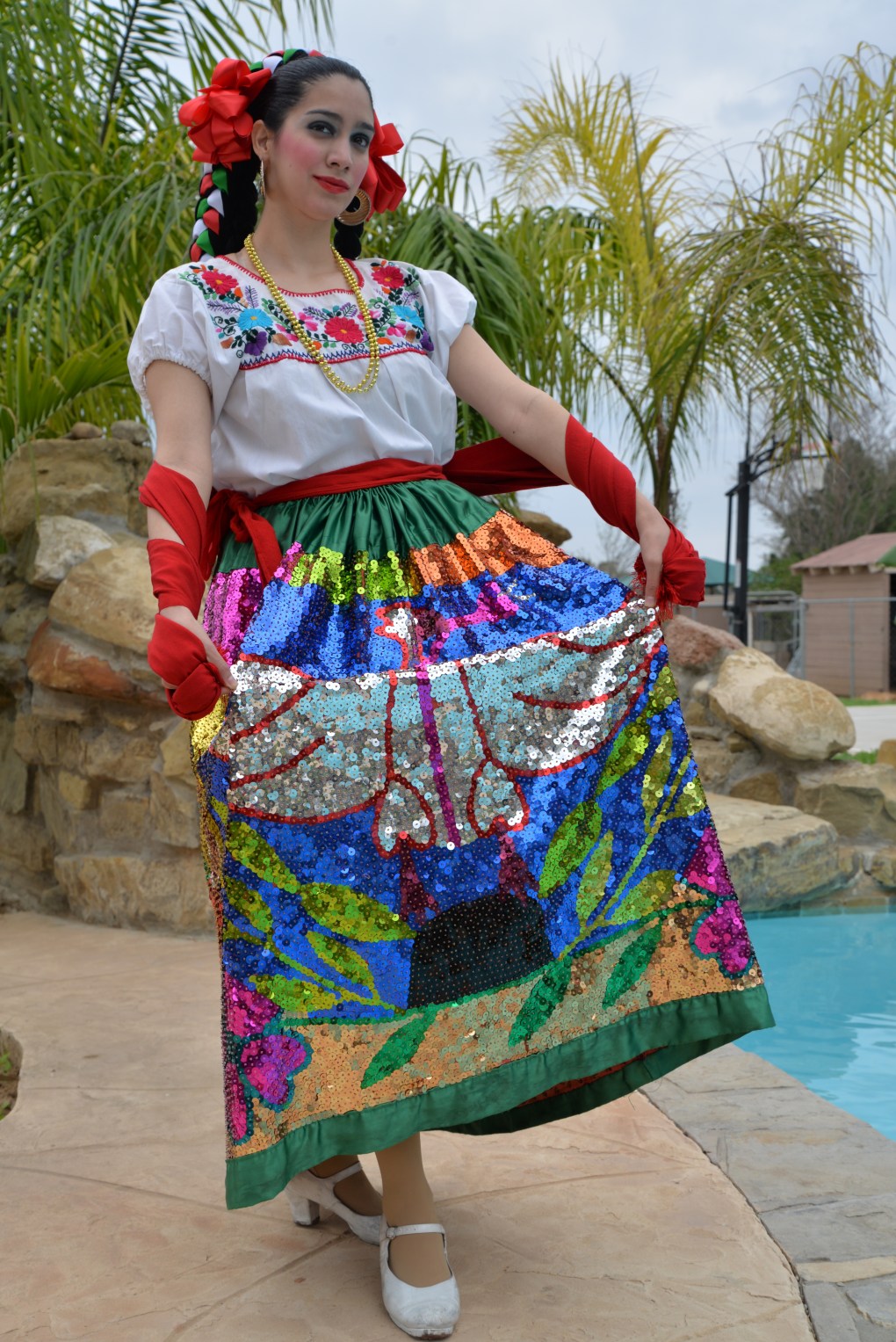

Folklorico Books for Every Folklorista’s Collection

Part of our responsibilities as Folkloristas is to research using books, newspapers, archives, oral histories, and bodily transmissions. We need to fully engage as practitioners of our art form. Our choreographies need to be grounded in theory, text, oral/bodily accounts, and especially in history to create and/or transmit them.  Part of this process involves collecting books written by scholars/artists that we can use as a reference. Every Folklorista that I know has their own book collection that they use to inspire their choreographies and learn more about our history. So, this month I decided to share with you my favorite books that have helped me as a scholar, writer, and choreographer. So, here it goes… Read More


Performing Nation: The Jarabe Tapatío of 1920s Mexico

As I was researching for my latest project, I happened to find my article entitled, “The Jarabe Tapatío: Imagining Race, Nation, Class, and Gender in 1920s Mexico” as published in The Oxford Handbook of Dance and Ethnicity available for preview on-line. Please click below.

Oxford Handbook of Dance and Ethnicity

I invite you to read through this article and tell me your thoughts. I have decided to give a brief summary of my arguments from this article for this months’ blog.

Read More

Creation, Growth, and Inspiration: The Beginnings of the Asociación Nacional de Grupos Folklóricos (1974-1976)

This article was written specifically for the Asociación Nacional de Grupos Folkloricos in 2016. This blog post includes an excerpt. To read the article in its entirety please click on the link below

Asociación Nacional de Grupos Folklóricos

As I write this account, I note that it has been forty-one years since the Asociación Nacional de Grupos Folklóricos or ANGF first began as a non-profit organization. The purpose of ANGF is “to serve as a voice for the promotion and preservation of Mexican folklore traditions…”  This is accomplished by organizing an annual conference whereby participants meet to learn regional dances, music, and traditions of Mexico and Latin America countries by renown teachers. Read More


Alura Flores de Angeles “Godmother of Mexican Folk Dance” (1905-2000)

Alura Flores de Angeles was a woman who was ahead of her times. She was born in 1905 the daughter of an indigenous man from Xochimilco and an American born Protestant missionary. At a time in Mexico when more than 50 percent of the population was illiterate, Flores de Angeles graduated from the National Preparatory School in San Ildelfonso in 1924. She was a star athlete who participated in the swim, volleyball, and basketball teams. She graduated from the Universidad Nacional Autónoma de México (UNAM) majoring in Physical Education. Flores de Angeles stated that as part of her Physical Education training she learned Mexican folkloric dances.

Read More

Folkloric Dance as an Ever-Changing Tradition

I am amazed at how many Mexican folkloric dances were cataloged and recorded by teachers of the Secretaria de Educacion Publica by 1934. In his writings, Carlos Merida, Director of Mexico’s School of Dance during the early 1930s, listed so many dances that are now well beloved. For example, a few of the dances that he listed included the danza de los viejitos, danza de los negritos, sones huastecos, sones costenos, jarabe tapatio, etc. Then, in the 1970s there was another government led movement by Mexican President Luis Echevarria (1970-1976) to collect and document the folkloric dances of Mexico. Many of these dances are performed in the repertoire of folkloric dance groups today. Of course, we also have the many dances that were specifically created for the stage such as the dances of Sinaloa, Nayarit Costa, Flor de Piňa from Oaxaca and the list continues. I argue that all of these dances have evolved and changed with time. No matter how hard we try to “preserve” dances so that they remain the same, dance and music traditions do not stay static but are fluid. As folkloristas we are involved in this movement to continue dance traditions that have been passed on from one generation to another.

These photos taken almost one hundred years apart attest to the ever-changing dynamic of the folkloric dance movement as it travels throughout the world.

Copyright, 1/28/2015, Mendoza-Garcia

Gabriela Mendoza-García Ph.D. is an Artist and Scholar. She has her own dance school and company called the Gabriela Mendoza-García Ballet Folklórico in Laredo, Texas.  Dr. Mendoza-Garcia founded this group in 2013 and teaches children and adults of all ages. Her company consists of seasoned folklórico dancers with years of experience performing this art form. She teaches traditional Mexican folklórico dance pieces, as well as, works that are inspired by her scholarly research. Her scholarship includes: editing the book Dancing throughout Mexican History (1325-1910), History & Folklore booklet with an accompanying documentary sponsored by the Webb County Heritage Foundation, The Jarabe Tapatío: Imagining Race, Nation, Class and Gender in 1920s Mexico published by Oxford University Press, an on-line blog, writings for Asociación Nacional de Grupos Folklóricos, and others.