Ensamble Folklorico Colibri

Dancing our Gender within Folklórico

A few year back I met up with a friend of my during the Asociación Nacional de Grupos Folklóricos conference in Arizona. We talked about our families, and the challenges of teaching dance. At that time her son was two years old and mine was about five years. I told her that my son was taking folklórico classes with me. She told me that she was reluctant to enroll her son in folklórico. Surprised, I asked why. She responded, “what do you do with heteronormativity?” I have to admit, I was taken aback. But then, we had a wonderful conversation.

What is heteronormativity?

According to scholars Berlant and Warner, in Sex in Public (1998) they argue that heteronormativity is this underlined idea that male/female couples are the norm. This permeates our laws, customs, and even our dances (552-558). Yes, in our folklórico dances especially the bailes or social dances of Mexico we represent male/female couple relationships as the norm.

Dancing our Gender

Without even realizing it, many of the dances especially the social ones require men and women as dancing partners. In fact, men often dance with their legs wide apart, have their chest held out, and their torso bent forward to catch the woman in a kiss. Their long, blasting gritos and whistles fill the air as they dance. Women match the speed of the male yet they dance with their legs closer together, must move their arms and wrists in skirt work movements that complement the dance. Depending on the type of dance, women can be told to keep their gaze down to the floor with a shy expression while the man romantically pursues her. We perform specific gender role expectations as we dance. In fact, when we perform the bailes of Mexico we even reinforce heteronormativity—this expectation that men and women are a romantic couple. Very seldom is any other alternative given.

Campobello Sisters: Challenging Heteronormativity

One famous sister duo to challenge heteronormativity was Nellie and Gloria Campobello.  Nellie Campobello was born in 1900 while Gloria Campbello was born in 1911(Tapía 3,7, 9). In 1930, the sisters were employed as teachers in the National Music and Dance Section of the Department of Fine Arts of the Secretaría de Educación Pública (SEP) (Tortajada Quiroz 276).

According to Frances Toor in A Treasury of Mexican Folkways (1947) Nellie and Gloria Campobello premiered their own version of the Jarabe Tapatío as part of their work with the Department of Fine Arts of the SEP in 1930. Nellie performed the role of the Charro and Gloria performed the role of the China Poblana (Tortajada Quiroz 277). They danced together as a couple. I have to ask myself did Nellie take on the characteristics of the Charro and try to woo her sister Gloria when dancing? Was this female/female version of the Jarabe Tapatío well received?

I found a newspaper article written by Carlos del Rio in the 1930 about the sisters’ dance. Del Rio stated:

​​Nellie and Gloria Campobello discovered the true jarabe and they danced it without fear, passionately. The lack of a male dancer did not stop them. What helped Nellie was her experience with the outdoors, her taste of adventure, her silhouette as an admirable man who pursues, wins, and dominates the woman in a final joy (38). [i]

Well, it appears that Del Rio loved this interpretation of two women dancing the Jarabe Tapatío together. Del Rio was elated that the sisters did not need a male dancer for their duets. According to Del Rio, Nellie did take on the characteristics of the Charro she was described as adopting a behavior that was entirely masculine on stage because she pursued the woman, defeated her, dominated her and then ended the dance joyously.[ii]

There are many reasons why this dance might have been accepted. For example, the fact that they were sisters dancing together might have made it acceptable for them to perform this dance. In addition, it could be that the sisters might not have deliberately danced the Jarabe Tapatío to challenge heteronormativity but it could certainly have been read this way by those in the audience.

You can see a photograph of Nellie and Gloria Campobello dancing the Jarabe Tapatío together in 5:33 of this You Tube Video

Challenging Heteronormativity in the 21st Century

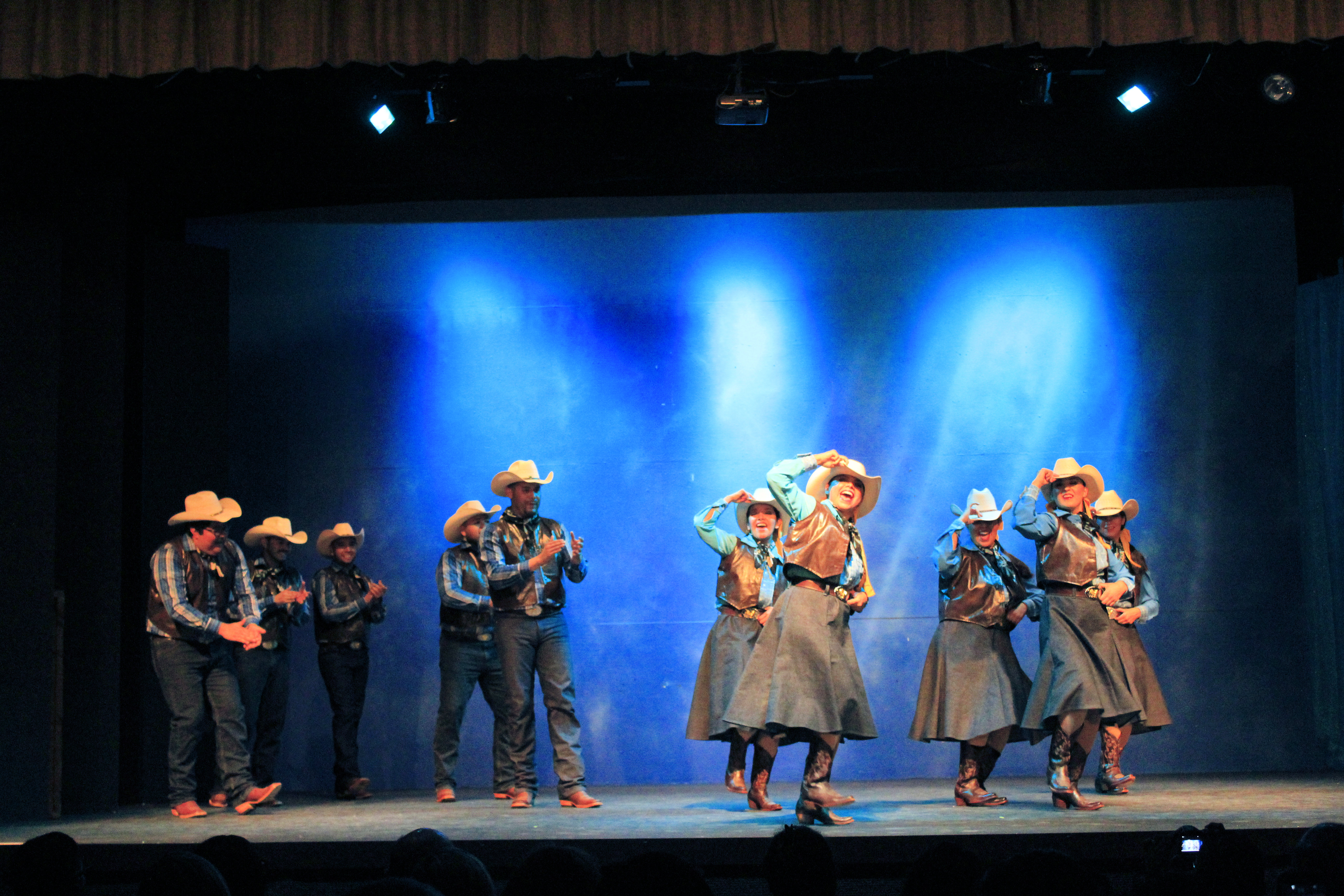
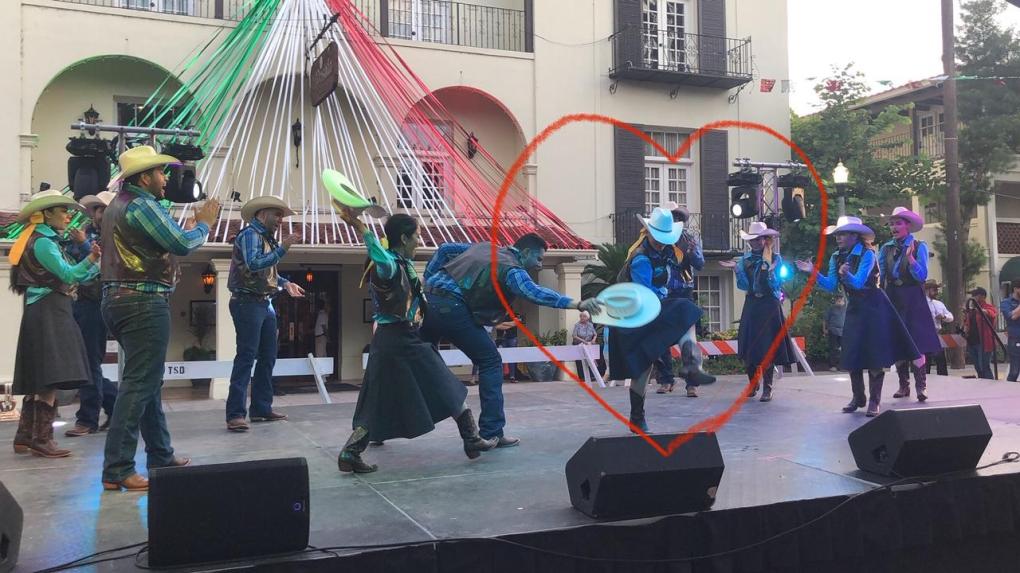
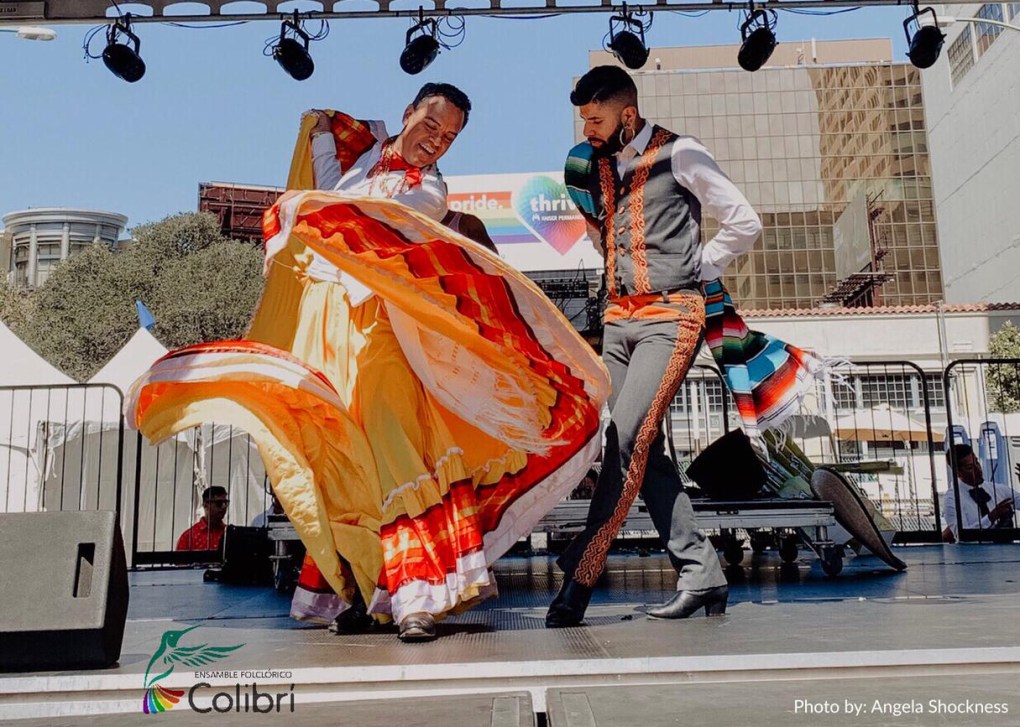
What do we do today to challenge heteronormativity? There are a few folklórico groups in the United States and Mexico that challenge heteronormativity. I spoke with Arturo Magaña of the Ensamble Folklórico Colibri whose purpose is “to create an artistic outlet for the LBGT community to express their heritage” (A. Magaña, pers. comm.).  This dance group performs the dances of Mexico with its dancers choosing the gender roles.  In this group sometimes their dancers perform with female/female partners, male/male partners or sometimes they dance with male/female partners.

Ensamble Folklorico Colibri
Ensamble Folklorico Colibri 2019

More specifically, Magaña has challenged heteronormativity within his choreography. So for example, in his version of El Alcaraban from Chiapas. Instead of women/men couples courting each other, he choreographed a love dance between male/male couple. In his choreographic works, Magaña is not afraid to even go a step further. For example, instead of depicting the traditional Nayarit wedding with the female bride and male groom dancing at their wedding reception. Magaña choreographed a full cuadro of Nayarit depicting a lesbian wedding to tell the stories of the LBGT community. Magaña tells me that his work is accepted in embraced throughout California. To my surprise, he says that 99% of the negative reactions come from folkloristas (A. Magaña, pers. comm.).

My Thoughts

I can’t help but wonder why we (folkloristas) are the ones who are the most resistant to challenging heteronormativity.  What are we holding onto? I think that as folkloristas we need to recognize the ways in which we reinforce heteronormativity in our teaching and our dances. It’s essential to point these instances out to our students, to ask questions, and most of all to have conversations and discussions. This is how we grow as folkloristas.

So, I go back to the original question. What do you do with heteronormativity?

Works Cited

Berlant, Lauren and Michael Warner. 1998. “Sex in Public.” Critical Inquiry 24 (2): 547-566.

Del Rio, Carlos. “Nelly y Gloria Campobello-Creadora de Danzas.” Revistas de Revistas: El Semanario Nacional.October 12. 1930.

Magaña, Arturo. 2019. Interview by author: December 13.

Tapía, Minverva. “Nellie Campobello: A Mexican Political Dance Pioneer.” MFA thesis.  University of California at Irvine, 2006.

Toor, Frances. 1947. A Treasury of Mexican Folkways. New York: Crown Publishing. 

Tortajada Quiroz, Margarita. 2001. Frutos de Mujer:Las Mujeres en la Danza Escenica. Mexico: Instituto Nacional de Bellas Artes y Literatura.


[i] This is my translation.

[ii] Later in life, Nellie Campobello served as Director of Mexico’s National School of Dance for forty-five years and directed the Mexico City Ballet. Gloria Campobello is remembered as having been Mexico’s first prima ballerina and taught at Mexico’s National School of dance (Tapia 24, 1, 11-13). The Campobello sisters would become celebrated as prominent dancers, educators, choreographers, researchers, and writers.

Photos courtesy of Gabriela Mendoza-Garcia. Video footage taken from You Tube.

Copyright, 12/12/2019, Mendoza-Garcia

Gabriela Mendoza-García Ph.D. is an Artist and Scholar. She has her own dance school and company called the Gabriela Mendoza-García Ballet Folklórico in Laredo, Texas.  Dr. Mendoza-Garcia founded this group in 2013 and teaches children and adults of all ages. Her company consists of seasoned folklórico dancers with years of experience performing this art form. She teaches traditional Mexican folklórico dance pieces, as well as, works that are inspired by her scholarly research. Her scholarship includes: Dancing throughout Mexican History (1325-1910), History & Folklore booklet with an accompanying documentary sponsored by the Webb County Heritage Foundation, The Jarabe Tapatío: Imagining Race, Nation, Class and Gender in 1920s Mexico published by Oxford University Press, an on-line blog, writings for Asociación Nacional de Grupos Folklóricos, and others.


Dancing Veracruz

3 Folklorico Findings that Shook Me (Surprised)

I feel that I am always learning more and more about our folklorico dances. I am constantly reading, asking questions, and thinking about new ideas.  Very often I am shook (as my teenage daughters would say) when I come across a new finding.  Here, are a few folklorico findings that shook me!

Theoretical Principle

First off, I like to bring academic theory into our conversations around folklorico dance. In my previous blog called Folklorico Dance as an Invented Tradition, I talk about how oftentimes we think that all the folklorico dances that we perform have a long history. In reality, they are recent creations. Eric Hobsbawn in his classic text “Inventing Traditions” (1983) coins this term to refer to “traditions actually invented, constructed and formally instituted and those emerging in a less easily traceable manner within a brief and date-able period-a matter of a few years perhaps- and establishing themselves with great rapidity (1).”  He notes that these invented traditions are practices with a given set of rules, rituals, that are repeated and that are thought to have a long history but in actuality are very recent (1).  Many of our Mexican folklorico costumes, music, and dances fall under this definition of invented traditions. In my writing, today I continue this thought by adding a few more folklorico facts that really support Hobsbawn’s theory of Invented Traditions.

  • Invention of the Huapangos Tamualipecos

In the summer of 2018, I attended the Asociacion Nacional de Grupos Folkloricos Conference in Phoenix, Arizona. I took a Tamualipas dance workshop with María Teresa Montelongo Ortíz. She gave presentation before the entire membership and told us that the huapango dances of Tamualipas were invented. (Surprise!!)

She said that they were created by Raúl Pazzi Sequera (national grand champion winner Huapango Veracruzano) and Moisés Rodríguez (former dancer with the Ballet Folklórico de Amalia Hernádez). Both men traveled to Tamualipas and created the distinctive footwork sequences that would come to represent the huapangos of Tamualipas. Then, alongside the Conjunto Típico Tamaulipeco which was the official musical group of Tamualipas, they traveled all across the country teaching the dances of the son huapango to the rhythm of the jarana (Montelongo Ortíz 26).  Thus, these dances were an invented tradition created for the stage.

  • Stylization of the Ranchera costume
Ranchera Costume
Ranchera Costume Worn by Dancers of the Gabriela Mendoza-Garcia Ballet Folklorico

I always thought that the ranchera costume of Jalisco had evolved from the outfits worn by women during the Colonial era. Low and behold, as I am reading through my materials I find out that this is partly true. The costume did evolve through time but the style that we wear today was created by Josefina Gómez and Maria Del Refugio García Brambila also affectionately known as Miss Cuca.[i]  They both designed this costume using oral histories, personal experiences, and a bit of artistic creativity.  This is the story behind the ranchera costume. One day Miss Cuca ran out of espiguilla so instead she bought ribbons to adorn a costume she was sewing. She discovered that the ribbons really complimented the dress. Plus, the ribbons accentuated the movement of the skirt so that it was really highly visible (Chávez Rodríguez 51). This would become the Ranchera dress that we know of today.

  • Innovations in Veracruz Dancing

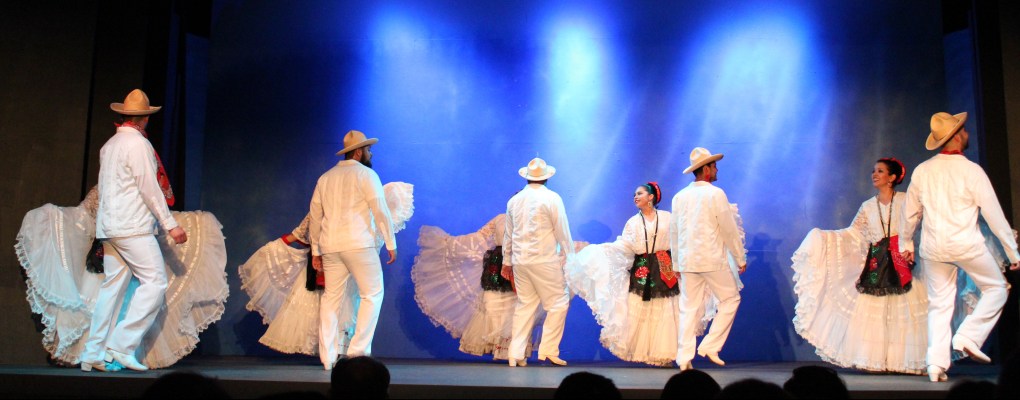
Many of the zapateado sequences that I had always thought were derived from the Jarochoas/os of Veracruz as they danced during their festivals, were in fact created for the stage by Mario Cabrera Salgado. According to the video Mario Cabrera “El Jaquetón,” Cabrera invented 54 jarocho steps which we use today in our dances. He also was the first person to use white botines when he danced Veracruz. Not only that but he changed the cotton palecate and used a long one made out of satin. He also changed the hat to a more durable one that would withstand our zapateados. Such creative innovations in dance that we still continue to this day.

Mario Cabrera “El Jaqueton”

My Thoughts: These are just three examples of the ways in which folklorico dances were invented for the stage during the 20th century. What other folklorico dances are invented traditions?

Works Cited

Chávez Rodriguez. Asociación Nacional de Grupos Folklóricos Congreso.46-52. July. 2002, Riverside, California.

Hobsbawn, Eric and Terence Ranger, Eds. The Invention of Tradition. Cambridge: Cambridge UP, 1983.

“Mario Cabrera: El Jaquetón,” https://www.youtube.com/watch?v=hWF7zrMBnKI

Montelongo Ortíz,María Teresa. Asociación Nacional de Grupos Folklóricos Congreso. 26-27. July. 2018, Phoenix, Arizona.

—-.—-. “ Huapangos Tamualipecos” (lecture, Asociación Nacional de Grupos Folklóricos, Phoenix Arizona, July 2018).


[i] In “Ballet Folklórico Mexicana: Choreographing National Identity in a Transnational Context, Olga Nájera-Ramírez  interviews Rafael Zamarripa Artistic Director of the Ballet Folklórico de la Universidad de Colima. He was as one of Miss Cuca’s former students. He says that Miss Cuca earned a degree in Physical Education. She also taught dance at Beatriz Hernández Boarding School. Her dancers would win national titles. She taught at many schools. Her dance group at the Escuela Normal or Teacher’s College was designated the official state representative of Jalisco.

Photos courtesy of Gabriela Mendoza-Garcia. Video footage taken from You Tube.

Copyright, 11/24/2019, Mendoza-Garcia

Gabriela Mendoza-García Ph.D. is an Artist and Scholar. She has her own dance school and company called the Gabriela Mendoza-García Ballet Folklórico in Laredo, Texas.  Dr. Mendoza-Garcia founded this group in 2013 and teaches children and adults of all ages. Her company consists of seasoned folklórico dancers with years of experience performing this art form. She teaches traditional Mexican folklórico dance pieces, as well as, works that are inspired by her scholarly research. Her scholarship includes: Dancing throughout Mexican History (1325-1910), History & Folklore booklet with an accompanying documentary sponsored by the Webb County Heritage Foundation, The Jarabe Tapatío: Imagining Race, Nation, Class and Gender in 1920s Mexico published by Oxford University Press, an on-line blog, writings for Asociación Nacional de Grupos Folklóricos, and others.


Celebrating Dia de los Muertos

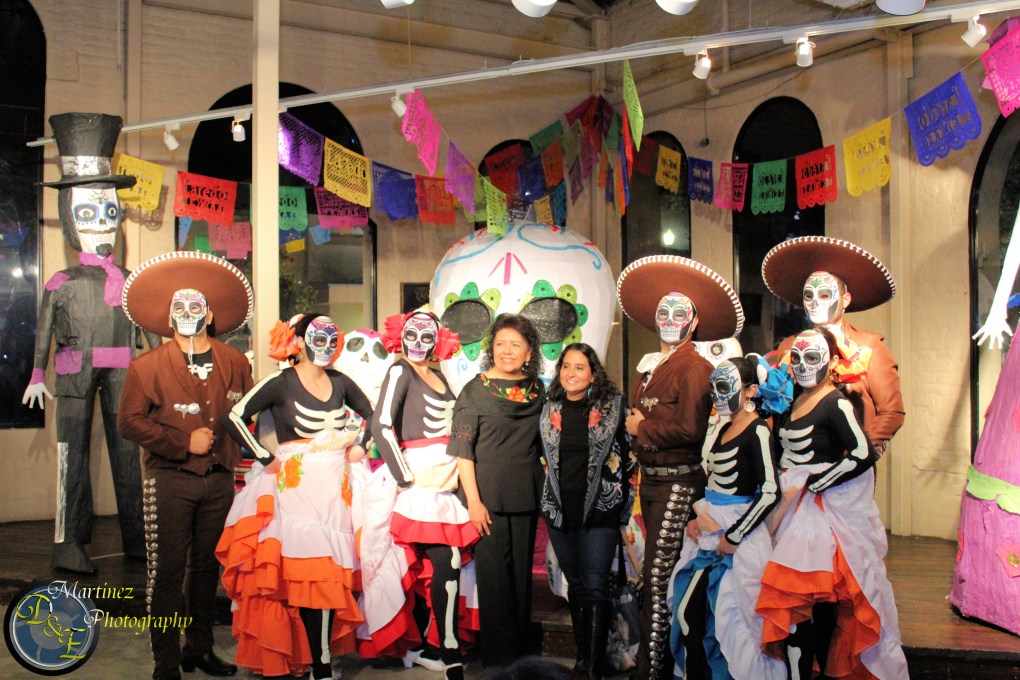
Celebrating Dia de los Muertos Folklorico Style

When I first started dancing folklorico as a college student at the University of Texas at Austin, my dance teacher, Michael Carmona, told us about Dia de los Muertos. I remember painting my face like a skeleton and dancing in our community in celebration of our ancestors. I have noticed that with the release of the Disney movie Coco, it seems like this event is even more popular than ever. Yet, I notice that when we dance as skeletons our movements take on additional meanings.

What is Dia de los Muertos? 

Dia de los Muertos is translated as Day of the Dead in English. It is celebrated on November 1 and 2 in Mexico and all around the world. Mexicans believe that on these days the souls of the departed return to earth to visit their family and friends.

What is the history of Dia de los Muertos?

Dancing as Muertos
Dancing as Muertos

It is very difficult to pinpoint the origin of anything. However, scholars acknowledge that the customs surrounding Dia de los Muertos have an indigenous influence. For example, the Aztec people held special offerings and ceremonies to honor children and adults who had died. It was known asMiccailhuitontli and Miccailhuitl which is translated as Little Feast of the Dead and Great Feast of the Dead. This is just one example because Mexico is a very ethnically diverse country whereby indigenous andmestizo groups celebrated the death of their loved ones through song, dance, ritual, and offerings. In the sixteenth century with the Spanish conquest of Mexico, Catholic friars noticed that the indigenous people incorporated their own ceremonies celebrating the dead during the Catholic feast day of All Souls Day.

How do we celebrate Dia de los Muertos today?

Loved ones prepare for a visit by the deceased by creating an altar that is displayed in their home. The altar is decorated with all the favorite items of the departed including pictures. In addition, food is prepared and placed on the altar so that the loved one may return and partake. In my city of Laredo, Texas, many celebrate by visiting the cemetery and put flowers on the graves. Others attend a mass in memory of their loved ones. Many buy pan de muerto (bread of the dead) which is a type of sweat bread that has bone shapes and is sold at the local bakeries.  Different villages, cities, and regions celebrate this custom in many different ways.

Who was José Guadalupe Posada?

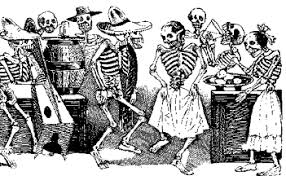
José Guadalupe Posada (1851-1913) was an illustrator, print maker that worked for many different Mexican periodicals and presses. He is most known for his illustrations of calaveras (skulls) that were dressed in fancy clothing and infused with political satire. One of his most popular drawings was of a rich, female skeleton wearing a fancy hat with a feather on it. Posada dubbed this drawing La Calavera de la Catrina. Posada’s skeletal illustrations were not greatly appreciated until after his death. Since the 1920s and 1930s these skeletal images have been closely associated with celebrations of Dia de los Muertos.

How is Dia de los Muertos a Bodily Memory?

Los Muertos Bailan

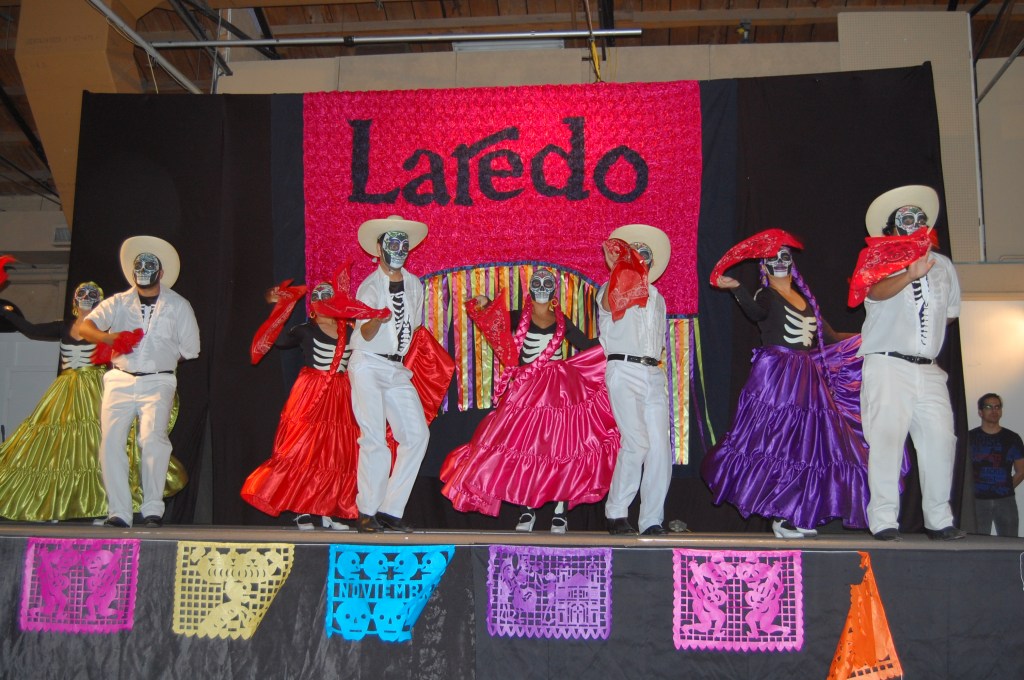
Folklorico dance groups celebrate Dia de los Muertos by dancing with their faces painted as skulls. Then, our dances take on additional meanings. Yes, we are still performing our Mexican cultural history when we dance. Yet, on Dia de los Muertos we are also performing as skeletons bringing to life the bodily memories of our ancestors. Oftentimes, when the dancers perform it may appear that the skeletal Catrina image depicted by Posada has come to life. I usually dedicate my own dancing to my beloved father, grandparents, aunt and my loved ones who are no longer physically on this earth. I remember them with every zapateado, grito, and skirt flourish. Sometimes I can feel their presence with me even stronger. This is the power of our dancing.

Works Cited

Berdecio, Roberto and Appelbaum, Stanley. Eds. Posada’s Popular Mexican Prints. Mineola: Dover Publications Inc., 1972. Print.

Carmichael, Elizabeth and Chloë Sayer. The Skeleton at the Feast: Day of the Dead in Mexico. Austin:  University of Texas Press, 1991. Print.

Delsol, Christine. “La Catrina: Mexico’s Game of Death.” SF Gate. October. 2011. Web. 6 May. 2014.

Photos courtesy of Gabriela Mendoza-Garcia or are in the public domain.

Copyright, 10/28/2019, Mendoza-Garcia

Gabriela Mendoza-García Ph.D. is an Artist and Scholar. She has her own dance school and company called the Gabriela Mendoza-García Ballet Folklórico in Laredo, Texas.  Dr. Mendoza-Garcia founded this group in 2013 and teaches children and adults of all ages. Her company consists of seasoned folklórico dancers with years of experience performing this art form. She teaches traditional Mexican folklórico dance pieces, as well as, works that are inspired by her scholarly research. Her scholarship includes: Dancing throughout Mexican History (1325-1910), History & Folklore booklet with an accompanying documentary sponsored by the Webb County Heritage Foundation, The Jarabe Tapatío: Imagining Race, Nation, Class and Gender in 1920s Mexico published by Oxford University Press, an on-line blog, writings for Asociación Nacional de Grupos Folklóricos, and others.


Books from my bookshelf

Digging Deep into Research

As Folkloristas it is essential that we conduct our own research on the dances that we present while making efforts to learn new choreographies. There are so many things we can do to enhance our cuadros (choreography) by conducting our own research.

Search your own Dance Library

I often start my research at home scouring my home library for materials that I may need before teaching a new cuadro to my students. In it I have some classic texts that I always reference. (See my blog posts: Folklorico Books for Every Folkloristas Collection and Summer Reading for Folkloristas of All Ages). I also keep materials from any workshops that I have attended. I have all my eleven years of monographs from the Asociacion Nacional de Grupos Folkloricos (ANGF) conference which I always rely on for more information on costumes, music, history, and dances. I try to get different perspectives from scholars by reading materials from authors written during different time periods. So, for example I may read an article or book from Frances Toor to see her perspective on Veracruz dances during the early 20th century. Then, I may dig into something written by a current folkloristas by referencing my ANGF monographs.

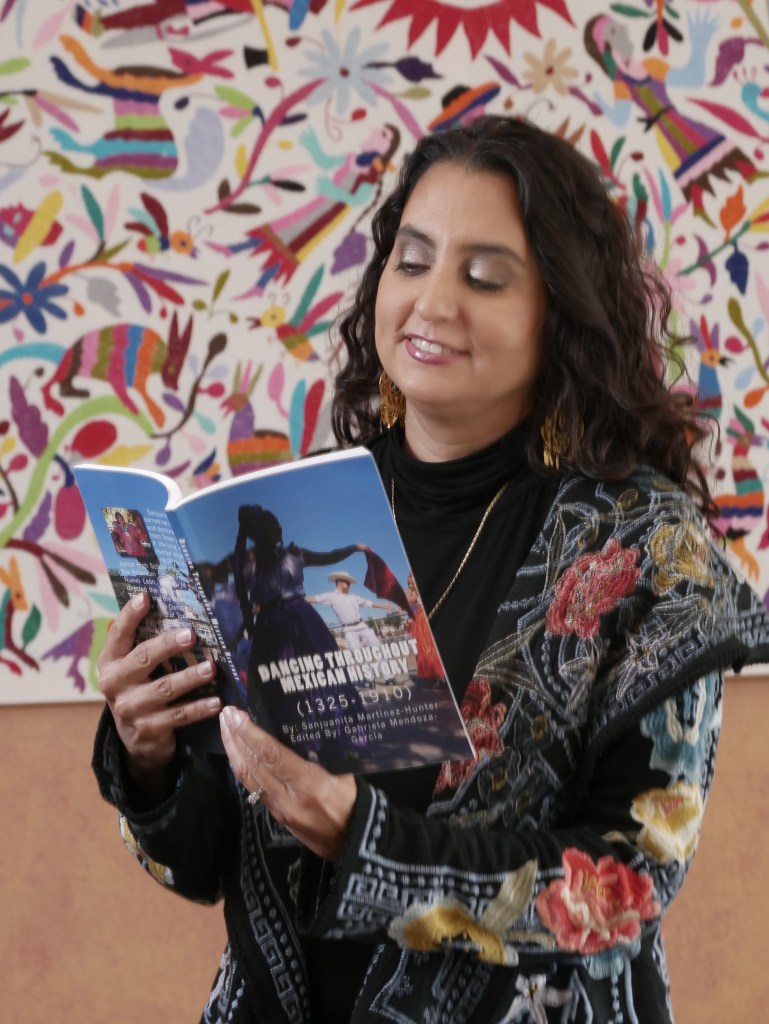
Posing for the Camera as I Read a Book
Reading a Book

Look for out of Print Materials

I am always searching for copies of out of print materials. I usually review books available on amazon and visit used book stores for copies of books that are no longer in print. When they are for sale at a reasonable price, I buy them immediately. However, many rare books are not sold today. So, I often visit a university library. First, I utilize the on-line database called world cat. (https://www.worldcat.org/ ). This is a database for researchers. I log in and mark my hometown libraries as my favorites. For me, my favorite library is the University of Texas at Austin (UT) Benson Latin American Library. I search their database by submitting a subject, title of book, and/or author. This database searches for libraries all over the world to tell me where I can find my book. Then, I make a list of all the books and archival materials that I will need. Be sure to look for books, newspapers, monographs, videos, music, photographs etc. I e-mail the librarian in advance to let her know that I will be visiting and to ask for books that are in storage. You might be able to check out the books if you are part of the alumni association of the university or you belong to a library book lending program. In Texas, this is called Texshare and I signed up at my local public library. With this card, I am able to check out books from participating libraries all over Texas.

Collect Oral Histories

I know this is so difficult to do because we are often working full-time and teaching dance but when we talk to people and get to know their perspectives…the rewards are endless. Meeting with people who danced, choreographed, or taught these dances and getting their life stories is so important. Sometimes, if I am unable to meet with anyone in person, I will begin a search on google and look for articles, news clips, on the people and places of the region that I will be presenting. Better yet, go out of your way to visit museums, libraries, and attend festivals in the United States and Mexico.

Watch Folklorico Concerts

One way I get inspired is to watch folklorico concerts of dance groups in Mexico and the United States. I pay close attention to the ways in which they use lights, props, backdrop, musical cues. I even notice the choreographic formations, costumes choices etc. This gives me ideas on things that I would do differently or keep the same.

Visit Mexico  

If possible, visit the state or region that you will be presenting. While you are there, watch their dances, meet the people, soak in the culture. This is vital.

My Thoughts

These are just a few ways that I research a cuadro before I present a suite of dances. I am sure that there are many other ideas. How do you research your choreographies before presenting them on stage?

Photos courtesy of Gabriela Mendoza-Garcia

Copyright, 09/01/2019, Mendoza-Garcia

Gabriela Mendoza-García Ph.D. is an Artist and Scholar. She has her own dance school and company called the Gabriela Mendoza-García Ballet Folklórico in Laredo, Texas.  Dr. Mendoza-Garcia founded this group in 2013 and teaches children and adults of all ages. Her company consists of seasoned folklórico dancers with years of experience performing this art form. She teaches traditional Mexican folklórico dance pieces, as well as, works that are inspired by her scholarly research. Her scholarship includes: Dancing throughout Mexican History (1325-1910), History & Folklore booklet with an accompanying documentary sponsored by the Webb County Heritage Foundation, The Jarabe Tapatío: Imagining Race, Nation, Class and Gender in 1920s Mexico published by Oxford University Press, an on-line blog, writings for Asociación Nacional de Grupos Folklóricos, and others.


Las Michoácanas: Recovering the Writings of Alura Flores de Angeles

After my aunt Sanjuanita Martínez-Hunter passed away, I helped my mother sort through all her personal possessions. Among her boxes of paperwork, I found a collection of manila folders with the words Alura Flores de Angeles scribbled on top. Thrilled, I opened each folder and in it were slides, pictures, brochures, press releases, newspaper clipping all documenting Flores de Angeles’ many visits to the University of Texas at Austin in which she displayed her costume collection, conducted dance workshops, and lectured on Mexican folkloric dance. Among my aunt’s paperwork, I also found copies of articles on Mexican Dance written by Flores de Angeles from 1934 to 1935 for Real Mexico magazine.

Alura Flores de Angeles (1905-2000) earned a degree in physical education at the National Autonomous University of Mexico (UNAM) during a time when few people much less women attended college. She was known for her poetic recitation having performed at nearly every theatre in Mexico City. Yet, she was especially known as a teacher of Mexican folkloric dance having taught at UNAM for over fifty years. Few realize that she was also an author. This month I share an excerpt from an article as written by Alura Flores de Angeles for Real Mexico in the December 1934/ January 1935 issue which I found in my aunt’s collection.

Business Card of Alura Flores de Angeles

Las Canacuas (Michoacán Dance)

We are now going to study some of the dances of the State of Michoacán. Michoacán is situated in the southwestern part of Mexico, and is one of the richest and most interesting states in the Republic. The most important and best known of the Michoacán dances are: La Danza de las Canacuas (The Dance of the Crowns), which is a women’s dance and is very beautiful.

Fiestas

Las Canacuas are danced on the Fiestas de las Coronas (Fiestas of the Crown) which are celebrated several times throughout year, particularly on certain market days when large crowds of visitors from far and near are attracted to the town where the fiestas are being held. Uruapan is the town where Las Canacuas are danced most often, and many people come from the towns nearby such as Huecorio, Janitzio, Jarácuaro, Santa Fe and others. Now that the pretty town of Uruapan is becoming so popular as a resort with Mexicans and visitors alike doubtless many more persons each year will have the opportunity of witnessing the dancing of Las Canacuas as well as the other Michoacán dances.

Ceremonial

There is a graceful little ceremony connected with the dance. Presents are offered to the assembly of visitors such as flowers, fruits, and small toys and curios. The state of Michoacán is famous for its flowers and fruits and indeed its lush soil will produced anything. The state also excels in the manufacture of attractive and ingenious arts and crafts. Among the most notable of these are the jicaras, which are trays peculiar to Michoacán and are famous all over Mexico. They are hand painted with birds, flowers, and other dainty or fanciful motifs. The jicara is used in the dance of Las Canacuas.

The girls of the dance and there may lie any number of them, are known as Michoacánas (Michoacan girls). They enter in a single file. Each has her jicara on her head and all carry small bouquets of flowers and fruits as well as small toys and curios. These are for presentation to the priests. The flowers presented are small yellow flowers indigenous to Mexico. They are called here flores del corazón (flowers of the heart). Small bouquets of these flowers are arranged with dried corn husk and a bunch is presented to each guest. The significance of this charming custom is to welcome. The michoacánas dance and sing and they hand round the bouquets. The words of the songs are often very naïve.

Costuming

The costume worn by the Michoacánas is beautiful and very vivid. The blouse called a huanengo is of fine, white handwork and is embroidered with fancy patterns in bright wool. The skirt is also of wool, usually of navy blue wool. At the bottom of the skirt is a rather wide border of the same material as the blouse. This can also be embroidered with wool or fancy patterns and figures may be appliqued on it. The waistline of the skirt is gathered and a band is wound a coupled of time about the waist and tied at either side.

The Michoacána also wears a shawl around the head. It hangs down her back below her waist. She wears jewelry, bracelets, necklaces, and earrings, usually of coral. She has her hair arranged in two long braids and sometimes she entwines ribbons in her braids.

Dancing

The dance consists of graceful moving and turns and the tapping of the feet on the ground. It is charming, picturesque, and beautiful. Usually the dance of Las Canacuas is prolonged to include the dancing of the Jarabe Michoacáno. This dance is quite different from the Jarabe Tapatío, the national dance of Mexico. Its procedure is thus: the girls place their jicaras down and seat themselves on the floor; they clap their hands; a man enters; he selects one girl from the group and dances the Jarabe Michaoacáno with her. This dance consists of a continued beating of the feet, turns, etc. It too is very attractive.

My Thoughts

Let’s remember that Flores de Angeles wrote this article in the 1930s. She describes Uruapan as just beginning to be discovered by tourists. Her writings reveal the ceremonial and social aspects of Las Canacuas and not necessarily a dance performed on stage with a set sequence of steps or movements. Amongst my aunt’s belongings, I also found a series of pictures of Alura Flores de Angeles’ costume collection. I am thinking about compiling all these archival photographs to write my new book project. This book would include full color photos of this costume collection plus other archival sources. What do you think about this project?

Works Cited

Flores Barnes, Alura. 1934. The Dances of Mexico: Las Canacuas (Michoacán Dance). Real Mexico 12, no. 1. (December/January): n.p.

___.___. 50 Veranos: Alura Flores de Angeles. N.d.  Dance program. Society of Folk Dance Historians Collection,  Austin.

—.—. Photograph. Society of Folk Dance Historians Collection, Austin.

Cover photo courtesy of the Sanjuanita Martinez-Hunter Collection. Business Card courtesy of the Society of Folk Dance Historians

Copyright, 5/5/2019, Mendoza-Garcia

Gabriela Mendoza-García Ph.D. is an Artist and Scholar. She has her own dance school and company called the Gabriela Mendoza-García Ballet Folklórico in Laredo, Texas.  Dr. Mendoza-Garcia founded this group in 2013 and teaches children and adults of all ages. Her company consists of seasoned folklórico dancers with years of experience performing this art form. She teaches traditional Mexican folklórico dance pieces, as well as, works that are inspired by her scholarly research. Her scholarship includes: Dancing throughout Mexican History (1325-1910), History & Folklore booklet with an accompanying documentary sponsored by the Webb County Heritage Foundation, The Jarabe Tapatío: Imagining Race, Nation, Class and Gender in 1920s Mexico published by Oxford University Press, an on-line blog, writings for Asociación Nacional de Grupos Folklóricos, and others.


Dancing Nuevo Leon Central

Dancing Nuevo León Central and Chihuahua

When I was a folklórico dancer with the University of Texas Ballet Folklórico, I remember my teacher Michael Carmona taught us the polkas, redovas, and schottisches of Northern Mexico. He called it Norteño. This group was started in 1975 by UT students and my aunt Sanjuanita Martinez-Hunter. This was one of the first regions in their repertoire. By the time I attended the University of Texas at Austin some twenty-five years later or so, we continued this dance tradition of representing the entire Northern region of Mexico in a suite of dances. Afterwards, I danced with Roy Lozano’s Ballet Folklórico de Tejas which was founded in the 1980s. When I danced with Roy Lozano in the 1990s, we would perform dances representing Nuevo León and another set representing Chihuahua. Thus, no longer was the entire Northern region of Mexico depicted in a suite of dances. Today, I see folklórico groups performing the norteño dances of Durango, Nuevo León, Chihuahua, Tamaulipas, etc., as separate and distinct states. Thinking about this, I wonder what the bodily distinctions are between the dances of Nuevo León Central and Chihuahua.

Dancing the Polka, Redova, and Shotis

In folklórico, Nuevo León Central is characterized by dances that include the polka, redova, and shotis (Guerrero Hernández 2003, 35). In contrast, only the polkas characterize the folklórico dances of Chihuahua. However, according to Rito Ortega Posada, he says that if you ever travel to Chihuahua all you have to do is say “Let’s dance a few dances of Northern Mexico” and everyone will dance the redova, shotis, etc. with with you on the dance floor (Ortega Posada 2001, 73).

A Final Bow . Photograph courtesy of Jesse Solis.
A Final Bow after Dancing Chihuahua

New Choreographies

Many of the dances and music that we perform to today are derived from choreographies and compositions created in the twentieth century. In my blog post, Folklórico Dance as an Invented Tradition, I wrote about Antonio Tanguma and his famous compositions that we now dance to that represent Nuevo León. He composed the songs entitled:  El Cerro de la Silla, Evangelina, El Naranjo, Polka Alegre among others. In fact, his very first composition was composed in 1938. It was entitled De China a Bravo (Houston 2017, 107; Quiroz 2003, 88-89).

It was during the 1970s that a new style of dancing the polkas from Chihuahua emerged. This type of style is similar to what we perform today. During the 1970s composers created new songs which included: De Chihuahua a Concordia, Cierro Prieto, El Huarachazo to name a few. New dance moves with new choreographies accompanied the music (Ortega Posada 2001, 73).

Stylistic Interpretations

There are stylistic interpretations that characterize the dances of Nuevo León Central and Chihuahua.

The polkas of Nuevo León Central use the punta y talón or toe/heel combinations, carretillas accentuate the footwork when wearing boots, pespunteados y entrecruces and are marked with rapid turns that resemble the European style of dancing (Guerrero Hernández 2003, 35).

According to Vicky Barriga of the Rarajipame Ballet Folklorico Infantil, there are five different stylistic versions of dancing the polkas of Chihuahua. Maestro/as who created their own stylistic versions of Chihuahua include: Prof. Antonio Rubio of the Universidad Autonoma de Chihuahua, Leonor Avalos (considered by Barriga to be one of the great choreographer of the polkas), husband and wife duo Victor Barriga and Rita Cobos Lugo of the Rarajipame Ballet Folklórico, and Profesor Chava who choreographed dances to represent Ciudad Juárez. Barriga also mentions that we can’t forget all those dancers who participate in competitions. This is also a specific style in which they incorporate new footwork and movements to win.  Also, she mentions that Leonor Avalos revolutionized these dances by making them synonymous with the state of Chihuahua. Before Avalos the dances of Chihuahua were lumped together as dances of the norteño region. She describes Chihuahua as having distinct polkas with rapid turns that requires much agility and elegance.  Each of the maestro/as listed above put their own touch to the polkas of Chihuahua (Barriga 2019).

My Thoughts

Writing this piece, makes me realize that I still have so much to learn. I feel that I am always learning something new. How does your folklórico group embody the norteño dances?

Works Cited

Barriga,Vicky. 2019. Correspondence by author. January 31.

Houston, Ron. 2017. Folk Dances of Mexico for Grupos Folklóricos: Dances Introduced by Alura Flores and Her Students. Austin: Society of Folk Dance Historians.

Garza Quiros, Fernando. 2003. “Artisticas Destacados de Nuevo León: Antonio Tanguma.” Nuevo León: Textos del Folklore. Monterrey: Asociación Nacional de Maestros de Danza Popular Mexicana A.C.

Guerrero Hernández, Jaime. ed. 2003. “Bailes y Ritmos de la Región Central.” In Nuevo León: Textos del Folklore. Monterrey: Asociación Nacional de Maestros de Danza Popular Mexicana A.C.

Photos courtesy of Gabriela Mendoza-Garcia

Copyright, 2/10/2019, Mendoza-Garcia

Gabriela Mendoza-García Ph.D. is an Artist and Scholar. She has her own dance school and company called the Gabriela Mendoza-García Ballet Folklórico in Laredo, Texas.  Dr. Mendoza-Garcia founded this group in 2013 and teaches children and adults of all ages. Her company consists of seasoned folklórico dancers with years of experience performing this art form. She teaches traditional Mexican folklórico dance pieces, as well as, works that are inspired by her scholarly research. Her scholarship includes: Dancing throughout Mexican History (1325-1910), History & Folklore booklet with an accompanying documentary sponsored by the Webb County Heritage Foundation, The Jarabe Tapatío: Imagining Race, Nation, Class and Gender in 1920s Mexico published by Oxford University Press, an on-line blog, writings for Asociación Nacional de Grupos Folklóricos, and others.


Five Historical Facts about Las Adelitas or Las Soldaderas

Adelita is a nickname given to women soldiers or soldaderas who fought along side men in battle during Mexico’s Revolutionary War (1910-1920). Many of us depict these brave women when we perform the dances of La Revolución. I first learned La Revolución as a dancer with Roy Lozano’s Ballet Folklórico de Tejas in the 1990s. Roy Lozano, my teacher, passed on the choreographies that he learned from performing with the Ballet Folklórico de México de Amalia Hernández in the late 1970s. Following this dance tradition, I have taught these dances to my own company which have been in our own repertoire since 2003. Yet, I feel that our folklórico practice encourages a romanticized view of the las adelitas. Quite recently, I began to deep deeper into historical accounts and realized that there was so much that I didn’t know.  

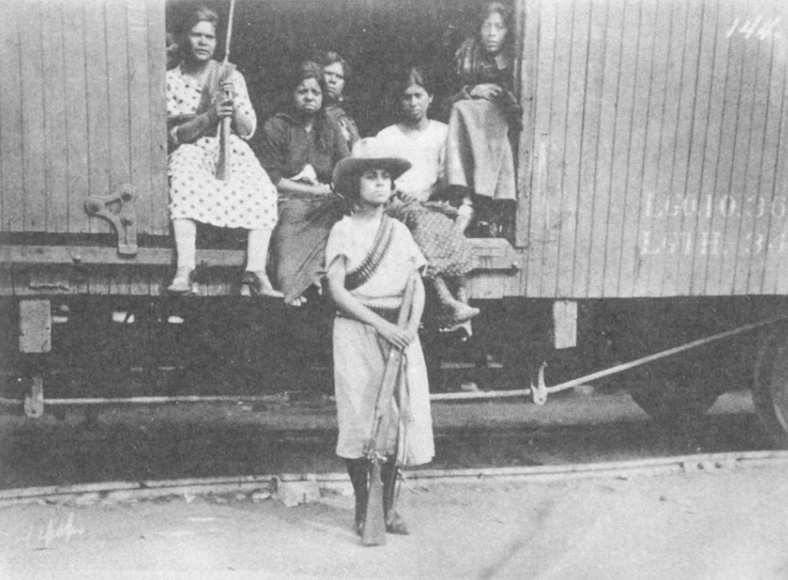
  • 1. The word soldaderas refers to women who followed men in camp and those who fought in battles. During Mexico’s Revolutionary War, soldiers paid women to work on their behalf as servants. These women purchased supplies, cleaned clothes, cooked, cared for the sick, buried the dead, and some were prostitutes. Many women were expected to follow their husbands, fathers, brothers, lovers, etc. into the military. Yet, others fought in battle as soldiers, generals and colonels. They lead militias of men and women troops to fight during the Revolution (Salas 1990, xii, 44; Monsiváis 2006, 5).
Soldaderas as Camp Followers
  • 2. Not all women willingly followed men in battle. Some were abducted and raped. There are stories of young girls been taken from their homes and forced to follow the troops while their mothers cried at home. Newspaper accounts tell of women kidnapped on trains and even one reports that forty women, almost the entire female population from the village of Jojutla, were abducted by Zapatistas. Nuns were taken from their convent and forced to accompany the Carrancistas. After the war, many of these nuns were pregnant or had children of their own. Parents fought back by hiding their children in the fields, posting look outs for revolutionaries, disguising their daughters etc. (Salas 1990, 40-42).
Soldaderas during the Mexican Revolution
  • 3. Women were so very brave. They lead regiments of men in battle as colonels and generals. They also led regiments comprised entirely of women in battle. Women were sent on secret spy missions, brought ammunition to men while dodging bullets during the line of fire, and some were so courageous that they were feared and respected by men (Salas 1990, 41-43).
Soldadera on Horse
Soldadera on Horse
  • 4. As we dance Las Adelitas we wear cartridge belts around our torso, carry rifles and use a serious expression to portray these tough, courageous women. We wear skirts and blouses typical of the time period. Yet, some soldaderas dressed as men. They wore pants, shirts, or even dressed in men’s military uniforms. See pictures below.
Soldadera posing for the camera
Soldadera  Posing
Carmen Robles, Soldadera
  • 5. After the Mexican Revolutionary War, women’s military contributions were devalued. Women were not called colonels or soldiers but were listed under the general term of soldaderas. The military classified soldaderas as wives. Very few women veterans received military pensions. Most did not. Women who did receive pensions could not re-marry nor officially participate in the military (Arce 2017, 65, 82). In addition, after the Revolution, images of the soldaderas were romanticized in literature, film, art, and song. Soldaderas were not depicted as diverse, independent women many of which fought in battle but instead they were cast along four main stereotypes.  Soldaderas were characterized as either self-sacrificing, sexually carefree, sweethearts, or soldiers (Salas 1990, 69, 82).

My Thoughts

I have danced and taught the choreographies that represent La Revolución for years.Yet, I believe that a close study of history alongside our folklórico practice really allowed me the ability to fully appreciate the individual spirit of these brave and courageous women.

Written by Gabriela Mendoza-Garcia Ph.D.

Works Cited

Arce, Christine.2017. México’s Nobodies: The CulturalLegacy of the Soldadera and Afro-Mexican Woman. Albany: State University ofNew York.

Monsiváis, Carlos.2006. “Foreword.” In Sex in theRevolution: Gender, Politics, and Power in Modern Mexico, ed. JocelynOlcott, Mary Kay Vaughn, and Gabriela Cano. 1-20. Durham: Duke University Press.

Salas, Elizabeth. 1990. Soldaderas in the Mexican Revolution: Myth and History. Austin: The University of Texas Press.

FurtherReading

Craske, Nikki. “Ambiguities and Ambivalences in Making the Nation: Women and Politics in 20th Century Mexico.” Feminist Review.79 (2005) 116-133.

Olcott, Jocelyn, Mary Kay Vaughn, and Gabriela Cano. 2006. Sex and the Revolution: Gender,  Politics, and Power in Modern Mexico. Durham: Duke University Press.

Poniatowska,Elena, 2016. Hasta no verte Jesús mío.Madrid: Alianza Literaria.

Schaefer, Claudia. 1992. Textured Lives: Women, Art, and Representation in Modern Mexico. Tucson: The University of Arizona Press.

Turner, Frederick C. 1967. “Los Efectos de la Participación Femenina en la Revolución de 1910.” Historia Mexicana. 16 no. 4 (April-June): 603-620.

All photos are in the public domain.

Copyright, 1/6/2019, Mendoza-Garcia

Gabriela Mendoza-García Ph.D. is an Artist and Scholar. She has her own dance school and company called the Gabriela Mendoza-García Ballet Folklórico in Laredo, Texas.  Dr. Mendoza-Garcia founded this group in 2013 and teaches children and adults of all ages. Her company consists of seasoned folklórico dancers with years of experience performing this art form. She teaches traditional Mexican folklórico dance pieces, as well as, works that are inspired by her scholarly research. Her scholarship includes: Dancing throughout Mexican History (1325-1910), History & Folklore booklet with an accompanying documentary sponsored by the Webb County Heritage Foundation, The Jarabe Tapatío: Imagining Race, Nation, Class and Gender in 1920s Mexico published by Oxford University Press, an on-line blog, writings for Asociación Nacional de Grupos Folklóricos, and others.

Dancing Throughout Mexican History (132-1910)

How do Folklorico Dancers Embody the Son?

 The Son -Mexico’s  Dance                                                                                                  

Mestizo folk music was born from the blend of the Indigenous and Spanish cultures in Mexico. In the seventeenth century, a new variety of generic song and dance, the son (peasant song) appeared. (Scholars today acknowledge the son as having mestizo, Indigenous, and African influences). As the son became popular, those sones which were native to a particular locale were called sones de la tierra. By the nineteenth century, sones were identifiable as typically Mexican. Sones are popularly sung and danced throughout Mexico. The huapango, the jarana, the Chilean son, the son jarocho, and the jarabe are all sones which stem from the Spanish zapateado steps, dances, and music. Most sones developed from Spanish peasant or rural music. A son differs from other music in its “form, rhythm, choreography, and textual content.” Its characteristic “unequal triple rhythm” is based on “patterns of six beats.”

Dancing to a Son
Independent couples dance sones, many of which are distinguished by the rapid action of the feet in a zapateado. The zapateado serves as accompaniment to the music when the rhythm of the dancers’ feet produce percussion-type sounds. The zapateado’s percussive accompaniment and many of the melodic instruments, such as the violin, stop while the lyrics of the son are sung. A zapateado produces its sound by the fast stamping of the feet on hard ground or on a raised wooden platform called a tarima. As “one of the universal traits of the son,” the zapateado is also a particular kind or type of son. Many of the sones from southern Mexico which are accompanied by marimba music are generally known as zapateados. Many of these belong to the repertory of sones de marimba or sones istmeños.

Lyrics of a Son
Lyrics for sones are usually written in rhyming couplets with eight-syllables in each line. The son usually opens with a dedication of the performance either to the gracious audience, to a particular important individual in the audience, or to beauty in individuals or in nature. The couplets of the sones often weave colorful tapestries of men and women in love surrounded by the beauties of nature. Malageña, a love overture to a girl from Malaga in Spain; Petenera, a tragedy about sailors set to unusually lively rhythm; and Indita, a description for the passion of Indigenous women are three typical sones that are appropriate for singing only.
In this book, Martinez-Hunter continues to describe the different types of dances that sones are performed to. These include the chilena, huapango, son jarocho, jarana, and the jarabe.

My Thoughts                                                                                                                                      

The sones and jarabes are still popular even today in the 21st century. We dance sones and jarabes from the states of Nayarit, Tamualipas, Jalisco, Veracruz to name a few.  A few of us living in the United States even create our own choreographies to the sones of Mexico.

Photos courtesy of Gabriela Mendoza-Garcia

Copyright, 10/14/2018, Mendoza-Garcia

Gabriela Mendoza-García Ph.D. is an Artist and Scholar. She has her own dance school and company called the Gabriela Mendoza-García Ballet Folklórico in Laredo, Texas.  Dr. Mendoza-Garcia founded this group in 2013 and teaches children and adults of all ages. Her company consists of seasoned folklórico dancers with years of experience performing this art form. She teaches traditional Mexican folklórico dance pieces, as well as, works that are inspired by her scholarly research. Her scholarship includes: Dancing throughout Mexican History (1325-1910), History & Folklore booklet with an accompanying documentary sponsored by the Webb County Heritage Foundation, The Jarabe Tapatío: Imagining Race, Nation, Class and Gender in 1920s Mexico published by Oxford University Press, an on-line blog, writings for Asociación Nacional de Grupos Folklóricos, and others.


Gabriela Mendoza-Garcia Ballet Folklorico Dancing Veracruz

Transformations of Folklorico

In the book Hybrid Cultures: Strategies for Entering and Leaving Modernity (1995), Néster García Canclini argues that traditional practices that identify us as a nation or people are highly valued. They are thought of as a treasure from the past and are so valuable that we imagine them as beyond question. We are so intent on preserving, restoring, and disseminating these traditions that we fail to see the ways in which these traditions interact, contradict, and respond to modern day influences. Canclini continues by stating that some people believe that folklore should remain unchanged, and that progress as well as modern communication alters and destroys it and makes it lose its identity. Instead, he argues that modern influences do not erase folklore but instead transform it (108, 148-149). I have noticed this same line of thought amongst folkloristas. We love our dances so much that we fail to realize just how much these dances continue to be transformed by history, politics, and modern day influences. I argue that these dance influences are part of a circular pattern where the communities are influenced by modern day politics, trends and vice versa. Plus, as Canclini mentions it is so important is to think through the contradictions expressed within these dance practices.

Folklorico Transforms throughout History

Thinking through Canclini’s ideas, let’s use a historic example from the book Dancing Throughout Mexican History 1325-1910 (2018) as written by Sanjuanita Martínez-Hunter and edited by myself to show the ways in which folklorico dance is transformed based upon political upheavals. The following is an excerpt.

The Spanish conquistadors came to forcefully impose their way of life and morality on the Aztec people. The conquerors saw no value in the Indigenous culture or religion…..[1]

However, the Spanish conquerors faced the problem that many thousands of their Indigenous subjects worshipped through dance. Desiring at all cost to save the souls of the newly conquered people, the conquistadors incorporated polytheistic festivities and dance into their sacramental rites. In their eyes, substituting the symbols and deity of Christianity for the polytheistic motifs and deities while preserving the pomp and color of polytheistic ceremonies helped actualize the transition from the sinful life of certain damnation to the holy life of eternal joy.[2]

As the acculturation progressed, the religious fiestas changed in form. Ancient deities who had presided over the festive rituals were replaced by the patron saints of Christianity. Dance included themes such as the struggle between Christianity and atheism, the medieval Crusades, and even the Spanish Conquest (43).[3]

In her writings, Martínez-Hunter continues to describe the ways in which the indigenous people also changed their dances using new dance movements, musical instruments, and themes of the time period. In other words, the indigenous people and the colonizers were influenced by each other and made changes to the dances to transform them. They did not stay the same during times of political unrest, uncertainty, or peace. Instead, Canclini urges us to examine the many contradictions that these dances express.

Folklorico is Constantly Changing Even Today

Now, let’s thinks of a more contemporary example which shows the ways in which Mexican folklorico dances are influenced by and react to contemporary dance trends.  Folklorico dance companies are known for their staged presentations of dances as performed by a community of people. Anthony Shay in “Choreographing Identities: Folk Dance, Ethnicity, and Festival in the United States and Canada” (2006) argues that dance communities borrow styles and ideas from folkloric dance companies. He quotes an interview in which Amalia Hernández of the Ballet Folklórico de México recounted the following story:

With only a small trace of irony, Hernandez describes being invited to judge a contest of traditional dancing in culturally conservative Veracruz. Watching the competition, Hernandez discovered that the participants were openly incorporating steps she had invented for her classic Ballet Folklórico de México suite. “I didn’t say a thing” she recalls with a big smile. “The tradition is like a river of style that goes on (Segal 1997, 67).”

This is yet another example showing the ways in which dance influences are two-fold and form a circular pattern. In other words, just as we are influenced by the dances of the community of people they are influenced by the folkloric dances presented by companies on stage, on television, via the internet etc. Both examples reveal this circular effect, where communities inspire the staging of the dances and vice versa. By carefully analyzing the dances, we can start thinking about the contradictions expressed.

My Thoughts

I argue that folklorico dances are influenced by their historic and political surroundings, as well as, modern day influences. In addition, they are dynamic, fluid and travel across communities in a circular manner.  It’s time we start analyzing the dances to think about the many contradictions they express. What do you think?

Announcement: The book Dancing Throughout Mexican History (1325-1910) by Sanjuanita Martínez-Hunter and edited by Gabriela Mendoza-Garcia is scheduled to be released in October 2018. It will be available for purchase through amazon. I will post more details at a later date.

Works Cited

Martínez-Hunter, Sanjuanita. Dancing Throughout Mexican History (1325-1910). South Carolina: Mexico Lindo Press, 2018.

Shay, Anthony. Choreographing Politics: State Folk Dance Companies, Representation, and Power. Connecticut: Wesleyan University Press, 2002.

Footnotes

[1] Anne Schley Duggan, et.al., Folk Dances of the United States and Mexico (New York: A.S. Barnes and Company, 1948), p. 103.

[2] Ibid.

[3] Luis Covarrubias, Regional Dances of Mexico (México: Fischgrund Litographia Record, n.d.), p. 34.

All photos courtesy of Gabriela Mendoza-Garcia

Copyright, 9/9/2018, Mendoza-Garcia

Gabriela Mendoza-García Ph.D. is an Artist and Scholar. She has her own dance school and company called the Gabriela Mendoza-García Ballet Folklórico in Laredo, Texas.  Dr. Mendoza-Garcia founded this group in 2013 and teaches children and adults of all ages. Her company consists of seasoned folklórico dancers with years of experience performing this art form. She teaches traditional Mexican folklórico dance pieces, as well as, works that are inspired by her scholarly research. Her scholarship includes: Dancing throughout Mexican History (1325-1910), History & Folklore booklet with an accompanying documentary sponsored by the Webb County Heritage Foundation, The Jarabe Tapatío: Imagining Race, Nation, Class and Gender in 1920s Mexico published by Oxford University Press, an on-line blog, writings for Asociación Nacional de Grupos Folklóricos, and others.

Folklorico Books for Every Folklorista’s Collection

Part of our responsibilities as Folkloristas is to research using books, newspapers, archives, oral histories, and bodily transmissions. We need to fully engage as practitioners of our art form. Our choreographies need to be grounded in theory, text, oral/bodily accounts, and especially in history to create and/or transmit them.  Part of this process involves collecting books written by scholars/artists that we can use as a reference. Every Folklorista that I know has their own book collection that they use to inspire their choreographies and learn more about our history. So, this month I decided to share with you my favorite books that have helped me as a scholar, writer, and choreographer. So, here it goes… Read More