Aztec dancers

5 Amazing Dances Performed by the Aztec People

Oftentimes, we depict Aztec dancing as very solemn with a ritual purpose. Yet, the Aztecs danced different ways for many occasions. Spanish chronicler Fray Diego Durán (1537-1588) in his text God and Rites tells us about the many ceremonial and festive dances of the Aztec people. Although his writings are from the Spanish viewpoint, they give us valuable insight into the dances of this remarkable people. I am most interested in the dances performed for festive occasions since I am not familiar with any staged adaptations.

Joyful dances— Durán writes of a dance which he called dances of youth. These dances and songs spoke of love and flirtation. They were performed on happy occasions. Think about it, these are themes still popular today.  I am amazed at how many songs today write of love lost and found (295).
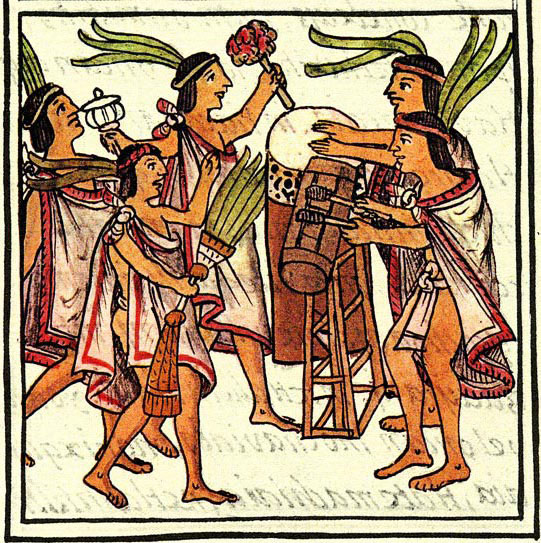
Aztec Dance

Scandalous dances—One dance scandalized Durán in particular. He says it is known as Cuecuechcuicatl (tickling dance or dance of the itch). Durán describes this dance as “roguish” and compares it to the Spanish sarabande because dancers wriggle, grimace, and are immodest (295). The sarabande was outlawed in Spain in 1583 because it was thought of as depicting unbridled passions (Martinez-Hunter 81-82). In a poem written by the Italian Giambattista Marion called L’Adone he describes the sarabande as,

The girls with castanets, the men with tambourines, exhibit indecency in a thousand positions and gestures. They let the hips sway and the breasts knock together. They close their eyes and dance the kiss and the last fulfillment of love (Martinez-Hunter 83).  

Using this description as a guide, we can get an idea of how the Cuecuechcuicatl was danced.

Comedic Dances—Durán calls the Dance of the Humpbacks comedic. He describes this dance as extremely merry and very funny. Here, men wear masks to represent old men (297). Many scholars believe he is referring to the Danza de los Viejitos. It is known as a humorous dance because young men wear masks over their face to disguise themselves as old men (Covarrubias n.p, Flores Barnes 25, 50, Toor 357). They dance gingerly as little old men using canes to walk slowly. Their canes have an animal carved at the handle (Toor 357). Then, the music which uses string instruments such as the jarana, skips to an up-beat tempo and the little old men begin to dance with vigor, strength, and speed until they pretend to collapse from fatigue (Covarrubias n.p, Flores Barnes 25, 50, Toor 357).

Acrobatic dances—In Durán’s writings he states that there is this dance that begins with a “simpleton who pretended to understand all his masters’ words backward, turning around his words” (297). Then, a juggler immediately follows this performance. Here, the juggler balances a log with his feet. He is so skillful at his tricks that he amazes the audience.

Imitation Dances–In another dance, the Aztecs painted themselves black or white or green. They wore feathers on their heads and their feet.  Some women stand in the center while both men and women pretend to drink from jars and cups that they held in their hands.  The dancers act as if they are drunk. Durán indicates that this dance was created for fun and amusement (297-298).

My Thoughts

Durán tells us that the Aztec people performed thousands of games, farces, comedies, and joyful songs. This small list reveals that the Aztec people danced for religious and secular events. They danced for all occasions not just solemn ones. I am discovering that I am always learning something new about the Aztec people.

Works Cited

Covarrubias, Luis. n.d. Mexican Native Dances. Mexico D.F.: Fischgrund.

Durán, Diego. 1977. The Book of God and Rites and the Ancient Calendar. Translated by Fernando Horcasitas, Doris Heyden, and Miguel León Portrilla. Norman: University of Oklahoma Press.

Flores Barnes, Alura. 1935, “The Dances of Mexico: Dance of the Viejitos.”  Real Mexico. 4(20): 26,50.

Martínez-Hunter, Sanjuanita. 2018. Dancing Throughout Mexican History (1325-1910). Edited by Gabriela Mendoza-García. San Bernardino: Mexico Lindo Press.

Scolieri, Paul A. 2013. Dancing the New World: Aztecs, Spaniards, and the Choreography of Conquest. Austin: University of Texas Press.

Toor, Frances. 1947. A Treasury of Mexican Folkways. New York: Crown Publishers, Inc.

Photos are in the public domain.

Copyright, April 4, 2021, Mendoza-Garcia

Gabriela Mendoza-García Ph.D. is an Artist and Scholar. She has her own dance school and company called the Gabriela Mendoza-García Ballet Folklórico in Laredo, Texas.  Dr. Mendoza-Garcia founded this group in 2013 and teaches children and adults of all ages. Her company consists of seasoned folklórico dancers with years of experience performing this art form. She teaches traditional Mexican folklórico dance pieces, as well as, works that are inspired by her scholarly research. Her scholarship includes: Dancing throughout Mexican History (1325-1910), History & Folklore booklet with an accompanying documentary sponsored by the Webb County Heritage Foundation, The Jarabe Tapatío: Imagining Race, Nation, Class and Gender in 1920s Mexico published by Oxford University Press, an on-line blog, writings for Asociación Nacional de Grupos Folklóricos, and others.


Aztec Dancing

Aztec Dance: Re-writing History

One time my two dear friends fought with each other. Of course, I was stuck in the middle. Each one told me their side of the story. All I could do was sit and listen to them tell me their perspectives on what happened to cause this disagreement. Have you ever been in this situation?

Well, this reminds me of how we think of history. Believe it or not, our ideas about history are always changing. When I was growing up, I was taught to think of history as searching for the “truth.” Now, I know that history is more like listening to different perspectives—not necessarily finding the “truth” as in this case with my two friends arguing with each other.

Our understanding about Aztec people and their dancing is constantly changing. Scholars still debate among each other, offer up different perspectives, and discover new finding even in the 21st century. Here are a few new ideas that I find fascinating.

  1. The Aztecs Never Thought of Cortès as a God

When I was growing up, I remember learning in my history class that part of the reason that Cortès was able to defeat the Aztecs is that they thought of him as the god Quetzalcoatl who was supposed to return to rule them. Matthew Restall in When Moctezuma Met Cortès (2018) argues that this a myth designed to justify the conquest of the Aztec people. Restall states that Cortès never mentions in any of his writings that the Aztecs thought of him as Quetzalcoatl. In fact, this idea surfaced in a poem written by a Spaniard in 1798 and continued from there (Restall 43-44). Think about it, if you position the Aztecs as simple minded people who believe that the Spaniards are gods, then these are people who need the guidance and help of the Spanish.  They must be conquered, guided, and converted to Christianity.

Aztec Music and Dancing

2. Aztec Dancing Used to Justify the Conquest

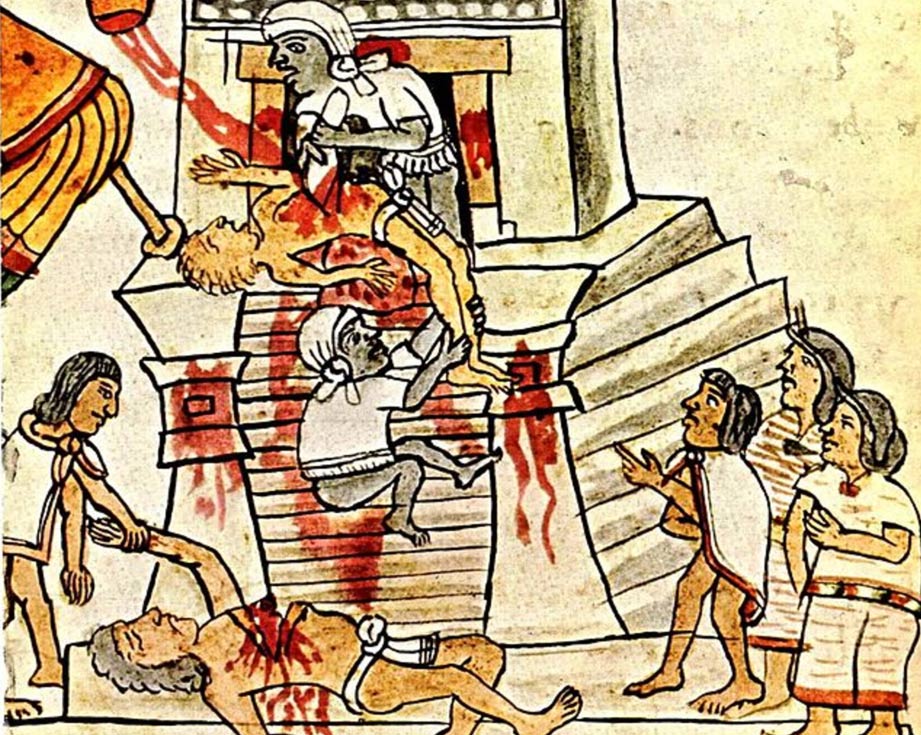
  • As I read through the book Dancing in the New World: Aztecs, Spaniards, and the Choreography of Conquest by Paul A. Scolieri (2013), I vividly imagine the Aztecs dancing for their social and religious ceremonies. Yet, what is remarkable to me are the ways in which Scolieri notes that the Spaniards justified the conquest of Mexico by referencing Aztec dancing. For example, He writes of the Noche Triste in which thousands of unarmed Aztecs were massacred by the Spanish conquistadors as they danced to celebrate the Toxcatl ceremony. The dancers were nobles and warriors. All were deliberately killed by the Spanish because they thought it was a ruse to overthrow them. He notes how some Spanish chroniclers lamented the massacre of the Aztec people and others romanticized Cortès’ involvement as a rescuer. Furthermore, he describes so many dances involving human sacrifice. These dances involving human sacrifice allowed the Spaniards to have even more reasons to convert them to Christianity (92, 101-102, 70-72).  Scolieri shows us the interconnections of Aztec dancing with history, politics, and religion.

3. Concheros Dancing has Many Interpretations

  • In her writings, Alura Flores de Angeles “Godmother of Mexican Dance” and other scholars argue that conchero dances do not have a direct indigenous lineage to pre-hispanic dance. Thus, I couldn’t understand why practitioners would tell me that the dances do have an unbroken indigenous lineage. That is until I read The Role of Interpretation in Determining Continuity in Danza Aztec History by Kristina Nielson (2018). This writing is from a blog taken from Nielson’s dissertation. As she explains it scholars interpret the move from indigenous worship to Christian worship and vice versa of the conchero dances over time as a break in lineage. Yet, practitioners see these changes as transformations of the dances which are a continuous cycle and not a break at all. Here, she argues that scholars and practitioners have different ways of interpreting the history of the concheros dancing. So, this explains this disconnect that I experienced.

My Thoughts

As I debunk the idea of history as a “truth,” I wonder how this idea affects our own understanding of folklórico dance traditions. What happens when we think of folklórico dancing as a perspective and not a “truth?”  What do you think?

Works Cited

Nielson, Kristina. The Role of Interpretation in Determining Continuity in Danza Azteca History. Mexica Resistance (blog). June 12, 2018. Accessed February 20, 2019. https://mexika.org/.

Restall, Matthew. (2018). When Moctezuma Met Cortès. New York: HarperCollins.

Scolieri, Paul A. (2013). Dancing in the New World: Aztecs, Spaniards, and the Choreography    of Conquest. Austin: The University of Texas Press.

All pictures are in the public domain.

Copyright, 3/3/2019, Mendoza-Garcia

Gabriela Mendoza-García Ph.D. is an Artist and Scholar. She has her own dance school and company called the Gabriela Mendoza-García Ballet Folklórico in Laredo, Texas.  Dr. Mendoza-Garcia founded this group in 2013 and teaches children and adults of all ages. Her company consists of seasoned folklórico dancers with years of experience performing this art form. She teaches traditional Mexican folklórico dance pieces, as well as, works that are inspired by her scholarly research. Her scholarship includes: Dancing throughout Mexican History (1325-1910), History & Folklore booklet with an accompanying documentary sponsored by the Webb County Heritage Foundation, The Jarabe Tapatío: Imagining Race, Nation, Class and Gender in 1920s Mexico published by Oxford University Press, an on-line blog, writings for Asociación Nacional de Grupos Folklóricos, and others.

Dancing Throughout Mexican History (132-1910)

How do Folklorico Dancers Embody the Son?

 The Son -Mexico’s  Dance                                                                                                  

Mestizo folk music was born from the blend of the Indigenous and Spanish cultures in Mexico. In the seventeenth century, a new variety of generic song and dance, the son (peasant song) appeared. (Scholars today acknowledge the son as having mestizo, Indigenous, and African influences). As the son became popular, those sones which were native to a particular locale were called sones de la tierra. By the nineteenth century, sones were identifiable as typically Mexican. Sones are popularly sung and danced throughout Mexico. The huapango, the jarana, the Chilean son, the son jarocho, and the jarabe are all sones which stem from the Spanish zapateado steps, dances, and music. Most sones developed from Spanish peasant or rural music. A son differs from other music in its “form, rhythm, choreography, and textual content.” Its characteristic “unequal triple rhythm” is based on “patterns of six beats.”

Dancing to a Son
Independent couples dance sones, many of which are distinguished by the rapid action of the feet in a zapateado. The zapateado serves as accompaniment to the music when the rhythm of the dancers’ feet produce percussion-type sounds. The zapateado’s percussive accompaniment and many of the melodic instruments, such as the violin, stop while the lyrics of the son are sung. A zapateado produces its sound by the fast stamping of the feet on hard ground or on a raised wooden platform called a tarima. As “one of the universal traits of the son,” the zapateado is also a particular kind or type of son. Many of the sones from southern Mexico which are accompanied by marimba music are generally known as zapateados. Many of these belong to the repertory of sones de marimba or sones istmeños.

Lyrics of a Son
Lyrics for sones are usually written in rhyming couplets with eight-syllables in each line. The son usually opens with a dedication of the performance either to the gracious audience, to a particular important individual in the audience, or to beauty in individuals or in nature. The couplets of the sones often weave colorful tapestries of men and women in love surrounded by the beauties of nature. Malageña, a love overture to a girl from Malaga in Spain; Petenera, a tragedy about sailors set to unusually lively rhythm; and Indita, a description for the passion of Indigenous women are three typical sones that are appropriate for singing only.
In this book, Martinez-Hunter continues to describe the different types of dances that sones are performed to. These include the chilena, huapango, son jarocho, jarana, and the jarabe.

My Thoughts                                                                                                                                      

The sones and jarabes are still popular even today in the 21st century. We dance sones and jarabes from the states of Nayarit, Tamualipas, Jalisco, Veracruz to name a few.  A few of us living in the United States even create our own choreographies to the sones of Mexico.

Photos courtesy of Gabriela Mendoza-Garcia

Copyright, 10/14/2018, Mendoza-Garcia

Gabriela Mendoza-García Ph.D. is an Artist and Scholar. She has her own dance school and company called the Gabriela Mendoza-García Ballet Folklórico in Laredo, Texas.  Dr. Mendoza-Garcia founded this group in 2013 and teaches children and adults of all ages. Her company consists of seasoned folklórico dancers with years of experience performing this art form. She teaches traditional Mexican folklórico dance pieces, as well as, works that are inspired by her scholarly research. Her scholarship includes: Dancing throughout Mexican History (1325-1910), History & Folklore booklet with an accompanying documentary sponsored by the Webb County Heritage Foundation, The Jarabe Tapatío: Imagining Race, Nation, Class and Gender in 1920s Mexico published by Oxford University Press, an on-line blog, writings for Asociación Nacional de Grupos Folklóricos, and others.


Was Aztec Dance Humorous?

Today, in the twenty-first century I have seen many, many Aztec dances as performed by different folklorico groups[1]. Usually, when we perform the Aztec dances they are depicted as very solemn and part of a ritual ceremony. It is true that the Aztecs did dance as part of religious celebrations.  They also danced war and victory dances. Yet, not all the Aztec dances were serious.  Some of these dances were humorous and meant to entertain. The following is an excerpt from the book Dancing Throughout Mexico (1325-1910) as written by Sanjuanita Martínez-Hunter and edited by myself.

Read More