Performing Nation: The Jarabe Tapatío of 1920s Mexico

As I was researching for my latest project, I happened to find my article entitled, “The Jarabe Tapatío: Imagining Race, Nation, Class, and Gender in 1920s Mexico” as published in The Oxford Handbook of Dance and Ethnicity available for preview on-line. Please click below.

Oxford Handbook of Dance and Ethnicity

I invite you to read through this article and tell me your thoughts. I have decided to give a brief summary of my arguments from this article for this months’ blog.

Read More
Folklorico Dance (Jalisco, Veracruz, Guerrero etc.) as a Form of Prayer

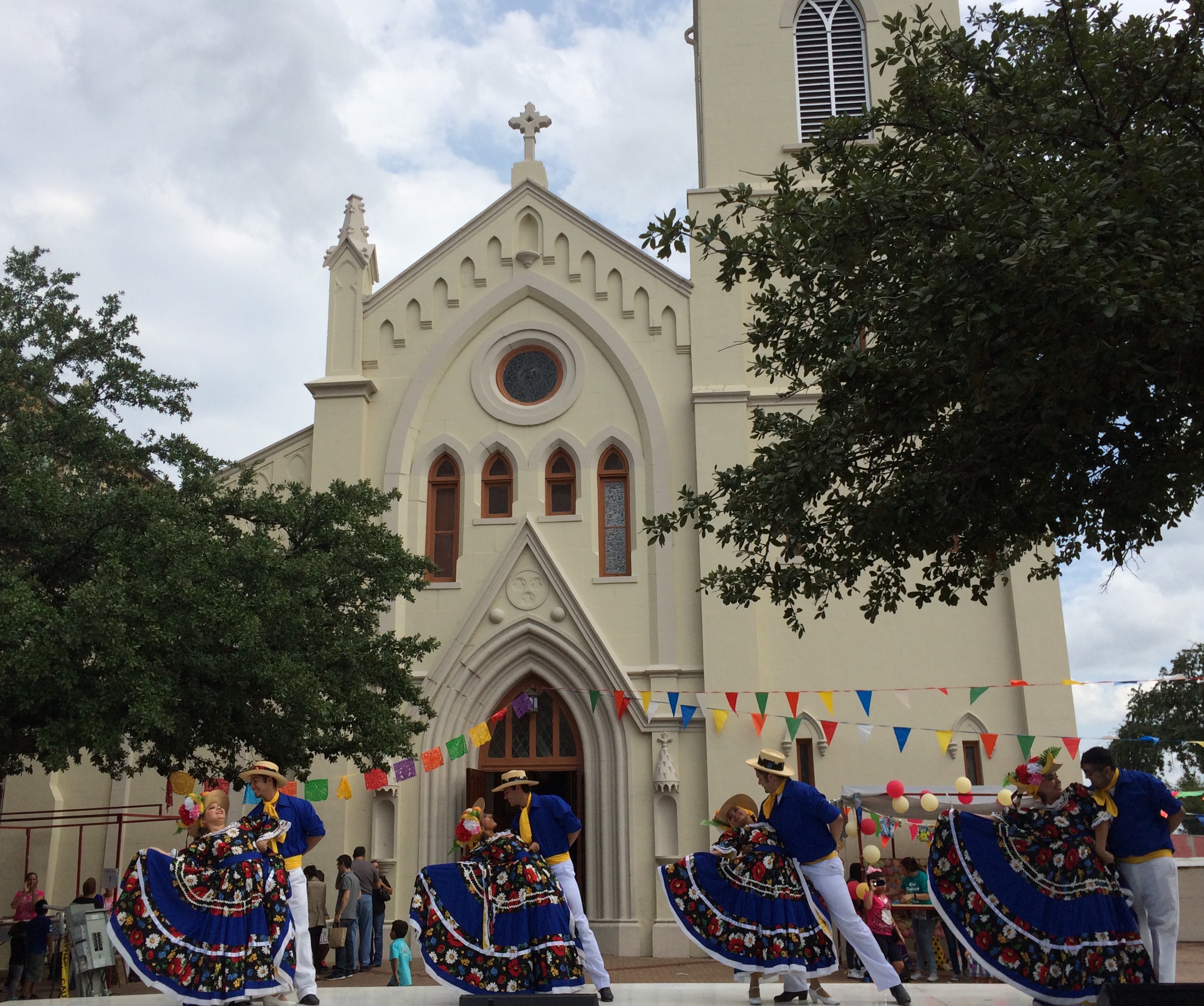
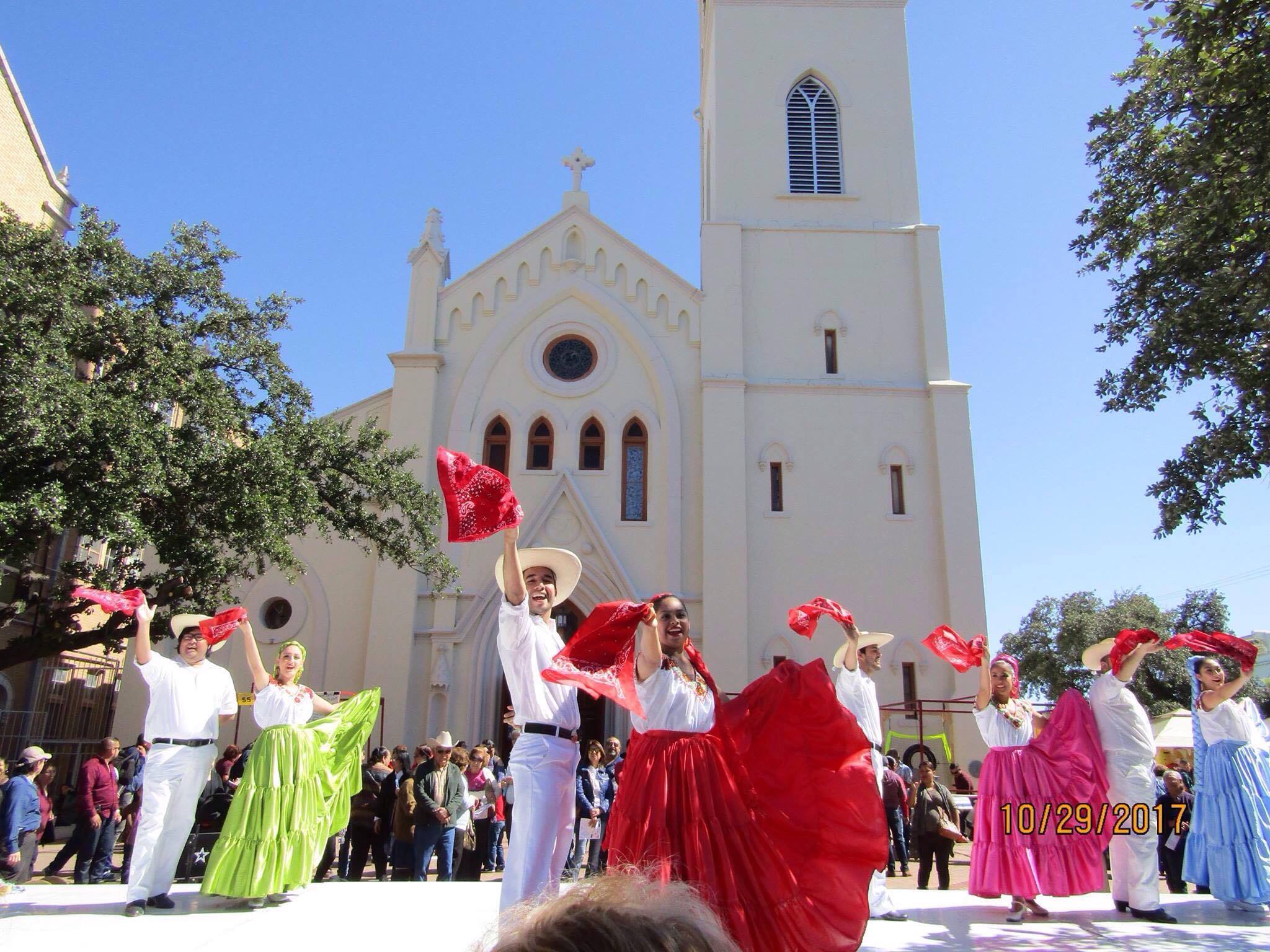
There we stood by the stage outside the St. Augustine Cathedral in Laredo, Texas, dressed in full costume. All my dancers and I were waiting our turn to perform at their Jamaica. Suddenly the bells rang indicating that mass had ended. As the churchgoers exited the building they walked right next to us as we stood by the stage. The priest came out of the church and walked all around us blessing us with holy water. Sprinkles of water touched my arms, dress, and head. Then, the priest got up on stage and welcomed everyone with a prayer. As we bowed our heads, I spoke silently to God thanking him with all my heart. Then, I prayed to God dedicating these dances to Him.  Just then, the organizer gave us the cue to begin. I took the stage performing the dances of Costa Chica, Guerrero with my dance group. We danced in front of the cathedral, before parishioners, family, friends and God.

Read More

Folklorico Dance as an Embodied Practice

Mexican Folklorico Dance is an art form that is passed down from parent to child and teacher to student. Yet, oftentimes we fail to really dig deep and closely look at what our dance movements tell us about ourselves as a people. We need to ask ourselves the following question. What are we trying to say when we dance?

Read More

Folklorico Dance as an Invented Tradition

Many times we believe that the Mexican folklorico dances that we perform have a long, long history.  In reality, many times the costumes, music, and dance steps are recent creations but are thought of as ancient. Eric Hobsbawn in his classic text “Inventing Traditions” (1983) coins this term to refer to “traditions actually invented, constructed and formally instituted and those emerging in a less easily traceable manner within a brief and date-able period-a matter of a few years perhaps- and establishing themselves with great rapidity (1).”  He notes that these invented traditions are practices with a given set of rules, rituals, that are repeated and that are thought to have a long history but in actuality are very recent (1).  Many of our Mexican Folklorico costumes, music, and dances fall under this definition of invented traditions.  I argue that many folklorico dances are thought to be old traditions but are were invented in the 20th century for performances. Let use a few examples of Mexican Folklorico costumes, music, and dances so we can think about this a bit further.

Read More

Folklorico Dance as Inspiration

Way back when, as a young dancer I mistakenly thought that all the folklorico dances that I learned came from communities of people. It was until I entered graduate school that I realized that many of these dance were created specifically for the stage by Mexican choreographers. Many times the Mexican government sought ways to distinctly represent every state of Mexico through music and dance.

Read More

Teaching Folklorico Dance as a Living Practice

“Empecé a enseñar el jarabe tapatío a los extranjeros en 1932 y nunca lo he enseñado dos veces exactamente igual. Yo enseño parte del ‘Proceso Folclórico’ viviente, que como una mariposa, se transforma para hacerse más hermosa.”[I began teaching the Jarabe Tapatío to foreigners in 1932 and I have never taught it the same way twice.  My teachings reflect the living ‘folkloric process’, in which like a butterfly it is transformed to make it even more beautiful.] Alura Flores de Angeles “Godmother of Mexican Dance”

Read More

Bodily Memories

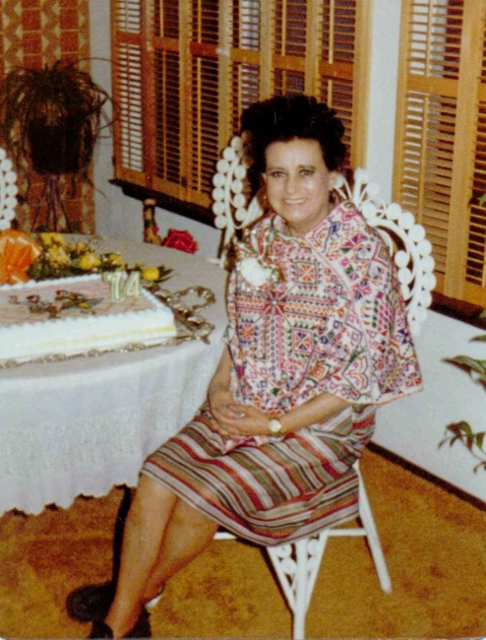
Bodily memories, teachings, feelings, movements passed on from one person to another. I have ingrained in my dancing body memories of my fabulous aunt, Sanjuanita Martinez-Hunter Ph.D., who was also my Dance Teacher.  Yes, I inherited her knick-knacks and collectibles but these are all just trivial pieces of material items in comparison to what I have truly inherited. I inherited her bodily knowledge. She was a dynamic personality who commanded attention upon entering every room. She connected on a personal level with every single student she taught. Most importantly, she imparted her Dance wisdom as taught from her own dance teachers to her students as a faculty at the University of Texas at Austin (UT).

Read More

I am Writing Again!

I have noticed that I have not written in this blog since 2015. Well, I am happy to say that I am back! I will be writing a monthly article beginning this month of July 2017. These articles will focus on my thoughts, inspirations, and reflections surrounding Mexican folkloric dance. Please read and give me constructive feedback. Thanks so much!

IMG_6187

Me in 2017  at my desk


Creation, Growth, and Inspiration: The Beginnings of the Asociación Nacional de Grupos Folklóricos (1974-1976)

This article was written specifically for the Asociación Nacional de Grupos Folkloricos in 2016. This blog post includes an excerpt. To read the article in its entirety please click on the link below

Asociación Nacional de Grupos Folklóricos

As I write this account, I note that it has been forty-one years since the Asociación Nacional de Grupos Folklóricos or ANGF first began as a non-profit organization. The purpose of ANGF is “to serve as a voice for the promotion and preservation of Mexican folklore traditions…”  This is accomplished by organizing an annual conference whereby participants meet to learn regional dances, music, and traditions of Mexico and Latin America countries by renown teachers. Read More


Alura Flores de Angeles “Godmother of Mexican Folk Dance” (1905-2000)

Alura Flores de Angeles was a woman who was ahead of her times. She was born in 1905 the daughter of an indigenous man from Xochimilco and an American born Protestant missionary. At a time in Mexico when more than 50 percent of the population was illiterate, Flores de Angeles graduated from the National Preparatory School in San Ildelfonso in 1924. She was a star athlete who participated in the swim, volleyball, and basketball teams. She graduated from the Universidad Nacional Autónoma de México (UNAM) majoring in Physical Education. Flores de Angeles stated that as part of her Physical Education training she learned Mexican folkloric dances.

Read More