Gabriela Mendoza-Garcia Ballet Folklorico Juvenil

A Note to Folkloristas–We Will Persevere

I could never have imagined the position that we are in–never in my wildest dreams. It began with me seeing all the postings on Facebook of my colleagues in California cancelling their concerts, classes, and even events. I noticed my friends in other states began to do the same. In Texas, Governor Abbot declared that all public schools would be closed until April 3rd. That is when it hit home! I suspended all my dance classes. I began to share warm-up exercises, zapateado techniques, and even host a few Facebook live on-line classes just so that we wouldn’t completely stop dancing folklórico entirely.  I had to re-think this entire situation. And these are my thoughts.

Aztec Codex Borgia
Aztec Codex Borgia

We come from a very strong people. Our people have overcome conquest, colonization, and even genocide. We adapted and survived the European colonization of the Americas, the Spanish inquisition, the War of Independence from Spain, the Reform Wars, the Mexican-American War, the Mexican Revolution, etc. In the United States, our people are both native people and immigrants to this country. We struggled and fought in many wars such as the American Revolution, American Indian Wars, the Mexican-American War, the Civil War, World War I, World War II, the Korean War, the Vietnam War, the Iraq War, the Gulf War, etc. We protested and fought for our civil rights during the Chicano Movement. We continue this fight even today. Our music and dance traditions continuously transform. They are inspired by the political events around us. We did not stop dancing in times of hardship. During the Spanish Inquisition, our people were punished with three hundred lashes with a whip, fined, and put in jail for singing and dancing the jarabes. This did not stop us from playing our music, singing our songs, and dancing.

Jarabes during the Colonial Era

Our people survived small pox which killed millions of indigenous people throughout the Americas in the 1500s. In Tenochtitlán approximately 150,000 died of small pox. We are the survivors of the measles, syphilis, influenza, etc. Throughout this decimation our ancestors continued dancing. Perhaps the reason we express so much joy in our dances is because our people turned to music and dance as a survival mechanism. Think about it, for a few hours they could leave their problems behind them while they danced. We should do the same

So, we shall too overcome this pandemic. As Folkloristas we are the storytellers, the shamans, the bearers of our cultural dance traditions in the twenty-first century. We will adapt, change, and continue dancing just as our ancestors before us. We will persevere!

Cover photo courtesy of Gabriela Mendoza-Garcia. Photos are in the public domain.

Copyright, 3/29/2020, Mendoza-Garcia

Gabriela Mendoza-García Ph.D. is an Artist and Scholar. She has her own dance school and company called the Gabriela Mendoza-García Ballet Folklórico in Laredo, Texas.  Dr. Mendoza-Garcia founded this group in 2013 and teaches children and adults of all ages. Her company consists of seasoned folklórico dancers with years of experience performing this art form. She teaches traditional Mexican folklórico dance pieces, as well as, works that are inspired by her scholarly research. Her scholarship includes: Dancing throughout Mexican History (1325-1910), History & Folklore booklet with an accompanying documentary sponsored by the Webb County Heritage Foundation, The Jarabe Tapatío: Imagining Race, Nation, Class and Gender in 1920s Mexico published by Oxford University Press, an on-line blog, writings for Asociación Nacional de Grupos Folklóricos, and others.
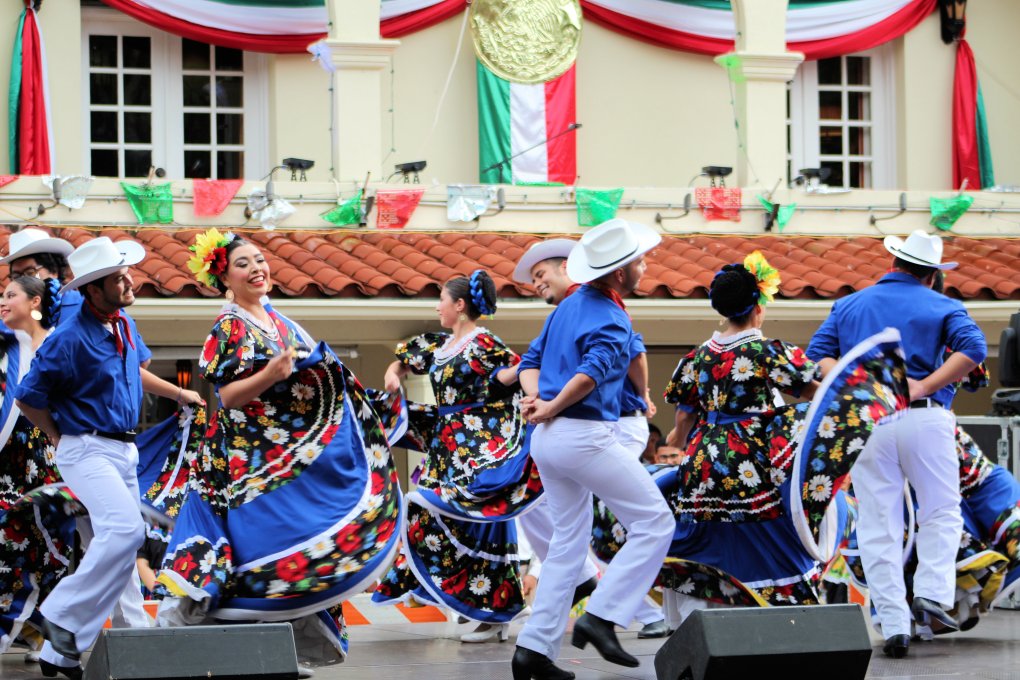
Dancing Folklorico: A Way of Speaking with the Body

Dancing Folklorico: A Way of Speaking with the Body

What does it mean to speak with the dancing body?

That is a question I was posed my first quarter as a graduate student at the University of California, Riverside. Yes, we discussed, debated this issue and even analyzed writings by current scholars. Yet, it was until I began my own research that I found that Nellie and Gloria Campobello, two Mexican dance maestras, had already begun this conversation in 1940.

Nellie and Gloria Campobello

Nellie Campobello was born in 1900 while Gloria Campobello was born in 1911. Nellie would later write a book of poems called Cartucho: Relatos de la Lucha en el Norte de México (1931) describing her experiences of having lived through the Mexican Revolution. Both sisters investigated Indigenous dances, taught in the Cultural Missions and were employed as teachers in the National Music and Dance Section of the Department of Fine Arts of the Secretary of Public Education. Later on, the Campobello sisters would be instrumental in forming the National Ballet of Mexico with Gloria becoming known as Mexico’s first prima ballerina.

To read more on the Campobellos please read my blog posts: Dancing our Gender within Folklorico Dance

Speaking with the Body

In the book Ritmos Indígenas de México (1940), the Campobellos argue that for the indigenouos people, movement is the principal form of expression. They have their own distinct ways of speaking, moving, and gesturing that parallels language. The Campobellos declare that the indigenous people speak more with the body than with their tongue. They advocate observing the indigenous people as they dance to understand their rhythms.  Body movement is a sacred language to the indigenous people. The Campobellos believe that through the analysis of movement you learn their secret beauty and pain inscribed in every movement (12-13). Let’s take the Campobello’s arguments a bit further. How does folklorico dance speak with the body?

Nowadays, Dance scholars believe that through a careful study of dance movements, you can understand the joy, pain, cultural, and even political stance of a people. So, we must analyze every zapateado, skirt flourish, even grito to hear the dancing body.

These groundbreaking ideas espoused by the Campobellos in 1940 are utilized by Dance scholars today when we study dance. Sixty-seven years after the Campobellos wrote Ritmos Indígenas de México, Diana Taylor argues the same ideas in her book The Archive and the Repertoire: Performing Cultural Memory in the Americas (2007). Here, she writes of the importance the indigenous people placed on the body to re-tell histories. She also declares we must all study the dancing body because the body is an archive that stores and disseminates memories, a sense of our identity, and our social knowledge (Taylor 2-3). So, our folklorico dances retain within their zapateados and movements memories of our ancestor’s histories. When we dance we tell stories of our identity and reveal our society’s customs.

How do we speak with our dancing bodies?

Speaking with our body
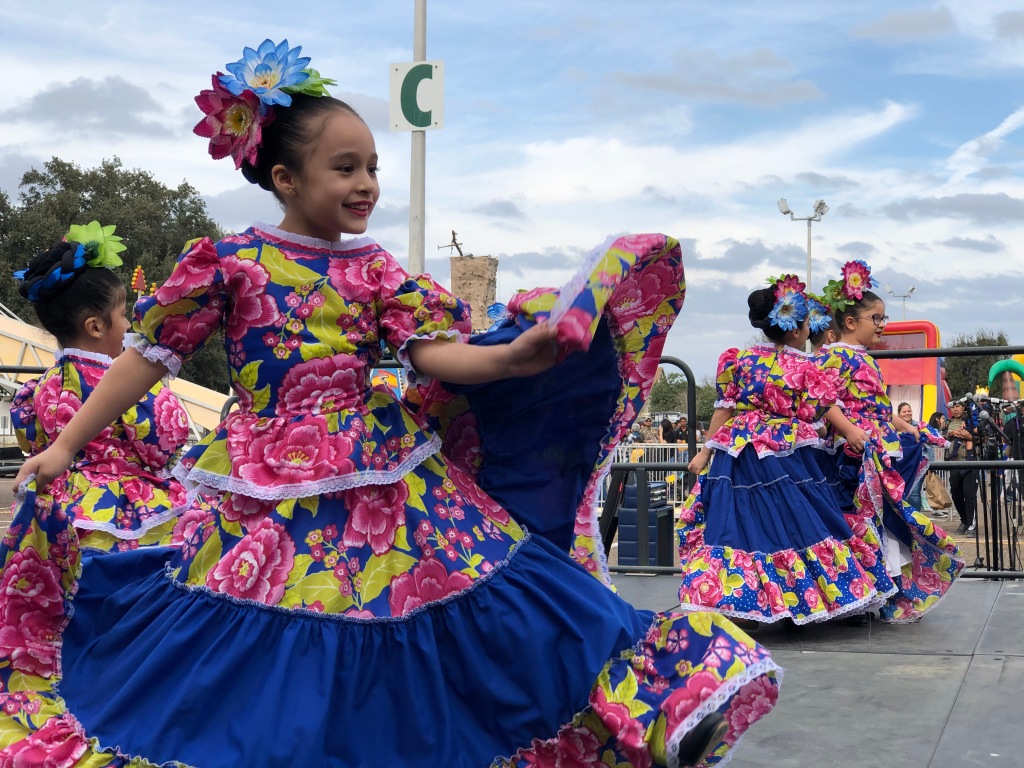
Photo of dancers of the Gabriela Mendoza-Garcia Ballet Folklorico Infantil

Barbara Browning in Samba: Resistance in Motion(1995) compares dance to a form of “bodily dialogue” in which many bodily meanings are spoken simultaneously and in different languages (2). Think about that, when we dance folklórico our body has many meaning that are spoken on multiple levels, at different tempos and rhythms.  What are we saying when we dance? It is up to us to think, study, and analyze these movements to find out what they are telling us.

My Thoughts

The Campobellos wrote about indigenous people and the ways in which dance made meaning for them. Yet, their ideas can be applied to all dance forms. Perhaps we should really sit back listen to our zapateados, hear the music, and connect with oral/written histories to really understand what our dances are saying. What do our folklórico dances say about us as a people? What do they say about our histories? What would it mean to us if we really listen to our dancing bodies and allow them to speak? Without saying a single word, our folklorico dancing bodies tell us so much.

Works Cited

Campobello, Nellie. 1940. Cartucho: Relatos de la Lucha en el Norte de México. México: E.D.I.A.P.S.A.

Campobello, Nellie and Gloria Campobello. 1940. Ritmos Indígenas de México. México.

Taylor, Diana. 2003. The Archive and the Repertoire: Performing Cultural Memory in the Americas. Durham: Duke University Press.

Photos courtesy of Gabriela Mendoza-Garcia

Copyright, 3/1/2020, Mendoza-Garcia

Gabriela Mendoza-García Ph.D. is an Artist and Scholar. She has her own dance school and company called the Gabriela Mendoza-García Ballet Folklórico in Laredo, Texas.  Dr. Mendoza-Garcia founded this group in 2013 and teaches children and adults of all ages. Her company consists of seasoned folklórico dancers with years of experience performing this art form. She teaches traditional Mexican folklórico dance pieces, as well as, works that are inspired by her scholarly research. Her scholarship includes: Dancing throughout Mexican History (1325-1910), History & Folklore booklet with an accompanying documentary sponsored by the Webb County Heritage Foundation, The Jarabe Tapatío: Imagining Race, Nation, Class and Gender in 1920s Mexico published by Oxford University Press, an on-line blog, writings for Asociación Nacional de Grupos Folklóricos, and others.